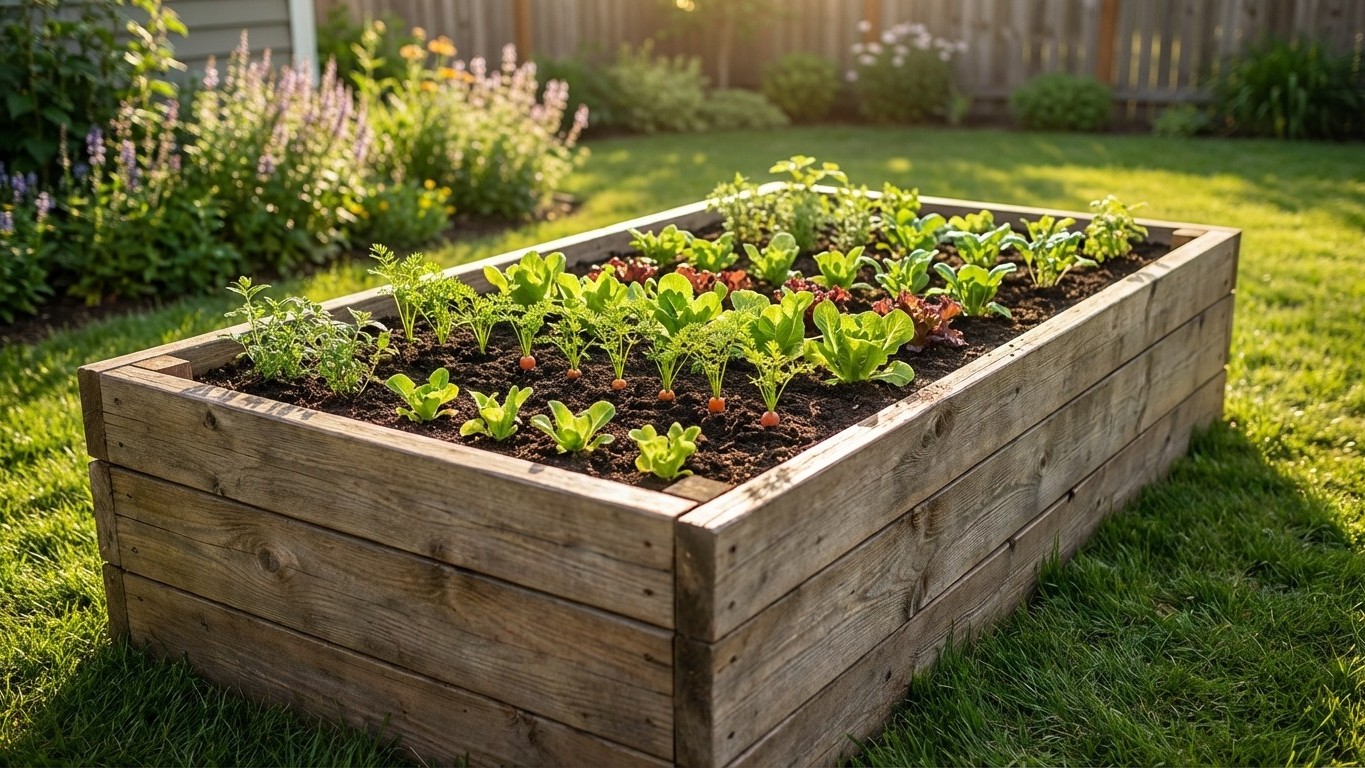
The first question on everyone’s lips when they start dreaming of fresh tomatoes outside the back door isn’t about seeds, soil, or fancy trellises. It’s lumber. Which wood makes sense for a raised garden bed that won’t rot within two seasons, won’t poison the summer salad, and won’t cost the equivalent of a summer vacation? Ask around at any neighborhood barbecue and you’ll get at least three different answers. Sometimes, the truth is hidden between what a board costs and how long you want your harvests to last.
Key takeaways
- Which wood promises longevity without breaking the bank?
- How does raised bed size impact your gardening success?
- Lining options: a simple solution to pesky weeds and pests?
Wood that Survives, and Wood that Lies
Pine. Cedar. Redwood. Even composite planks made from recycled materials, each promises more or less longevity, price, and beauty. Pine wins in big-box store parking lots for one reason: price. But pine, untreated and exposed to a year’s worth of weather, bends and blackens by year three. If you hope for a decade from your bed, cedar or redwood become the wiser choices—those oils in cedar that give the garage that fresh scent, they also fend off rot and insects effectively. In the U.S., western red cedar and redwood stand out for a reason. Both last five to fifteen years, sometimes longer, with only occasional upkeep. The catch? Price tags that can feel like they belong with designer countertops, not in the backyard.
Pressure-treated lumber used to make garden lovers queasy, the chemicals behind that “soft green tint” were known for leaching heavy metals. Since 2003, the EPA banned arsenic in consumer lumber, but some Gardeners-make-with-february-seeds-i-almost-lost-my-entire-spring-garden/”>Gardeners still avoid treated wood entirely out of caution. That’s fair. If you’re growing edibles, look for alternatives labeled safe for raised beds, or stick with naturally rot-resistant woods. Reclaimed wood tempts anyone with an eye for character, but without knowing its treatment history, it’s playing food-safety roulette.
plastic composites? They last, for sure. Think of it as the garden equivalent of cast iron: heavy, tough, never rots, but never breaks down either, and the look often fails to charm those who prefer the honesty of real wood. For some, though, never worrying about splinters or fungus justifies the premium.
Sizing Up Your Ambitions: Dimensions that Work
So much depends on a bed’s size. Too narrow, and you can’t pack in enough kale to make the constant watering worth it. Too wide, and your reach stalls halfway, leaving a thicket of untouched dandelions in the center. The gold standard, for adults and kids alike: four feet wide by eight feet long. Four feet is the sweet spot, reach in from either side without trampling the soil or your beans.
Length is where you get to be creative. Space tight? Go for four by four. Have an expanse? Extend length to ten or even twelve feet, but keep the width under four so nothing goes untended. Think of it as setting up a kitchen, you want everything accessible, never straining to reach the oregano at the far end.
Height is where practicality meets accessibility. Six-inch sides hold just enough soil for salad greens, but root crops demand a minimum of twelve inches, maybe more. Raised beds at eighteen or even twenty-four inches do more than save your back, they keep weeds and pests at bay, and make gardening a luxury for aging knees. One raised bed at waist height on a patio can change not just what you grow, but who gets to enjoy the harvest—city gardeners, wheelchair users, anyone whose bending days are behind them. A garden, democratized by two-by-tens and deck screws.
To Line or Not to Line? Modern Dilemmas
Every raised bed eventually faces an invasion, grasses climbing up through the bottom, roots slipping in from ambitious neighbors, or slugs staging midnight raids. Lining is the preemptive strike. But what to use?
Landscape fabric divides gardeners. Some swear by its ease: roll it out, staple it in, fill and forget. Soil drains. Grass stays out. Yet after a few years, fabric frays, torn by shovels or tunneling moles. Plastic is off-limits, impervious to water, it creates swampy, stunted beds, and microplastic nightmares. Cardboard is the surprise contender. Thick, overlapping sheets at the base, soaked before adding soil, smother weed seeds and break down by the season’s end, feeding the worms, leaving behind only routes for roots destined to stay. It’s low-tech and basically free (think cereal boxes, appliance cartons, last week’s Amazon spree), and it actually works.
Some adventurous gardeners try copper mesh for slug defense or hardware cloth against gophers, an extra chore now that pays dividends, or seems paranoid, depending on what’s ever snacked on your carrots. More often, the real debate is whether to line the sides, not just the bottom. Here, heavy-duty plastic (like pond liner) comes up—if your planks are pressure treated and you want a safety barrier, or you simply want to extend the wood’s lifespan by denying water direct access. Always make sure there are holes for drainage. The worst fate for a raised bed? Making a perfect box, and drowning the soil you just forked over cash for.
Beyond the Boards: Small Choices, Big Gardens
Walking past community gardens sprawled across empty lots in major cities, you notice not the perfect rectangles but the wild diversity, some beds taller, some patched with shingles, others ringed with scavenged stone or brick. The best raised bed matches its maker. Your choice of lumber, your dimensions, and lining reflect not just soil science but the realities of late-night internet searches, tight budgets, inherited tools—and ambition.
Can you grow tomatoes in a two-foot-high cedar box, lined with cardboard, on the cracked asphalt behind an apartment? Absolutely. Will the neighbor frown at your repurposed pallet project? Possibly. Does it matter? Less than you think. A raised bed accomplishes two things: it raises soil, and with it, the possibility of a season spent outdoors, hands deep in earth.
Every bed sets the stage for a year’s drama, rainfall, drought, weeds, harvest. One plank choice, one dimension change, the decision to line (or not), and suddenly, you’re part of an ongoing experiment stretching back generations. The only real question: How will your next raised bed change the shape of your garden—and your weekends?