Sunlight streaming through a bedroom window at 6 a.m.—for some, it’s a pleasant reminder of possibility. For others, it’s a cruel interruption. And thermal blackout curtains? Traditionally hailed as a quick fix. Pull them closed and, like magic, the room grows darker, quieter, cozier. Except, for me, that promise faded into frustration. Years spent wrestling with curtains that let in morning rays and drafts, all because of a simple mistake I didn’t even know I was making.
Key takeaways
- What if your blackout curtains aren’t really blocking light or cold?
- Discover the surprising reason most people hang thermal curtains wrong for years.
- A hotel-inspired hanging method can change your sleep and energy bills dramatically.
Mistake Number One: The “Standard Hang” That Fails
The problem started with the rod. Like most people, I hung my blackout curtains directly above the window frame, rod neatly centered, brackets drilled just a few inches past the glass. It looked perfectly fine—symmetrical, proportional, by-the-book. The curtains themselves, heavy with their promise of insulation, dropped to the sill. And yet, every morning: a stubborn line of light across the top and a persistent chill near the window. It was less “sleep sanctuary” and more “early morning spotlight.”
Turns out, most of us unwittingly hang our blackout panels the way we do sheer drapes or regular curtains. That is—too close to the window, too narrow, and often too short to really do their job. Curtains meant to block light and cold become mere window dressing. The result? Gaps that defeat the very purpose of owning thermal blackout curtains. A friend, grinning at my “blackout” bedroom one summer, told me flat out: “You know you’re losing the battle at the edges, right?”
The Edge Effect—Where Light and Drafts Sneak In
Research from building science experts backs this up: even the sturdiest curtain fails if it doesn’t fit the window properly. Any opening—at the top, sides, or bottom—becomes a ticket for sunlight, air, and noise to enter. Multiply that by every window in your home, and you’re not just waking up early—you’re paying more for Heating and cooling, too.
It’s a detail that translates to real money. The U.S. Department of Energy has found that as much as 30% of a home’s heating energy is lost through windows—even if insulated drapes are present. All because most of us treat thermal curtains as an afterthought, not a precision tool. I was guilty as charged.
The Fix: Rethinking the How, Not Just the What
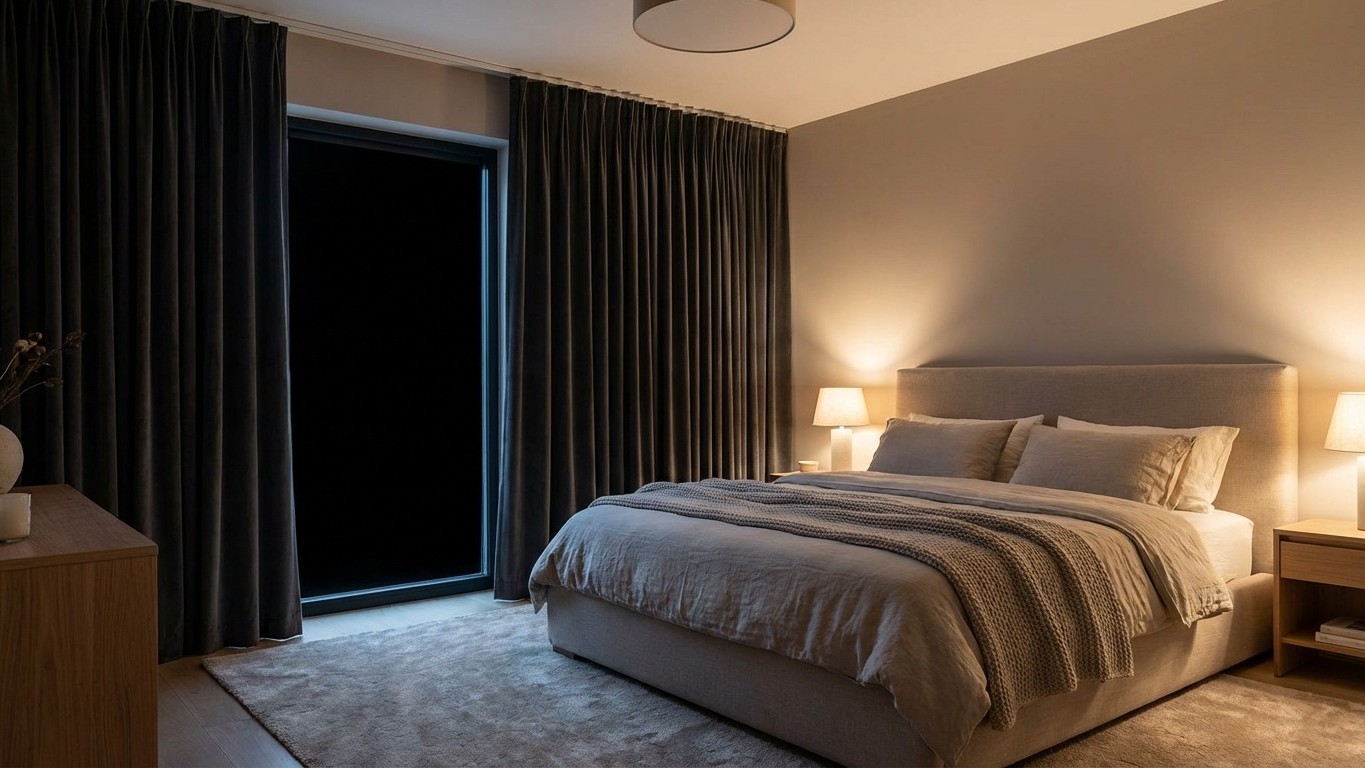
So, what’s the right way? It’s not just about buying better (or pricier) curtains. It starts with how you hang them. The “hotel trick” is legendary for a reason. Hotels—designed for rest at any hour—have blackout setups dialed in. The rod is mounted high, sometimes a foot above the window frame, and extends well past the sides—often 8 to 12 inches on each side. Curtains fall from ceiling to floor, overlapping the wall, trapping light and drafts alike.
Applying this approach changed everything for me. Moving the rod up, widening it, letting the curtains puddle slightly on the floor—each tweak closed a gap. No more light leaking in from the top. No more chilly eddies slipping beneath. And the blackout effect? Uncanny. The first morning after my fix, I reached for my phone thinking it must still be night. Instant improvement. According to independent home energy auditors, strategic curtain placement can improve window insulation by up to 45%. That’s not a small gain—it’s the difference between tossing off the covers in February and sinking deeper into sleep.
Small Adjustments, Massive Payoff
There’s another trick, one hotels rarely reveal: the “return,” or wrapping the curtain back toward the wall at the sides. Some ready-made rods sell curved end brackets for this exact reason, snuggling the fabric against the wall to block even more air and light. Lacking those? I improvised, using stick-on hook-and-loop tape to anchor the curtain edges to the wall behind the radiator. Not pretty, perhaps, but brutally effective.
The lesson? The tiniest details can transform a tired bedroom into a true retreat. Suddenly, I understood why professional designers obsess over “stack back” and “overlap” calculations. The first night after the change, my partner remarked that the room felt both quieter and warmer. A correlation? Absolutely. Thermal curtains laid flush against walls do double duty: dampening sound as well as IR and UV rays. In a city apartment, that’s a lifeline against both the neighbor’s stereo and oppressive July heat.
Blackout performance isn’t just about sleep, though. It’s about quality of life. Deep winter mornings become less grim when the cold draft stays outside. Kids nap longer. Home offices become habitable at noon, not saunas or caves. Even pets seem to approve—ours now spends most afternoons sunbathing as close to the “new” curtains as possible, nestled in the cozy pool of retained warmth.
Retrofitting every window isn’t necessary. Start where the need is most acute—bedroom, nursery, TV room. Rehanging a rod is a minor hassle compared to the cumulative hours lost squinting into sunlight or layering up against a draft.
The Unexpected Bonus: Style Transformed
There’s beauty, too, in well-hung blackout curtains. Rooms appear taller with rods closer to the ceiling—a simple optical illusion that architects swear by. Guests have commented that our living room feels “finished” in a way it never used to. As with so many home upgrades, the practical invites the aesthetic.
It’s easy to overlook what seems “good enough.” I did, for years. But the difference—waking up rested, feeling insulated, maybe even a little smug about my utility bill—makes the effort worthwhile. Just don’t expect applause for your curtain skills; satisfaction here is silent, dark, and warm.
Now, when sunlight finds a way in, or a breeze brushes my ankles, I pay attention. Are there other places in our homes—and lives—where we settle for close enough, when a simple shift could turn frustration into comfort?