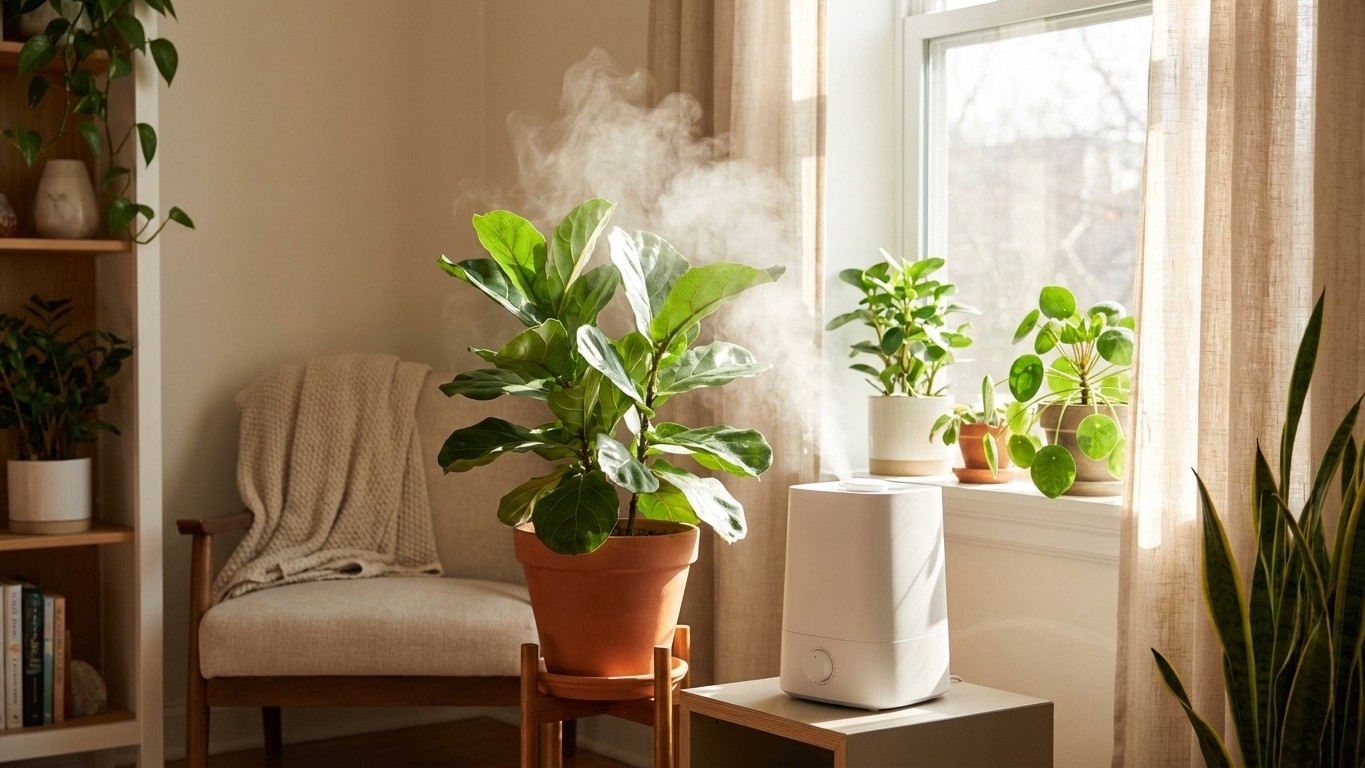
In February 2026, the modern home is a paradox for plants: warm, insulated, comfortable… and often drier than a summer hillside. Central heating, double glazing, and long stretches without airing out rooms can push indoor air to humidity levels many houseplants simply did not evolve for.
That’s why “ideal humidity for houseplants” is more than a nice-to-have. It can be the difference between glossy new leaves and the slow, familiar drift toward brown tips, stalled growth, and constant pest issues.
This page is a practical reference you can return to. Clear humidity targets, the symptoms that actually matter, and solutions that scale from “free” to “close to professional.”
Why humidity matters for indoor plants
Humidity is not about how wet the soil is. It’s about the water in the air, and how fast your plant loses moisture through its leaves. Result? A plant can be “well watered” and still behave like it’s thirsty.
The physiological processes tied to humidity
Plants constantly balance water intake and water loss. Roots pull water up, leaves release it through tiny pores called stomata. That release, called transpiration, is a cooling system and a nutrient transport mechanism rolled into one.
Drop the surrounding humidity and transpiration accelerates. The leaf loses water faster, cells at the margins dehydrate first, and you see crisp edges or brown tips. Growth often slows because the plant partially closes stomata to conserve water, which also limits CO₂ intake for photosynthesis.
Push humidity too high for too long, and you change the other side of the equation: wet leaf surfaces, slower drying, and more favorable conditions for fungal leaf spots and molds. The plant isn’t “happy” just because the air feels tropical. It needs air exchange and stability.
Humidity also interacts with basics like light and temperature. Bright light increases water demand; warm air holds more moisture; a radiator blast can dry leaves in hours. If you want the full systems view, connect this page to indoor plant care fundamentals, including light, watering, humidity, and temperature, via the cluster page anchored as indoor plant care.
Ideal humidity levels: benchmarks by plant family
Start with a simple anchor: many common houseplants tolerate typical indoor conditions, but they grow best in a mid-range. Several extension and horticulture references commonly place “most indoor plants” around the 40% to 60% relative humidity (RH) band, while many tropical foliage plants prefer higher levels. blogs.ifas.ufl.edu
Relative humidity is the percentage of water vapor in the air compared to the maximum the air could hold at that temperature. That last part matters. Warm air can hold more water, so RH changes as your room heats or cools, even if the absolute amount of water vapor stays similar.
Tropical plants, succulents, and common varieties: specific needs
Most common “easy” houseplants (pothos, philodendron types sold as basics, snake plant, ZZ plant) tend to do fine around 40% to 60% RH, especially when watering and light are consistent. The higher end often looks better, but they rarely demand it.
Humidity-sensitive tropicals (many calatheas, marantas, some anthuriums, many ferns) often show stress below the mid-50s, and can visibly improve in the 60% to 80% range, assuming airflow is decent and leaves aren’t staying wet for long periods. Greenhouse-style guidance frequently places tropical foliage “mature growth” targets around roughly 65% to 80% RH. lifetips.alibaba.com
Succulents and cacti are the opposite story. They’re built for water conservation, and many are comfortable in lower humidity. A moderate range such as 40% to 55% RH is often plenty, and persistently high humidity combined with cool temperatures and low airflow can raise rot risk. lifetips.alibaba.com
Orchids sit in the middle. Many popular indoor orchids do well in moderate humidity, often roughly 55% to 70% RH, with the usual caveat: airflow matters, and wet crowns plus high humidity can become a problem. lifetips.alibaba.com
Summary table: recommended humidity for popular indoor plants
Use this as a starting point, not a verdict. Cultivar, potting mix, light level, and temperature can shift what “ideal” looks like in your home.
- Most common houseplants (general target): 40% to 60% RH blogs.ifas.ufl.edu
- Tropical foliage that dislikes dry air (calathea, maranta, anthurium types, many ferns): 60% to 80% RH lifetips.alibaba.com
- Orchids (many common indoor types): 55% to 70% RH lifetips.alibaba.com
- Succulents and cacti: 40% to 55% RH (often fine lower, but watch extremes) lifetips.alibaba.com
If you’re trying to decide whether to adjust humidity or adjust plant choices, this is where “varieties resistant to dry air” becomes a smart cross-cluster link. Sometimes the best fix is choosing plants that match the room you already have.
How to measure humidity at home: simple methods and useful tools
Your eyes can learn a lot, but one small device usually ends the guessing. Humidity is slippery because it changes hour to hour: morning showers, cooking, heating cycles, a window cracked open at night.
Hygrometer: the most reliable baseline
A basic digital hygrometer gives you a working RH number. Place it near leaf level, not on the floor, not on a sunny windowsill. If you have multiple rooms, you may discover something surprising: one corner can be 10 points lower than the rest, simply due to a vent or a draft path.
Measure where the plant lives. That’s the only number that matters.
The “glass of water” method and condensation clues
No tool available right now? Use rough indicators:
- Cold glass test: Put a glass of cold water (with ice) in the room for 5 to 10 minutes. Heavy condensation suggests higher humidity; very little suggests drier air. This does not give a percentage, but it helps you compare rooms.
- Window behavior: Frequent condensation on windows in winter can signal higher indoor humidity, but it can also reflect cold surfaces and poor ventilation. Treat it as a “check further” sign, not a target to chase.
Visual indicators in the plant
This is the part people actually use. Leaves act like a daily humidity log, but they also report watering problems, light stress, and fertilizer salts. Diagnosis needs context.
One habit changes everything: keep a tiny note for two weeks. Room RH (morning and evening), watering day, and one sentence about what you see. Patterns jump out fast.
Symptoms of wrong humidity: how to read leaves and growth
Brown tips are common. Misleading too. The same symptom can come from underwatering, salt buildup, drafts, or low humidity. The goal is not “spot the symptom.” The goal is “spot the pattern.”
Air too dry: brown tips, crisp edges, slow unfurling
Low humidity stress often shows up as:
- Brown tips or brown margins, especially on thinner leaves
- Crispy texture at the edges, not mushy
- Leaf curling or slight taco-shaped folding on humidity-loving species
- New leaves that struggle to unfurl cleanly, then tear
- Slower growth during heating season, even when light is adequate
Several reputable horticulture sources link brown tips or margins to a too-dry atmosphere, especially in winter, and recommend humidity-raising methods such as damp gravel trays or humidifiers. rhs.org.uk
A daily-life comparison helps: imagine running outside in cold wind with wet hair. Your scalp dries fast, and it feels harsh. That’s your calathea next to a radiator, even if its soil is moist.
Too much humidity: mold, spots, and disease risk
High humidity becomes a problem when it combines with poor airflow, cool temperatures, or wet foliage. Watch for:
- White or gray fuzzy mold on soil surface or nearby surfaces
- Persistent damp smell around the plant stand
- Leaf spots that spread, especially if leaves stay wet
- Increased fungal issues in crowded corners
Spacing and airflow are often as important as the RH number. Extension guidance frequently warns that when conditions are too moist, diseases can thrive, and that air circulation should be present without placing plants in cold drafts. extension.psu.edu
Humidity can also become a human-home issue. Many indoor comfort guidelines recommend staying in a moderate band (often around 30% to 60% RH) to reduce discomfort and moisture problems. If you push an entire apartment to 70% all winter, you may be trading plant comfort for mold risk in corners and on cold walls. extension.psu.edu
Practical solutions to adjust humidity indoors
Think in tiers. Start with methods that cost nothing and don’t add risk. Then scale up if you’re keeping humidity-demanding plants, or if you live in a region where winter heating makes indoor air consistently dry.
Easy wins: grouping, trays, misting, humidifiers
Group plants together. Plants release moisture through transpiration, so grouping can create a small, more stable microclimate. It won’t turn a dry living room into a jungle, but it can soften the worst swings.
Use a pebble tray or damp gravel tray. This classic method is widely recommended, with one non-negotiable rule: the pot base should not sit in water. The water evaporates and raises humidity around the plant, while roots stay aerated. blogs.ifas.ufl.edu
Mist strategically, not as your main system. Misting can help briefly, but it’s rarely stable enough to keep RH elevated for long. Some horticulture advice still includes regular misting as one option, often alongside pebble trays. rhs.org.uk
Add a humidifier for consistency. If your home sits below 30% RH in winter, a humidifier is usually the cleanest path to stability. It also helps human comfort. ASHRAE guidance cited by extension resources places indoor RH commonly in the 30% to 60% band. extension.psu.edu
If you want a “professional” feel without turning your home into a lab, a humidifier with a built-in humidistat is the step up: you set a target RH, it regulates output, and you avoid constant overshooting.
Pitfalls to avoid: overwatering vs air humidity
The most common mistake is trying to “fix dry air” by watering more often. Soil moisture and air moisture are different levers. Overwatering is repeatedly flagged by extension services as a leading cause of indoor plant decline, especially in winter. blogs.ifas.ufl.edu
Use this quick separation:
- Low humidity: crispy edges, brown tips, leaves feel dry, issues worsen near heaters
- Overwatering: yellowing, soft stems, fungus gnats, musty soil, roots turning brown and mushy
When watering is the real variable, revisit your seasonal schedule using the sister page anchored as how often to water houseplants. Frequency changes with light, temperature, pot size, and winter slowdown.
Light matters too. A plant in dim light uses less water; if you keep watering like it’s summer, problems appear fast. Tie your humidity plan to placement with the sister page anchored as best light for indoor plants (low light vs bright indirect).
Seasonal comparison: adjusting humidity in winter vs summer
Seasons change indoor physics. In much of Europe, winter is the hard mode: cold outside air holds less water, then you heat it indoors and relative humidity drops further. Extension guidance highlights that winter heating can drop indoor RH below 30% and that this can stress houseplants. extension.psu.edu
Managing humidity with heating, AC, and ventilation
Winter (heating season): Keep plants away from radiators and hot air vents. Even if the room RH seems acceptable, the air right in the vent path is harsher. Grouping plants and running a humidifier for a few hours in the morning and evening can stabilize the daily troughs.
Summer (heat waves, AC): Air conditioning can dry air, but open windows can also swing humidity wildly. If you ventilate at night, check the morning RH and watch for leaf spot risk in crowded corners. High humidity plus stagnant air is the common setup for fungal issues, even when watering is “correct.”
Should you chase the same RH all year? Usually no. Aim for a stable, healthy band for the room (often 40% to 60% is a sensible target), then create microclimates for the few plants that truly demand more. Your walls will thank you.
FAQ: ideal humidity for houseplants
What is the ideal humidity for houseplants?
For many houseplants, a practical target is 40% to 60% relative humidity. Some tropical foliage plants prefer higher levels, often around 60% to 80%, while many succulents are comfortable at lower or mid ranges. blogs.ifas.ufl.edu
How do I know if my houseplants need more humidity?
Look for repeated brown tips, crispy edges, curling on thin-leaved tropicals, and new leaves that struggle to unfurl, especially in winter or near heat sources. Then confirm with a hygrometer near leaf level. Brown tips can have multiple causes, so also check watering, drafts, and fertilizer salt buildup. rhs.org.uk
What are easy ways to increase humidity for indoor plants?
- Group plants together to create a small, shared microclimate
- Use a pebble or damp gravel tray, keeping the pot above the waterline
- Run a room humidifier for stable results, especially during heating season
These approaches are repeatedly recommended in horticulture and extension guidance, with pebble trays and humidifiers being common, low-risk tools when used correctly. blogs.ifas.ufl.edu
Can too much humidity harm houseplants?
Yes. High humidity with poor airflow can encourage fungal diseases and molds, and consistently wet conditions can increase rot risk for plants that prefer drier air, like many succulents. Balance humidity with ventilation and avoid keeping leaf surfaces wet for long periods. extension.psu.edu
Do all indoor plants need the same humidity level?
No. Aroids sold as common houseplants often tolerate average home humidity, while calatheas, marantas, many ferns, and some anthuriums can demand higher RH to look their best. Succulents and cacti usually prefer lower humidity and strong airflow. lifetips.alibaba.com
Where do the sister pages fit in a humidity problem?
- If symptoms are confusing, start broader with indoor plants care varieties houseplants to compare plant groups and their environmental preferences.
- If leaves crisp and soil is always wet, revisit watering habits with how often to water houseplants.
- If growth stalls and stems stretch, check placement with best light for indoor plants (low light vs bright indirect).
- If you want the full “ecosystem” logic, link back to indoor plant care basics.
Conclusion: a simple plan that works in real homes
Set one realistic room target, often 40% to 60% RH, then decide which plants deserve special treatment in a tighter humidity zone. Group them, add a tray, and only graduate to a humidifier if winter air regularly drops low. Track it for two weeks. The data will make the decision for you.
One last thought: if your home stays dry and you don’t want devices running all season, is the best “humidity hack” choosing plants that like your air, rather than fighting your building?