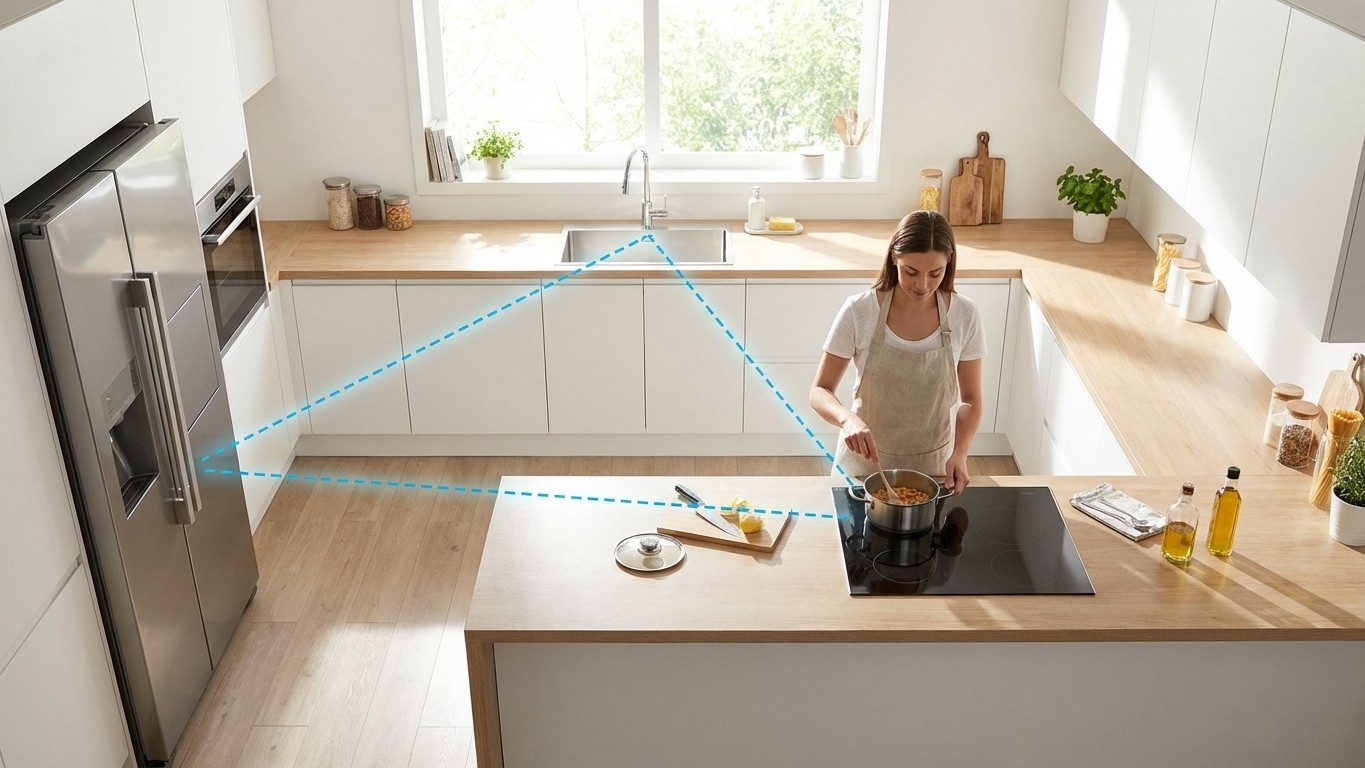
After years of feeling exhausted every time I cooked dinner, constantly zigzagging across my kitchen like I was running a marathon, I discovered something that changed everything. The solution wasn’t a fancy gadget or expensive renovation—it was an old design principle from the 1940s that most people have forgotten about. By repositioning just a few key elements around what’s called the “kitchen work triangle,” I literally cut my cooking steps in half and transformed meal preparation from a chore into a joy.
The revelation came during a particularly frustrating evening when I found myself walking back and forth between the refrigerator, stove, and sink at least twenty times while making a simple pasta dinner. I was spending more energy moving around than actually cooking, and by the time I sat down to eat, I was too tired to enjoy the meal I’d worked so hard to prepare.
The Forgotten Science of Kitchen Efficiency
The kitchen work triangle isn’t some trendy design concept—it’s a time-tested principle developed by efficiency experts in the mid-20th century. The idea is beautifully simple: your refrigerator, stove, and sink should form a triangle with each side measuring between 4 and 9 feet. This creates what designers call the “golden triangle” of kitchen workflow, minimizing unnecessary movement while maximizing functionality.
What makes this rule so powerful is its foundation in human behavior and cooking patterns. Think about any recipe you make: you retrieve ingredients from the refrigerator, wash and prep them at the sink, then cook them on the stove. Most cooking tasks involve moving between these three points repeatedly, so the distance and accessibility between them directly impacts your energy expenditure and cooking enjoyment.
When I mapped out my old kitchen layout, I realized my refrigerator was a whopping 12 feet from my stove, with my sink awkwardly positioned on a completely different wall. No wonder I felt like I was training for a 5K every time I made dinner. The inefficiency was built right into my space.
Redesigning for Real-World Cooking
The beauty of implementing the work triangle doesn’t require a complete kitchen overhaul. In my case, I focused on strategic repositioning and smart storage solutions that respected the triangle principle. I moved my most-used appliances—the coffee maker, toaster, and stand mixer—to create clear pathways between my three main work zones.
The refrigerator became my starting point, positioned so I could easily reach both the sink for washing vegetables and the stove for immediate cooking. I relocated frequently used items like oils, spices, and cooking utensils to drawers and cabinets within arm’s reach of the stove. Cleaning supplies and dish soap found new homes directly under the sink, eliminating those annoying mid-cooking searches.
One of the most impactful changes was creating what I call “prep zones” within the triangle. I designated the counter space between the sink and stove as my primary prep area, keeping cutting boards, knives, and mixing bowls in the cabinet directly below. This meant ingredients could flow seamlessly from refrigerator to prep area to cooking surface without any backtracking.
The Dramatic Results
The transformation was immediate and remarkable. Cooking tasks that previously left me breathless now felt effortless. Making my morning smoothie went from a 15-step dance around the kitchen to a simple 6-step process. Preparing dinner became so much more enjoyable that I started experimenting with more complex recipes, knowing the logistics wouldn’t exhaust me.
Beyond the physical benefits, the psychological impact surprised me. When your kitchen flows logically, cooking becomes meditative rather than stressful. I found myself actually enjoying the process of meal preparation, taking time to appreciate ingredients and techniques instead of rushing through tasks to minimize the walking.
The efficiency gains compound throughout the day. Breakfast preparation, lunch packing, evening cooking, and cleanup all became smoother operations. I estimate I’m saving at least 20-30 minutes of active movement time daily, which adds up to hours of saved energy each week.
Making the Triangle Work in Any Kitchen
Even if you can’t relocate major appliances, you can optimize your existing layout using triangle principles. Focus on creating clear pathways between your three work zones and eliminating obstacles that force detours. Store items where you’ll use them most frequently—baking supplies near the oven, fresh ingredients near prep areas, cleaning supplies near the sink.
Consider the triangle when organizing inside your cabinets and drawers too. Group related items together and position them strategically within the workflow. Your coffee setup should be near the water source, cooking oils should live near the stove, and fresh produce should have easy access to washing facilities.
The kitchen work triangle proves that good design isn’t about following trends—it’s about understanding human behavior and creating spaces that support natural movement patterns. By honoring this simple geometric principle, you can transform your kitchen from an obstacle course into an efficient, enjoyable workspace that makes every meal a pleasure to prepare.