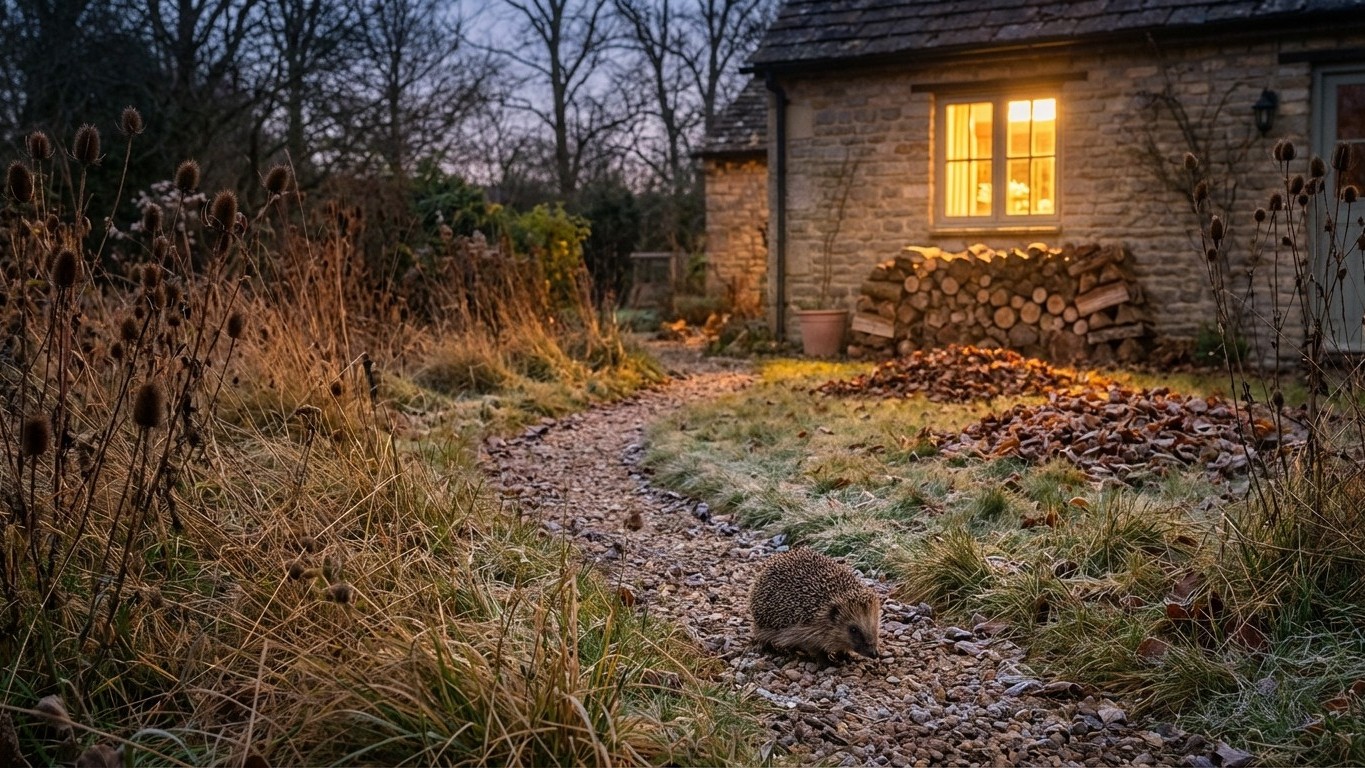
When I first decided to abandon my winter garden cleanup routine three years ago, it felt like giving up. The neat, manicured beds I’d maintained for decades would lie dormant under a blanket of fallen leaves, spent stems, and what my neighbors might charitably call “organized chaos.” What I didn’t expect was the nightly parade of visitors that would soon make my garden their home.
The transformation didn’t happen overnight. In those first weeks of my newfound garden negligence, I noticed subtle changes. The usual stark winter landscape began to take on texture and depth. Dried flower heads caught frost like delicate crystal sculptures, and leaf piles created natural undulations across formerly pristine borders. But it was the soft rustling sounds that started around dusk that truly caught my attention.
The Night Shift Takes Over
My first hedgehog sighting came during a late evening in December. A small, spiny shape emerged from beneath a pile of bramble cuttings I’d left near the garden shed, moving with surprising purpose across what was once my immaculate lawn. This wasn’t the tentative exploration of a lost animal – this was a confident resident making their rounds.
As winter deepened, the activity increased. What began as occasional glimpses became regular entertainment. Armed with a red-filtered flashlight to avoid disturbing my visitors, I discovered an entire ecosystem thriving in my “messy” garden. The hedgehogs had established clear pathways through the longer grass, created shelters beneath log piles, and were systematically working their way through the beetle and grub populations that flourished in my undisturbed soil.
The revelation was profound: by doing less, I was providing more. Every seed head I left standing became a bird feeder. Each pile of leaves transformed into an insect hotel. The bramble patches I’d always viewed as untidy became highways for small mammals seeking food and shelter.
Creating Wildlife Highways
The hedgehogs taught me that gardens exist as part of a larger network. These animals travel impressive distances each night – sometimes covering several miles as they forage. A tidy garden offers little sustenance or shelter, forcing them to expend precious energy moving between viable habitats. By leaving my space wild, I’d created what conservationists call a “wildlife corridor” – a safe passage that connects fragmented habitats.
The changes I made were surprisingly simple. Instead of cutting back perennials in autumn, I let them stand through winter. Their hollow stems provide overwintering sites for beneficial insects, while their seed heads feed birds well into spring. Log piles became permanent features rather than temporary eyesores waiting for disposal. Even my approach to lawn care shifted – I stopped autumn fertilizing and allowed areas to grow longer, creating varied textures that support different species.
The leaf management strategy proved crucial. Rather than bagging every fallen leaf, I began creating intentional piles in quiet corners. These become composting zones that generate heat as they decompose, providing warmth for hibernating creatures while slowly enriching the soil. The hedgehogs particularly favor the areas where I’ve layered leaves with garden prunings, creating complex three-dimensional habitats.
Beyond the Hedgehogs
What started as an experiment in garden laziness revealed itself as a masterclass in ecosystem management. The hedgehogs were just the most visible beneficiaries of my new approach. Bird activity increased dramatically as natural food sources became abundant and varied. The robin that used to visit sporadically now maintains a territory that includes my garden, regularly turning over leaves to hunt for insects.
Soil health improved markedly without constant disturbance. The earthworm population exploded, creating rich, aerated growing medium that supported more diverse plant growth. Native wildflowers began appearing in areas I’d previously kept weed-free, bringing specialized pollinators I’d never seen in my formal garden.
The aesthetic transformation surprised me most. What I’d feared would look neglected instead developed a natural beauty that changed with the seasons. Winter structure from standing stems gave way to spring emergence through established mulch layers. The garden began to feel alive in ways my manicured version never had.
Practical Rewilding
Transitioning to wildlife-friendly winter management doesn’t require abandoning all garden care – it’s about strategic neglect. I still maintain areas near the house for human use while allowing wilder zones to develop in less visible corners. Pathways remain clear for access, but borders embrace a more natural aesthetic.
The timing of this approach matters significantly. Beginning the transition in late autumn allows natural processes to establish Before Spring growth begins. Plants that might look untidy when first left standing soon develop winter beauty as frost and snow highlight their architectural qualities.
Those nightly hedgehog visits have become one of my garden’s greatest rewards. Watching these ancient creatures navigate pathways they’ve helped create, seeing them emerge confidently from shelters my “laziness” provided, reminds me that the best gardens serve more than human desires. Sometimes the most profound improvements come not from adding more, but from thoughtfully doing less.