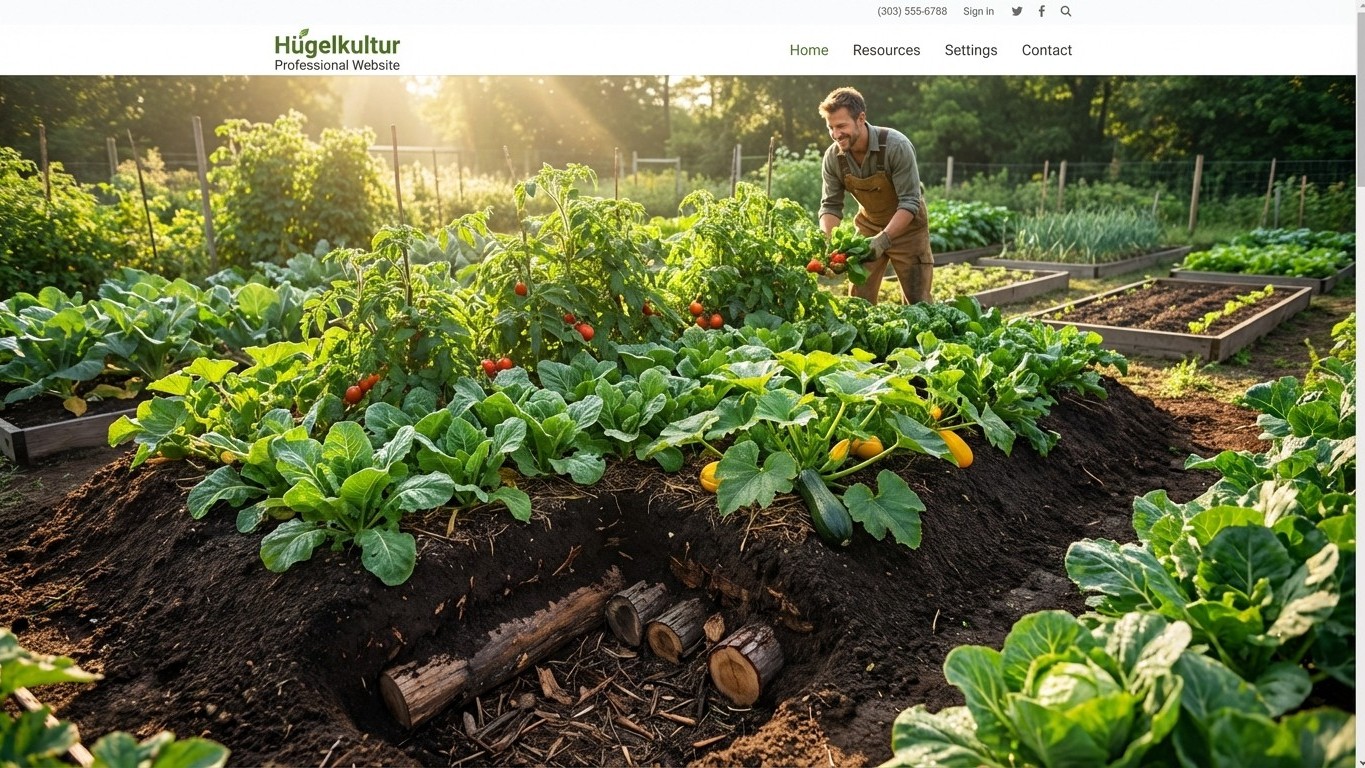
When I first stumbled across the term “hügelkultur” while scrolling through gardening forums, I thought someone had misspelled “agriculture.” Little did I know that this unpronounceable German word would completely revolutionize how I garden—and practically eliminate my weekend watering routine.
Hügelkultur, literally meaning “mound culture” or “hill culture,” is a horticultural technique where a mound constructed from decaying wood debris and other compostable biomass plant materials is later planted as a raised bed. The method has been quietly gaining momentum among permaculture enthusiasts, with gardeners in Arizona’s high desert reporting great success despite extreme conditions, proving this isn’t just another garden fad.
The Ancient Wisdom Behind the Modern Garden Revolution
Though the technique is alleged to have been practiced in German and Eastern European societies for hundreds of years, the term was first published in a 1962 German gardening booklet by Herrman Andrä, and was later adopted and developed by Sepp Holzer, an Austrian permaculture advocate. What started as a peasant farming technique has evolved into what many consider the ultimate sustainable gardening method.
The science behind hügelkultur is beautifully simple. As the wood decays, its porosity increases, allowing it to store water like a sponge. The water is slowly released back into the environment, benefiting nearby plants. It’s nature’s own irrigation system, hiding beneath your tomatoes and squash.
This mimics the natural succession that occurs in a forest, where trees fall and nobody cleans them up. As they begin to rot, they act as a sponge, holding water and releasing nutrients and organic matter to the top layer of the forest. Essentially, you’re recreating a forest floor in your backyard.
Building My First Hügelkultur Beds: What Actually Works
My journey began last fall when I finally had enough of lugging garden hoses around and watching my water bill skyrocket during summer droughts. The best time to build a hügelkultur mound is in the fall, so it can settle in for many months and begin the decomposition process. By the time you plant in the spring, nutrients are readily available to the garden.
The construction process is surprisingly forgiving. In its basic form, mounds are constructed by piling logs, branches, plant waste, compost and additional soil directly on the ground. I started with a shallow trench about 18 inches deep, then layered in everything from fallen oak branches to kitchen scraps.
Wood selection turned out to be more important than I initially thought. Some of the better woods are apple, alder, cottonwood, birch, willow and poplar, while you want to stay away from cedar and walnut, as they have resins and toxins that aren’t good for plant life. I learned this the hard way after using some black walnut branches in my first attempt—my lettuce seedlings were less than thrilled.
The amount of wood incorporated into the bed must fall below the halfway point of the raised bed’s height. This means a 40-inch tall, raised bed would have no more than 20-inches of wood debris, leaving 20-inches of soil remaining above the wood’s surface level. Getting this ratio right is crucial for giving your plants enough growing medium while maximizing the water retention benefits.
The Transformation: From High-Maintenance to Hands-Off
The first year required patience and strategic planning. The first year, the woods will be using nitrogen to break down, so plant crops that are not big nitrogen feeders, or legumes that add nitrogen to the soil. In the second year, the decomposing wood will be returning nitrogen to the garden. I planted beans and peas that first season, and they thrived despite my initial skepticism.
By year two, the magic really started happening. The mound may need water, but in subsequent years, it will be self-sustaining, much as the forest. I watched in amazement as my hügelkultur beds stayed moist and green while my traditional raised beds required daily watering during our brutal summer heat waves.
The beds continue to increase in productivity. This winter we grew a great variety of lettuces, onions, herbs, carrots, broccoli, and more. The extended growing season became an unexpected bonus—as the sticks, leaves, and logs used to build hügelkultur raised beds decompose, they naturally generate heat, which causes the soil to warm up a bit faster in spring and may extend your growing season by a few weeks.
Perhaps most surprisingly, after the first year, it breaks down enough that you don’t need to do anything other than plant your Plants. It becomes self-tilling, making the soil more and more usable. This method lasts for years, so you don’t need to till and weed every year. My weekend gardening routine transformed from frantic watering and weeding to peaceful harvesting and planning.
The Real-World Results That Convinced Me
The proof, as they say, is in the produce. In an average season, many home gardeners can grow around $600 worth of produce. With an extended season, that number can only increase. My hügelkultur beds consistently outperformed my traditional gardens in both quantity and quality of vegetables.
Water conservation became the most dramatic change. Experienced hügel gardeners have found that if the beds are high enough, they don’t require irrigation at all after the second year. During our region’s worst drought in decades, my hügelkultur tomatoes continued producing while neighbors’ gardens withered.
This method is economical and helps clean up your outdoor space, but the best part is that it sequesters carbon and eventually leads to fertile soil bursting with microbial life that doesn’t require much watering. I found myself looking forward to cleaning up fallen branches, knowing they’d become next season’s garden foundation rather than yard waste.
The technique isn’t without its learning curve. One drawback to this method of gardening is that as the wood chips and larger pieces of wood begin to break down, you may experience some shifting and settling of your garden beds. It’s a good idea to assume the first few years you’ll need to amend your beds with additional soil. But this minor maintenance pales in comparison to the time and water savings.
What started as curiosity about a funny German word has become my go-to garden philosophy. Depending on the type of wood used and the size of the bed, a hugelkultur gardener can expect their carefully constructed system to sustain itself for up to 20 years. Twenty years of reduced watering, self-fertilizing soil, and abundant harvests—that’s what I call a worthwhile investment. My garden doesn’t just grow vegetables anymore; it grows itself.