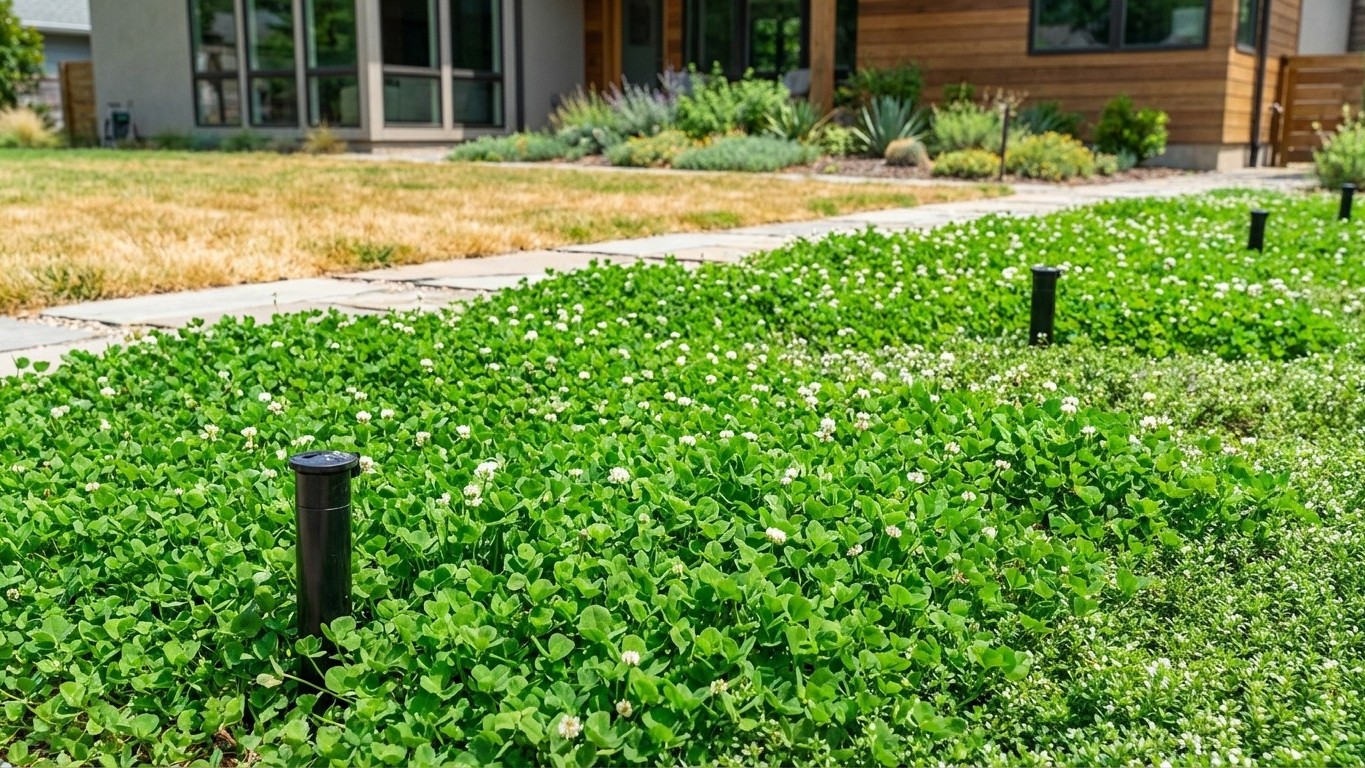
Every summer brought the same exhausting cycle: yellowed grass patches, endless watering schedules, and the inevitable decision to tear out and replant sections of my lawn. After years of fighting California’s relentless heat and mounting water bills, I discovered a revolutionary solution that transformed my approach to landscaping entirely.
The answer came in the form of drought-tolerant ground covers—specifically varieties like Kurapia, which uses approximately 60% less water than traditional lawns while maintaining that coveted green appearance year-round. This isn’t just another landscaping trend; it’s a fundamental shift toward sustainable yard management that addresses both environmental concerns and homeowner frustration.
Why Traditional Lawns Fail in Modern Climates
Traditional turfgrass demands enormous resources to maintain its picture-perfect appearance. Native plants are more drought tolerant, especially those with extensive root systems that can reach down 14 feet, giving them a significant advantage over shallow-rooted conventional grass. The problem intensifies during heat waves when even well-maintained lawns struggle to survive without constant irrigation.
Water restrictions have become increasingly common across the United States, particularly in Western states. Some drought-tolerant alternatives can save up to 75% water compared with other grass lawn selections, making them not just environmentally responsible but financially sensible choices for long-term property management.
The maintenance burden extends beyond watering. Traditional lawns require regular mowing, fertilizing, pest control, and seasonal reseeding—all activities that drain both time and money. Kurapia is considered to save on the cost of water, fertilizers, mowing, and labor when compared to bermudagrass, representing a comprehensive solution to lawn maintenance challenges.
Game-Changing Ground Cover Solutions
Several outstanding alternatives have emerged that completely redefine what a “lawn” can be. Kurapia stands out as particularly impressive, establishing fast and filling in completely within 2-4 months when planted about a foot apart. This Japanese-developed ground cover creates a dense, interconnected mat that naturally suppresses weeds while requiring minimal intervention.
The plant’s unique growth pattern sets it apart from traditional grass. Each stem touches soil, anchors itself and shoots roots down as deep as 10 feet or more, creating a network of strong stems that hold onto each other like steel cables. This deep root system explains its exceptional drought tolerance and ability to recover from damage.
For those seeking variety, creeping thyme offers another excellent option. This drought-tolerant groundcover can replace small lawns, tolerates light foot traffic once established, and releases terrific fragrance when walked on. The added benefit of seasonal flowers makes it both functional and aesthetically pleasing.
Native sedges represent another category worth considering. Wood’s sedge develops into dense mats that suppress weeds and tolerate mowing, while bristle-leaf sedge resembles fescue turfgrass and forms low-growing clumps ideal for dry sites. These options provide familiar lawn-like appearances while requiring significantly less water and maintenance.
Financial and Environmental Benefits
The economic advantages extend well beyond reduced water bills. Many regions offer substantial incentives for lawn replacement projects. Some water districts provide rebates of up to $5 per square foot for grass lawns replaced with water-efficient landscaping, essentially paying homeowners to make the transition.
Long-term maintenance costs drop dramatically with proper ground cover selection. Kurapia never has to be mowed, though some choose to trim it based on personal preferences for appearance. This eliminates ongoing expenses for fuel, equipment maintenance, and professional lawn care services.
The environmental impact proves equally compelling. These ground covers help with soil erosion, suppress weeds naturally, and eliminate the need for gas-powered lawnmowers. They also support local ecosystems, with many varieties producing flowers that attract beneficial pollinators throughout the growing season.
Implementation Strategy for Success
Successful ground cover installation requires thoughtful planning and proper soil preparation. These plants love at least 6 hours of direct light and require excellent drainage, often benefiting from raised grades and grit amendments where water tends to linger. Taking time for thorough site preparation significantly impacts establishment speed and long-term success.
Timing matters considerably for optimal results. The best planting time runs from early April to early September when heat promotes rapid spreading. Cold-season planting delays establishment and may require alternative strategies or different plant selections.
Initial watering schedules differ from long-term maintenance needs. New installations need soaking every 3-4 days during the first three weeks, then every 5-7 days for weeks 4-6, followed by deep, occasional watering only during extended drought periods. This graduation approach ensures proper root development while transitioning toward water independence.
The transformation from water-hungry lawn to drought-tolerant landscape represents more than a gardening decision—it’s an investment in sustainable living that pays dividends through reduced maintenance, lower utility costs, and environmental stewardship. With proper selection and installation, these ground covers deliver the green, attractive landscape homeowners desire while eliminating the frustrating cycle of seasonal lawn replacement that plagued my summers for years.