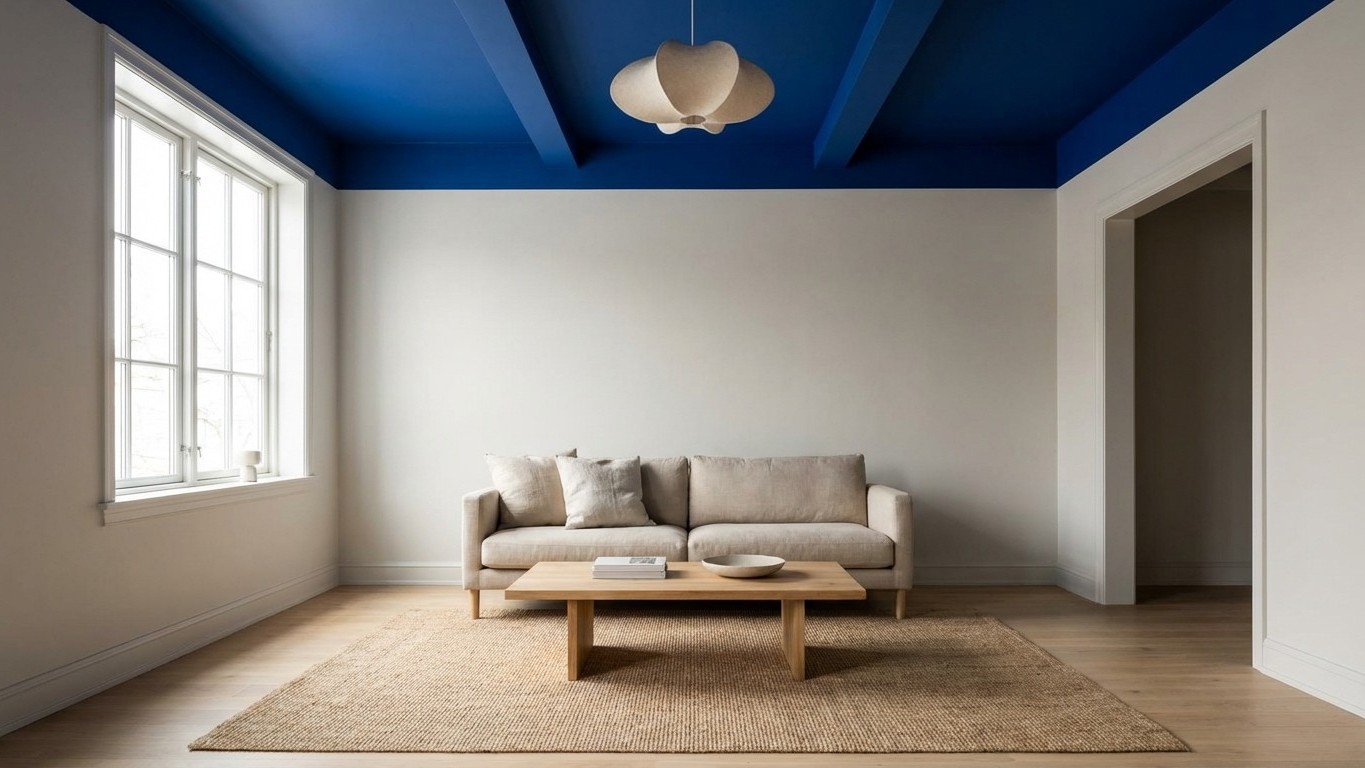
When it comes to home decor, Ceilings often remain an afterthought, typically painted white and left unadorned. However, this “fifth wall” holds untapped potential to transform your space dramatically. By reimagining your ceiling’s color, you can influence the room’s ambiance, perception, and overall aesthetic.
Key takeaways
- Why ceilings are the ‘fifth wall’ in your home design.
- The surprising impact of light vs. dark ceiling colors.
- Bold ceiling trends that turn heads and elevate spaces.
Understanding the Impact of Ceiling Color
Ceiling color plays a pivotal role in shaping a room’s atmosphere. Light hues, such as soft whites or pale creams, reflect more light, creating an illusion of height and openness. This effect is particularly beneficial in smaller rooms or spaces with low ceilings, making them feel more expansive. Conversely, darker shades can make a ceiling appear lower, fostering a cozy and intimate environment. This approach works well in large rooms where a sense of warmth is desired.
Beyond spatial perception, ceiling colors can evoke specific emotions. Cool tones like blues and greens often instill calmness and tranquility, making them ideal for bedrooms or relaxation areas. Warm colors, such as yellows and reds, inject energy and vibrancy, suitable for lively spaces like kitchens or playrooms.
Embracing Bold Ceiling Trends
Recent design trends have seen a shift towards bold and expressive ceiling treatments. The concept of “color capping,” for instance, involves painting the ceiling and upper walls in a cohesive hue, creating a seamless and immersive environment. This technique can add depth and character to a room, making it feel more curated and intentional.
Another emerging trend is the use of statement ceilings, where the ceiling becomes a focal point through the application of vibrant colors, intricate patterns, or textured finishes. This approach can add drama and dimension, elevating the overall design of the space.
Choosing the Right Ceiling Color for Your Space
Selecting the appropriate ceiling color requires careful consideration of the room’s size, function, and existing decor. Here are some guidelines to help you make an informed decision:
- Small Rooms: Opt for light, neutral colors to enhance the sense of space and brightness.
- Large Rooms: Consider darker or richer tones to create a more intimate and grounded atmosphere.
- Rooms with High Ceilings: Darker shades can make the ceiling feel lower, adding coziness to the space.
- Rooms with Low Ceilings: Lighter colors can give the illusion of height, making the room feel more open.
It’s also essential to test paint samples in your space, observing how different lighting conditions affect the color throughout the day. This practice ensures that the chosen hue complements the room’s natural and artificial lighting.
Implementing Your Ceiling Transformation
Once you’ve selected the perfect color, proper preparation is key to achieving a flawless finish. Ensure the ceiling is clean, smooth, and primed before painting. Using high-quality paint and tools will contribute to a professional-looking result. If you’re incorporating patterns or textures, consider consulting with a professional to achieve the desired effect.
Remember, the ceiling offers a vast canvas for creativity. By thoughtfully choosing and applying color, you can Transform your space, adding depth, character, and a personalized touch that reflects your style and enhances your home’s overall ambiance.