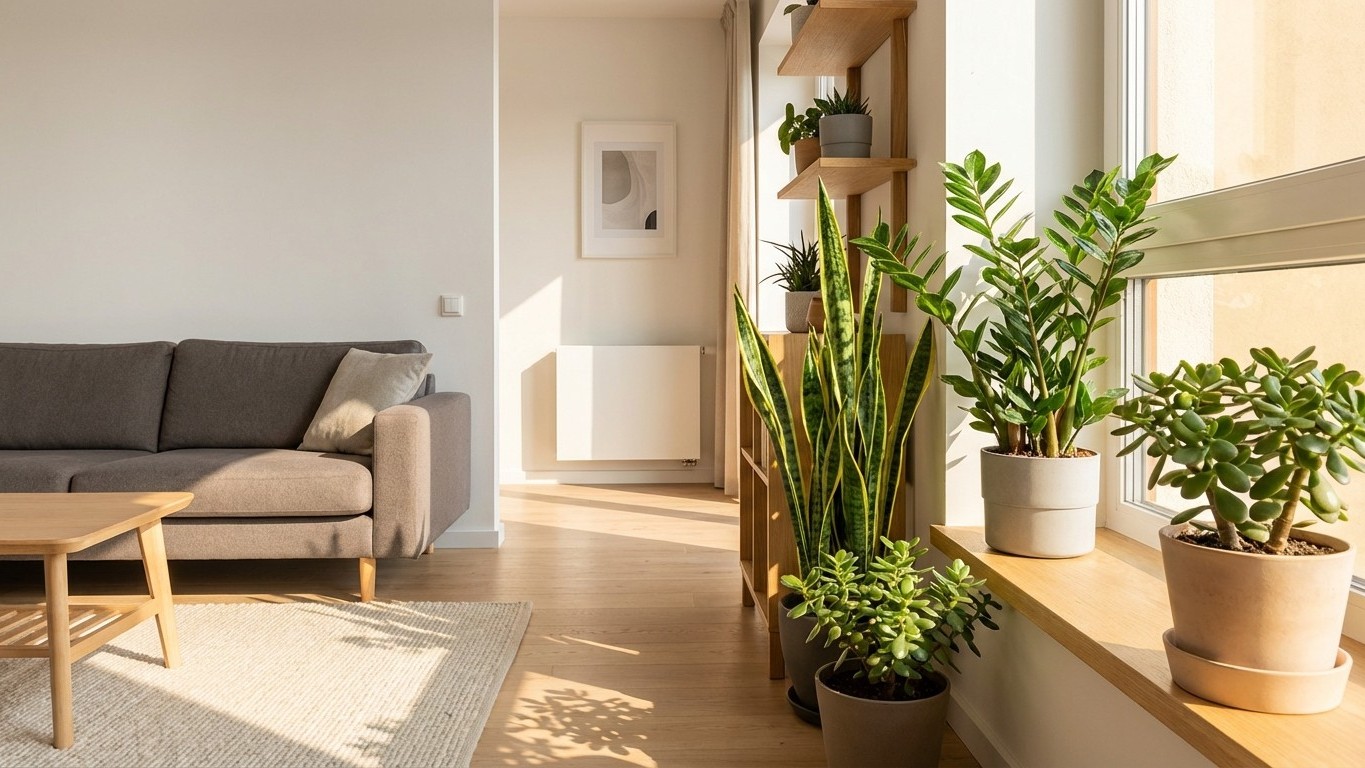
Turn the heat up to 72°F, close all the windows, and let winter do its thing — and suddenly your lush indoor garden looks like a scene from a drought documentary. Brown tips, curling leaves, soil that cracks within days. The culprit isn’t your watering schedule.
Dry indoor air results from the heating system zapping humidity. Most indoor houseplants are tropical natives, used to humidity levels of about 40 to 50 percent, yet the humidity in a typical winter home can drop as low as 20 percent.
That’s the equivalent of living in a desert, for a plant designed for the humid tropics.
The good news is that not every plant suffers this fate. A select group of species has evolved, or simply adapted, to handle low ambient moisture, warm temperatures, and the relentless blast of a radiator. Understanding which ones make the cut, and why, completely changes how you approach indoor plants care varieties houseplants.
Why Some Indoor Plants Tolerate Heat and Dry Air
Physiology and Adaptations to Dry Environments
Plants have evolved to endure drought stress with an array of morphological, physiological, and biochemical adaptations.
For indoor species, these traits translate directly into survival under a blasting heater. The most visible strategy is leaf structure.
Thick, leathery leaves with waxy cuticles perform the dual function of cutting down on water loss and reflecting heat away from the plant.
Think of the Sansevieria, the ZZ plant, or the jade plant, all of them sport this kind of armor.
Desert succulents have thick fleshy leaves with a thick waxy layer to prevent water loss. They also have extensive root systems that search for water, and some have specialized roots that form large bulb structures — underground water reservoirs for the plant.
The ZZ plant’s rhizomes are a perfect indoor example: they store water for months, making weekly watering entirely unnecessary.
Some drought-tolerant plants also have tiny hairs, or trichomes, on their leaves. These hairs help trap moisture near the leaf surface and reflect sunlight, reducing water loss.
There’s also a less visible but equally powerful mechanism: stomatal regulation.
The stomatal regulation of plants through enhanced ion transport, transcription factor activities, and abscisic acid (ABA) signaling are involved in the molecular mechanisms of plant response to drought stress.
In plain terms, drought-adapted plants simply close their pores faster when they sense dry conditions, losing far less moisture per hour than their thin-leaved, tropical cousins.
Specific Risks Linked to Heating and Prolonged Dry Air
In dry environments such as those created by heating, fans, or air conditioning, even a well-watered plant will show signs of stress. The lack of humidity is similar to what we feel when heated air dries out our throat or lips.
Plants lose water through their leaves via transpiration, and when the surrounding air is too dry, water escapes faster than roots can replenish it. Stress accumulates silently, long before you notice any visible damage.
Beyond the humidity problem,
heat-tolerant plants don’t like wide temperature fluctuations. Avoid placing them near heat or air conditioner vents, drafty windows, or exterior doors — all of which can cause cold or hot bursts that stress your plants.
The danger isn’t just the heat itself.
Spider mites and other pests love dry air, making your plants even more susceptible to pest infestations.
A weakened, dehydrated plant becomes an easy target.
Top 10 Indoor Plants That Resist Heat and Dry Air
This list isn’t built on aesthetics alone. Each plant here has a verified track record in heated apartments, offices with poor ventilation, and summer rooms where humidity plummets. For a deeper dive into choosing by light, pet safety, and space, explore our guide to houseplant varieties.
1. Sansevieria (Snake Plant / Mother-in-Law’s Tongue)
Sansevierias are perfect for warmer environments due to their natural adaptation to arid conditions in West Africa. There are 70 species of this plant offering a variety of heights, colors, and shapes. Their thick, waxy leaves store water efficiently, making them resilient to heat and drought.
Watering once every two to three weeks in winter is entirely adequate. If you can kill a snake plant, you’re truly trying.
2. Zamioculcas Zamiifolia (ZZ Plant)
The ZZ plant is tolerant of drought, low light levels, and neglect. It barely needs to be watered — about twice per month is enough. ZZ plants are appreciated for their qualities when grown as houseplants because they can grow with very little maintenance or change to your current indoor environment.
Its waxy, smooth leaves can retain water, allowing it to thrive in hot, dry environments.
3. Cacti and Succulents
Drought-resistant succulents have fleshy leaves and stems that store water for later use. These plants can go for several days without watering.
Cacti and succulents are used to heatwaves and drought. Sansevieria, Haworthiopsis attenuata, and Gasteria acinacifolia can get through a heatwave lasting several weeks without any particular maintenance.
Just give them a bright window and minimal water, they do the rest.
4. Aspidistra (Cast Iron Plant)
Cast iron plants are great for indoors and outdoors. Indoors, they receive attention for their lush, substantial foliage. They are understory plants native to Asia that prefer low light and humidity in the 40-50% range.
The name says everything. This plant tolerates neglect, dim rooms, and dry radiator air with the stoic indifference of a plant that simply refuses to fail.
5. Aglaonema (Chinese Evergreen)
The Aglaonema, commonly known as the Chinese Evergreen, is a very tough but beautiful addition to your indoor garden. Famous for its variegated leaves in blends of green, cream, and red hues, this plant can thrive in almost any indoor condition. It is a star performer among low-maintenance houseplants.
This plant is not picky about humidity, so it’s perfect for homes with dry indoor air.
6. Scindapsus / Pothos (Devil’s Ivy)
Golden pothos is also called devil’s ivy because it’s pretty much impossible to kill. You can forget to water it and even forget to give it light for long periods, and it’ll still be green whenever you finally remember.
Pothos is an easy-to-care-for houseplant that thrives in varying conditions. It can tolerate high temperatures as long as it is not placed in direct sunlight, which can scorch its leaves.
7. Chlorophytum (Spider Plant)
Spider plants are well-adapted to varying conditions and can handle high temperatures if kept well-watered. These plants are fast-growing, and their arching leaves look beautiful cascading from a hanging basket.
The Spider Plant enjoys a well-lit spot but also thrives in low-light conditions.
One honest caveat: their leaf tips will brown in very dry air, which is cosmetic rather than fatal, simply snip them off with clean scissors.
8. Yucca
Spineless yucca plants are showy houseplants that grow quite tall over time. Native to Mexico and Guatemala, the yucca is accustomed to growing in dry conditions.
Give it a bright, sunny spot and water it sparingly. Yuccas take up architectural space beautifully while demanding almost nothing in return, a fair trade in any heated living room.
9. Crassula (Jade Plant)
Jade plants are succulents, meaning they store water in their fleshy leaves and can handle periods of drought, making them perfect for forgetful waterers. They also tolerate a range of light conditions, though they prefer bright, indirect light.
Water only once every 2–3 weeks; the jade plant resists drought by storing water in its thick leaves and handles the combination of cold drafts and hot dry air well.
10. Philodendron
An easy-to-grow heartleaf philodendron can be found in many homes — it may be the most popular philodendron species sold today. Native to parts of Mexico and Central America, it needs moderate watering and little maintenance to grow into a gorgeous trailing vine.
Philodendrons appreciate some occasional misting during very dry spells, but otherwise adapt admirably to average household conditions. If you’re just starting out, our article on the best indoor plants for beginners covers why philodendrons earn their place at the top of the beginner list.
How to Care for Plants in Dry Air and Heat
Adapted Watering Tips
The instinct when leaves look stressed is to water more. Wrong move.
Dry air does not mean watering the plant more — excess watering can be equally as harmful as a dry environment. Check the soil before watering: stick your finger an inch into the soil. If it’s dry, your plant needs water; if it’s still moist, wait a little longer.
For most drought-tolerant species, the golden rule is simple:
allow the soil to dry out completely between waterings. Water thoroughly, ensuring moisture reaches the roots, but always avoid letting the plant sit in standing water.
Ideally, water deeply during the cooler evening hours, when plant roots can absorb the water and protect themselves from the heat during the day. There is also less evaporation loss into the air during this time.
This single habit change can make a measurable difference in how efficiently your plants absorb what you give them.
Managing Ambient Humidity Without a Humidifier
No humidifier? No problem — at least for the plants on this list. But if you want to push conditions a little further in their favor, three low-tech strategies work reliably.
Placing several pots together creates a humid microclimate. Plants release water vapor, and together, they raise the local humidity around their leaves.
Group your plants on a windowsill or in a corner and let them create their own ecosystem.
The second method involves pebble trays. Fill a shallow tray with gravel, add water just below the top of the stones, and set your pots on top. As the water evaporates, it humidifies the air immediately around the foliage.
Misting leaves with a spray bottle can help in the short term, although it is only a temporary solution. Overuse can be counterproductive, potentially causing fungi.
Mist lightly in the morning, never in full sun, and avoid doing so on plants with hairy or waxy leaves like succulents.
Strategic Positioning and Protection From Radiators and Drafts
Keep your plants as far away as possible from heat sources. If you can feel the heat with your hand, the plant is probably still too close.
A general buffer of 3 to 5 feet from a radiator or forced-air vent is the practical minimum.
Keep houseplants away from cold, drafty windows as well as hot radiators and other heating units, fireplaces, and air vents.
This applies equally in summer (air conditioning vents are just as drying) and in winter. For rooms with limited options, consider placing a plant on a bookshelf at mid-height, where air circulation is gentler and temperature more stable.
If your home has north-facing rooms that get little natural light but stay warm, the low light indoor plants that also tolerate dry air, think Aspidistra, ZZ plant, and Aglaonema, are the most strategic choices.
Useful Tools: Pebble Trays, Clay Balls, and More
Beyond pebble trays, expanded clay pebbles (hydroton) serve double duty: placed in the bottom third of a pot, they improve drainage and prevent roots from sitting in water; used in a tray, they create the same evaporative humidity effect as gravel.
Drought-tolerant plants thrive in well-draining soil. For most, a cactus or succulent mix works well, ensuring that excess water doesn’t sit around the roots, which can cause rot.
Switching to terracotta pots also helps: they breathe, which stabilizes moisture distribution and prevents the root stress that plastic containers can cause during heating season.
Signs a Plant Is Suffering From Heat or Dry Air
Brown or Dry Leaves: Causes and Quick Diagnosis
Dry, curling, or brown tips on your houseplants’ leaves are common signs of overheating and lack of humidity. Plants affected can also turn yellow and drop their foliage or flower buds.
But not all browning is equal.
The location of browning tells you a lot about the cause. Brown tips or margins more often indicate underwatering or low humidity, while browning in the middle of a leaf is more commonly associated with overwatering.
Relative humidity under 40% can significantly speed up water loss from leaf surfaces, especially in thin-leaved species like calathea, maranta, and ferns.
If you’re noticing tip burn on those species specifically, that’s your signal to either boost humidity or swap them out for more resilient varieties.
Slow growth is another sign, dry air stresses plants, slowing or halting their growth. Spider mites and other pests love dry air, making your plants even more susceptible to pests.
What to Do When Your Plant Shows Drought Stress
Act on the environment first, not the watering can. Move the plant away from the heat source, assess the soil moisture before adding water, and group it with other plants immediately.
Boost humidity around your houseplants by grouping plants together to create a micro-climate, or by placing plant pots on a shallow tray filled with pebbles and water.
If the soil has pulled away from the edges of the pot, a sign of severe dehydration, place the entire pot in a basin of water for 20 minutes to allow gradual, deep rehydration from the bottom up. Trim the damaged tips with clean scissors (they will not regenerate, but removing them keeps the plant looking healthy and redirects energy).
FAQ: Indoor Plants and Dry Air
Can You Mist Indoor Plants With a Spray Bottle?
Yes, with limits.
Mist with room-temperature water several times a day if needed. Spray in the morning and evening, before the heat peaks, so that the effect lasts longer. Never spray a plant in direct sunlight during the hottest hours — because of the magnifying glass effect, the drops of water could burn the foliage.
Avoid misting succulents, cacti, or any plant with fuzzy leaves entirely.
Should You Avoid Certain Varieties in a Very Dry Apartment?
Most homes have average or low humidity levels, especially in arid climates or with heating systems. Tropical houseplants won’t thrive in these regions; plants like cacti, succulents, and vigorous vines are ideal.
Specifically, ferns, calatheas, prayer plants, and orchids require humidity levels most heated homes simply cannot provide without a dedicated humidifier. For an exhaustive breakdown of which varieties match which conditions, our indoor plants care varieties houseplants guide is the right starting point.
Can These Plants Be Placed Near a Radiator or in Full Sun?
Most drought-resistant plants prefer warm conditions, typically between 60–75°F (15–24°C). Avoid placing them in drafts or areas with sudden temperature changes.
Full sun is acceptable for cacti, succulents, yucca, and aloe. For the rest, ZZ plant, Aglaonema, Pothos, Philodendron, bright indirect light is the sweet spot.
Avoid placing any of these plants directly near heat vents, drafty windows, or exterior doors, which can cause cold or hot bursts that stress them.
Summary Table: Best Indoor Plants for Dry Air
Here’s a quick reference for the ten plants covered above, because sometimes you just need the facts at a glance:
| Plant | Heat Tolerance | Dry Air Tolerance | Watering Frequency | Light Needs |
|---|---|---|---|---|
| Sansevieria | Very High | Very High | Every 2–6 weeks | Low to bright indirect |
| ZZ Plant | High | Very High | Every 2–3 weeks | Low to moderate |
| Cacti / Succulents | Very High | Very High | Monthly or less | Bright / direct |
| Aspidistra | Moderate | High | Every 1–2 weeks | Low to shade |
| Aglaonema | Moderate–High | High | Every 1–2 weeks | Low to bright indirect |
| Pothos / Scindapsus | High | Moderate–High | Every 1–2 weeks | Low to bright indirect |
| Spider Plant | Moderate | Moderate | Every 1 week | Moderate to bright |
| Yucca | Very High | Very High | Every 2–3 weeks | Bright to direct |
| Crassula (Jade) | High | Very High | Every 2–3 weeks | Bright indirect |
| Philodendron | Moderate–High | Moderate | Every 1–2 weeks | Moderate to bright |
The plants above perform reliably under heating or summer heat conditions, but “tolerant” never means “immune.” Even the toughest snake plant will eventually show wear if placed six inches from a forced-air vent at 80°F for months. The real skill isn’t choosing the right plant once — it’s adjusting care as seasons shift. Winter turns an apartment into a desert; summer turns a south-facing window into a furnace. The species here give you enough margin to navigate both. What changes season to season, though, is which one of them is under the most stress, and that’s worth watching closely.