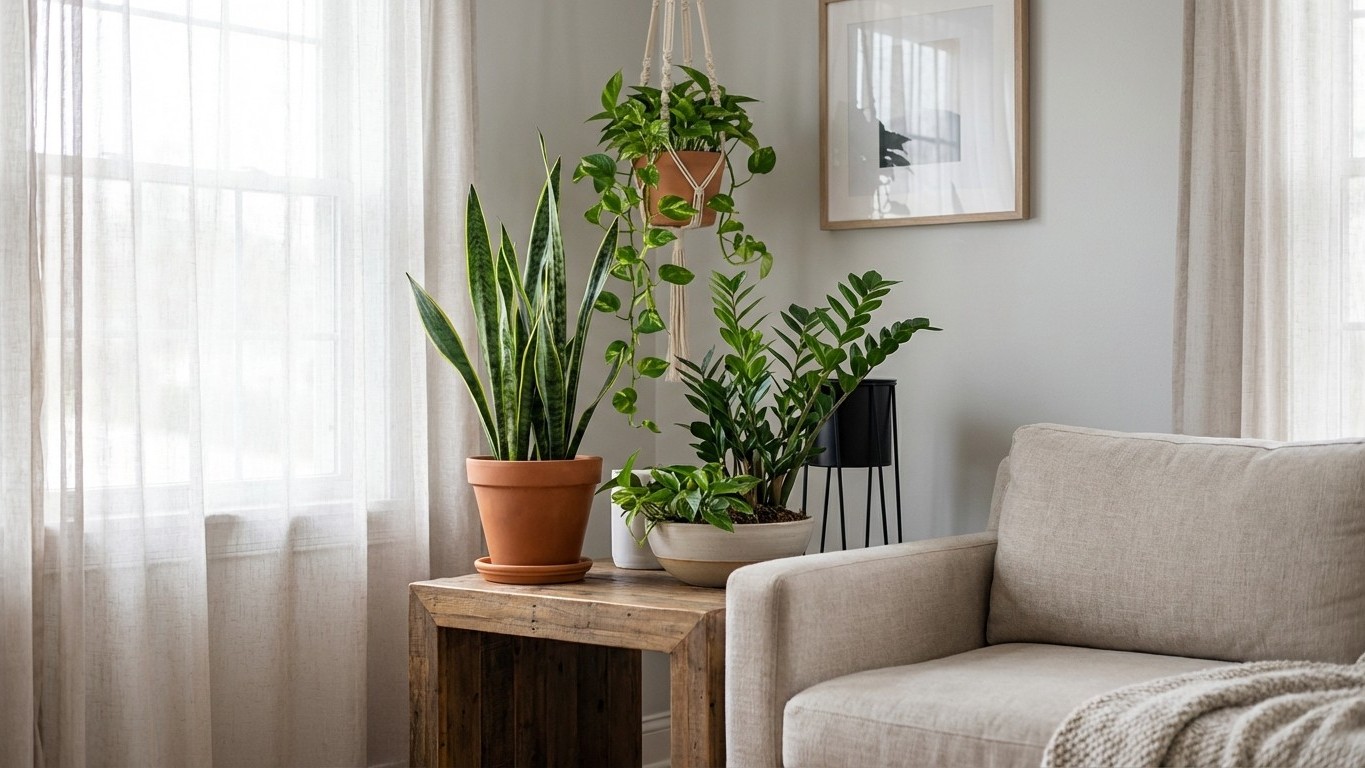
Plenty of homes have “low light”. Few owners measure it.
A hallway that never sees sun. A north-facing bedroom with sheer curtains. A living room where the brightest spot is already “taken” by the sofa. In February 2026, that’s still the most common reason people search for low light indoor plants: not to build a jungle, but to stop losing plants in the same dim corner.
Low light doesn’t mean “no light,” and it definitely doesn’t mean “any plant will adapt.” Some species merely survive while slowly shrinking and stretching. Others keep their shape, hold color, and keep producing new leaves at a realistic pace. This page focuses on the second group, with concrete ways to read your room, then 15 options that are genuinely suited to low-light living.
Why choose indoor plants for low light?
Understanding low light indoors
“Low light” is often used like a vibe. Botanically, it’s closer to a number. Several university-style references define low-light houseplant conditions around 50 to 250 foot-candles, roughly 500 to 2,500 lux for many practical home setups, with some sources describing “low” even lower depending on the measuring method and time of day. The point is simple: indoors, light falls off fast as you move away from a window, even when the room feels bright to your eyes.
One useful mental image: outside at midday, sunlight can be around the five-figure range in foot-candles. Indoors, you’re playing with leftovers. That’s why plants that evolved on forest floors, under a canopy, often cope best in apartments.
Benefits of low-light plants at home
Low-light houseplants solve a very ordinary problem: they let you use the whole home, not just the windowsill. The payoff isn’t only aesthetic. A plant that tolerates shade also tolerates routine, the forgotten watering can, the winter dip in daylight, the week you travel and ask a neighbor for help.
Some of the classic “air-Cleaning” lists that circulate online come from a NASA report from 1989, which tested certain species under controlled conditions. That history is real, but the everyday takeaway needs nuance: a healthy plant can be part of a pleasant indoor environment, yet it’s not a substitute for ventilation and source control. Still, choosing robust greenery for darker spaces is one of the easiest upgrades you can make to how a home feels.
How to evaluate the light in your space
Simple methods to measure light
The fastest tool is already in your pocket. A phone lux meter app is not lab-grade, but it gives you a repeatable reference if you measure the same spot at the same time for several days. Measure at plant height, not standing up, and do it around midday for consistency.
A second method is the shadow test. In low light, you’ll see a weak, blurry shadow or almost none. In brighter indirect light, the shadow is clearer with softer edges. Direct sun gives a hard-edged shadow and usually a hot patch on the floor. That heat is often what burns foliage, not just the photons.
If you want something more formal, a dedicated light meter reads foot-candles or lux. Extension-style guidelines commonly describe “low light” as roughly 25–100 foot-candles in some frameworks, while other references group low-light tolerant houseplants around 50–250 foot-candles. Those ranges overlap enough to be useful: if your reading is consistently under a couple hundred foot-candles in daytime, you are in true low-light territory.
Rooms and exposures that typically count as low light
North-facing windows in the Northern Hemisphere usually produce gentler, steadier daylight. Great for shade-tolerant plants, often too dim for sun lovers. East windows can be kinder than you think because morning sun is shorter and cooler, but distance from the glass still matters.
Typical low-light zones show up in predictable places: bathrooms with frosted windows, entryways, offices where blinds stay half-closed for screen glare, and any spot more than a few steps back from the window line. The difference between “two feet from the window” and “eight feet from the window” can be the difference between growth and slow decline.
If you want a broader framework that accounts for space, pets, and your tolerance for maintenance, you’ll get more context in houseplant varieties and the hub page indoor plants care varieties houseplants, which connect light choice to real household constraints.
Top 15 low light indoor plants that truly cope
Quick comparison table: names, needs, difficulty
- Sansevieria: very low water, tough, slow growth in dim light, easy
- Zamioculcas zamiifolia (ZZ plant): drought-tolerant, slow, easy
- Aspidistra elatior (cast iron plant): steady in shade, moderate water, easy
- Aglaonema (Chinese evergreen): low to medium light, moderate water, easy-medium
- Philodendron scandens: adaptable vine, moderate water, easy
- Pothos (Epipremnum aureum): fast in brighter spots, slower in shade, easy
- Spathiphyllum (peace lily): tolerates low light, likes consistent moisture, medium
- Calathea (Goeppertia): needs humidity, wants brighter indirect than people think, medium-hard
- Maranta leuconeura (prayer plant): similar to calathea, humidity helps, medium
- Boston fern (Nephrolepis): humidity-dependent, dislikes deep darkness, medium-hard
- Chlorophytum comosum (spider plant): tolerant, forgiving, easy
- Dracaena: tolerant, drought-leaning, easy
- Syngonium: adaptable climber, moderate water, easy-medium
- Scindapsus pictus: slower in shade, likes to dry slightly, easy-medium
- English ivy (Hedera helix): cooler rooms help, watch pests, medium
1. Sansevieria (snake plant, “mother-in-law’s tongue”)
Sansevieria is the plant you buy for a dim corner and keep for years. Thick leaves store water, which is why it tolerates missed waterings and why overwatering is the main way people kill it.
In low light it grows slowly, sometimes comically slowly. That’s not failure. That’s the plant budgeting energy. Let the pot dry well between waterings, and use a gritty, fast-draining mix if you tend to “love” plants too much.
2. Zamioculcas zamiifolia (ZZ plant)
The ZZ plant looks glossy and expensive even when it’s doing very little. It stores water in thick rhizomes, so dim light plus wet soil is a bad combination.
Keep it on the dry side, rotate it occasionally for symmetry, and don’t chase growth with fertilizer in winter. If your reading lamp is the brightest thing in that corner, ZZ is still in the conversation.
3. Aspidistra elatior (cast iron plant)
Aspidistra earned its nickname by tolerating neglect, shade, and temperature swings better than most broadleaf houseplants. It’s a solid option for older buildings with drafty windows and lower winter light.
Water when the top layers dry, wipe leaves now and then so dust doesn’t steal the little light it receives, and accept its slow, steady rhythm.
4. Aglaonema (Chinese evergreen)
Aglaonema is the workhorse of low-to-medium light interiors, with many cultivars offering patterns and color. The catch: highly variegated or very colorful forms often want brighter indirect light to keep their look, because pale leaf areas photosynthesize less than green tissue.
If color fades or stems stretch, move it closer to a window without adding direct sun. For people building a broader plant collection, this is a good bridge species between “true low light” and “bright indirect.”
5. Philodendron scandens (heartleaf philodendron)
Vines are practical in low light because they let you place foliage where you want it: trailing off a shelf, wrapping a moss pole, softening a doorway. Heartleaf philodendron tolerates shade better than many trendy aroids.
Keep the soil lightly moist but not constantly wet, and prune to encourage fuller growth. Leggy growth is a light message, not a watering message.
6. Pothos (Epipremnum aureum)
Pothos is often recommended for beginners for a reason: it forgives. In low light it will slow down and the internodes may lengthen, but it usually keeps going. That reliability is why it’s frequently listed among classic indoor plants for everyday homes.
One caution for households with pets: many common aroids, including pothos and philodendrons, are listed as toxic to cats and dogs by veterinary resources. If your cat chews leaves, placement matters more than plant choice.
If you’re assembling a first collection, the page best indoor plants for beginners pairs well with pothos-style choices and explains what “forgiving” really looks like over months, not days.
7. Spathiphyllum (peace lily)
Peace lily is the classic answer to “Is there a flowering plant for a darker spot?” It can bloom in brighter indirect light, and it can tolerate lower light, though flowering usually decreases as light drops.
Its drama is useful: it droops when thirsty, then recovers after watering. That said, constant sogginess invites root issues. Aim for evenly moist soil, not swamp conditions.
8. Calathea (often sold under Calathea, botanically many are Goeppertia)
Calatheas are marketed as low-light plants because they scorch in direct sun. Different issue. Many calatheas prefer bright, filtered light to look their best, and in truly dim rooms they can decline or lose pattern intensity.
What they do tolerate is no direct sun. What they demand is humidity and consistent care. If your home is dry in winter, expect crispy edges unless you add humidity support.
9. Maranta leuconeura (prayer plant)
Maranta is the friendlier cousin in the “prayer plant” category for many homes, though it still likes humidity and stable watering. In low to medium light, its leaf movement and patterns bring life to a shelf where other plants look static.
Use soft water if your tap water is very hard and you notice browning tips. Keep it away from heating vents. Small details matter with maranta.
10. Boston fern (Nephrolepis)
Boston ferns are often lumped into “low light” lists, but they don’t love deep darkness. Many homes place them in a dim corner, then wonder why fronds thin out.
They tend to do best in bright, indirect light with stable humidity, which is why bathrooms and kitchens can work if there’s a window. If you can’t offer humidity, choose a tougher low-light plant and save the fern for a more suitable spot.
11. Chlorophytum comosum (spider plant)
Spider plants are a practical choice for low to medium light, and they telegraph stress early through pale leaves or slowed growth. They also produce plantlets when happy, which makes them feel generous in a way many slow growers don’t.
Let the top inch dry between waterings, and don’t oversize the pot. Rootbound spider plants can still perform fine, and too much soil stays wet too long in low light.
12. Dracaena
Dracaenas are built for indoor life: upright shape, tolerance for lower light, and a drought-leaning watering style. They’re a strong pick for offices and bedrooms where you want a clean silhouette.
Watch watering discipline. In low light, the plant’s water use drops, so your schedule should slow down too. If leaf tips brown, check humidity and water quality, but start by checking whether the pot is staying wet.
13. Syngonium (arrowhead vine)
Syngonium adapts well and can be trained to climb or trail. It’s a useful “design plant” for low to medium light because it fills space without demanding sun.
In dimmer rooms, keep it lightly on the drier side to avoid root stress. If it reaches toward the window and elongates, that’s your cue to move it a little closer to light or add a small grow light.
14. Scindapsus pictus (satin pothos)
Scindapsus pictus gives you a silver pattern that reads as decor, even from across the room. In low light it grows slowly, but it can hold on better than many patterned plants.
Don’t treat it like a fern. Let it dry slightly between waterings, keep it warm, and resist frequent repotting. Low light means low demand.
15. English ivy (Hedera helix)
Ivy can work indoors, particularly in cooler rooms with decent indirect light. It’s often used as a trailing plant for Shelves, and it can handle lower light than many trailing ornamentals.
It also attracts pests like spider mites when conditions are too warm and dry. If your home runs hot in winter, ivy may become a maintenance project.
Care tips specific to low light indoor plants
Water, humidity, fertilizer: what to adjust
Low light changes the math. Photosynthesis slows, growth slows, and water use drops. Result: the same watering schedule that worked by a bright window can rot roots in a shaded corner.
A good default is to water based on dryness, not the calendar. Check the pot’s weight, use a finger test, or use a wooden skewer to see if the lower soil stays wet. If you learn one skill for low-light plant care, make it this one.
Fertilizer should also scale down. Feeding heavily in low light can push weak, soft growth. In many homes, a light feeding during active growth seasons is enough, and some slow growers barely need it if you repot occasionally with fresh mix.
Humidity is a different story: low light doesn’t automatically mean high humidity. Central heating can turn a winter Apartment into a crisp desert. Calathea, maranta, and ferns respond to that fast, while sansevieria and ZZ won’t care.
Managing growth and repotting
Repotting is often oversold as a fix. In low light, a bigger pot can be a trap because extra soil holds extra water. Many low-light plants prefer to be slightly snug in their container.
Pruning is more useful. For vines like pothos and philodendron, cutting back leggy growth encourages branching and a fuller look. For upright plants like dracaena, rotating the pot keeps growth even.
If you want a deeper framework on routine care and species differences, easy care indoor plants and indoor plants care varieties houseplants help you build habits that match your lifestyle, not the other way around.
Common mistakes to avoid with low light indoor plants
Overwatering, wrong light assumptions, poor variety choice
The biggest mistake is treating “low light tolerant” like “low light loving.” Many plants tolerate shade, but they still prefer brighter indirect light for stronger growth. If you expect fast growth in a dim hallway, you’ll overcorrect with water and fertilizer. That’s when plants decline.
Another error is believing in “zero light houseplants.” A plant can be maintained under artificial light, and some can survive surprisingly dim conditions for a while, but complete absence of usable light is a slow countdown.
Variety choice matters too. Highly variegated plants generally need more light than their greener equivalents. If your goal is Success in low light, choose greener forms and let pattern be a bonus, not the mission.
Pet households face a separate pitfall: many popular low-light picks are on veterinary toxicity lists. If you have cats that chew, treat placement and plant selection as part of the same decision, not an afterthought.
Integrating low light plants into your decor
Display ideas: unexpected spots, groupings, accessories
Low light plants open up the “dead zones” of decor: the top of a bookshelf away from the window, a bathroom corner, the space beside a media console. The trick is to match plant architecture to the furniture line.
Try upright forms like sansevieria and dracaena to echo vertical shelves and door frames. Use trailing plants like philodendron, pothos, and scindapsus to soften hard edges, especially where you’d normally hang art.
Grouping helps too. Three medium plants together read like a design choice, while one struggling plant in a dim corner reads like an accident. Choose pots that fit the room, then pick plants that fit the light, not the other way around.
If you can’t change the room, change the light. A small grow light aimed at one shelf can turn “survival” into real growth without rearranging your life.
Frequently asked questions about low light indoor plants
Which plants can really live without direct sun?
Many houseplants prefer zero direct sun, especially those that naturally grow under forest canopies. Snake plant, ZZ plant, cast iron plant, aglaonema, pothos, and heartleaf philodendron are among the most reliable options for no direct sun. “No direct sun” still allows bright indirect light, and most of these plants look better with more indirect light than the minimum.
How do you know if an indoor plant lacks light?
Look for slow or Stopped growth during seasons when it should grow, smaller new leaves, longer gaps between leaves on vines, and a leaning or stretching habit toward the nearest window. Some plants also lose pattern or color intensity. A lux reading that stays very low at plant height during daytime helps confirm the suspicion.
What mistakes should you avoid to keep a low light plant healthy?
Overwatering is the classic one. Another is moving a plant from low light to much brighter light suddenly, which can scorch leaves even if the plant “wants more light.” Increase light gradually. Finally, avoid using a heavy, water-retentive soil in a dim spot, it stays wet too long.
Do you need to change watering for low light plants?
Yes. Low light usually means slower water use. Water less often, and base it on soil dryness rather than a weekly routine. For drought-tolerant plants like sansevieria and ZZ, err on the dry side. For peace lily, maranta, and ferns, aim for consistent moisture without waterlogging.
Are there flowering plants for a dark corner?
Peace lily is the usual candidate because it can tolerate lower light than many flowering houseplants, although blooms tend to be better with brighter indirect light. In very dark corners, expect foliage more than flowers. If flowers are the goal, consider adding a small grow light rather than chasing a mythical “shade-Blooming” indoor plant.
What to do next
Pick one dim spot in your home, measure it for three days at the same time, then choose a plant that matches that number instead of the marketing tag on the pot. If you want help selecting based on room size, pet safety, and how hands-on you want to be, follow the path through houseplant varieties and then refine your shortlist with easy care indoor plants. After that, you’ll have a more interesting problem: once a dark corner finally looks alive, which corner gets the next plant?