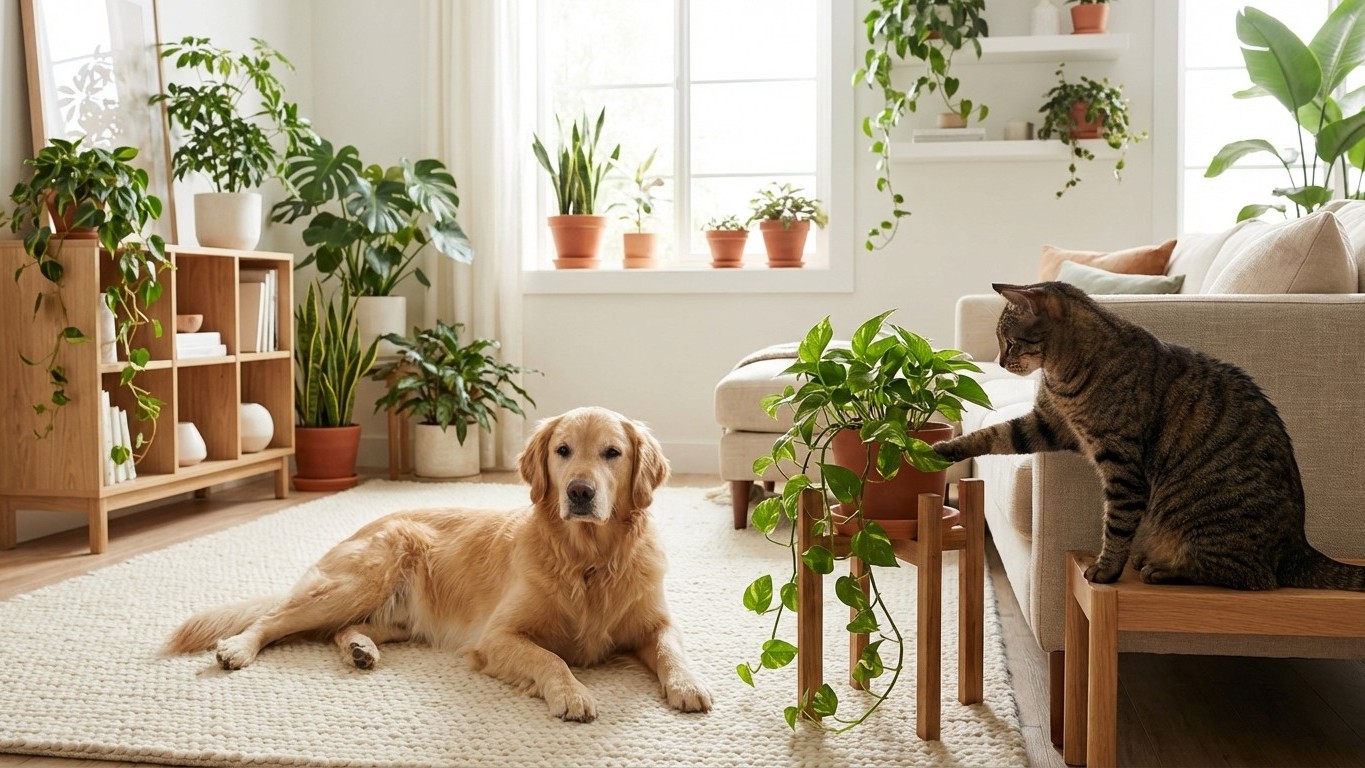
Why Your Choice of Houseplants Can Become a Vet Emergency
A cat nibbles on a trailing leaf while you’re at work. A dog sniffs and bites a stem left on the floor. These scenes play out in millions of homes every day, and most of the time, nothing happens. But sometimes they do.
The ASPCA Poison Control Center reported over 10,000 cases of cats and dogs admitted to veterinary hospitals due to indoor plant ingestion in 2020.
That number alone makes the case for thinking carefully before bringing any new plant through the front door. The good news? The list of genuinely safe, beautiful, and easy-to-grow pet safe houseplants is much longer than most people think.
This guide compiles verified, ASPCA-backed information to help you build a lush indoor garden without putting your animals at risk. No vague advice, no recycled lists. Just facts, organized by use case, with the nuances that actually matter.
Understanding the Risks: Toxic vs. Non-Toxic Plants
The word “toxic” covers a wide spectrum. On one end, a mildly irritating plant causes a bit of drooling. On the other, a single chewed leaf from a true lily can trigger kidney failure in a cat within 72 hours.
The ASPCA points out that the consumption of any plant material may cause vomiting and gastrointestinal upset for dogs and cats, but plants listed as non-toxic are not expected to be life-threatening to pets.
That distinction matters enormously.
The most common toxic culprits in homes share one mechanism: calcium oxalate crystals.
The main toxic agent present in plants like Monstera is needle-like, insoluble calcium oxalate crystals. The sap can cause irritation and inflammation of the mouth, throat, eyes, and digestive tract.
Pothos, philodendrons, peace lilies, and dieffenbachias all fall into this category. They are everywhere. They are often sold without warning labels. And
many philodendrons are considered moderately toxic for cats and dogs because they contain insoluble calcium oxalates.
There is also an important cat-specific consideration.
Cats have insufficient glucuronidation, a detox pathway, making them more sensitive than dogs to certain plant compounds.
A plant that only causes a mild stomach upset in a dog can be significantly more serious for a cat. Check both species when you research, not just one.
A Verified List of Pet Safe Houseplants
The following plants are classified as non-toxic to cats and dogs based on the ASPCA database. Scientific names are included to avoid the confusion that common names inevitably create. “Asparagus fern,” for instance, is not actually a fern and is toxic, while a true Boston fern is entirely safe.
Robust and Low-Maintenance Options
These are the plants that survive neglect and reward beginners, which also happen to be among the safest choices for pet owners. If you’re just getting started, you’ll find more detail on these kinds of varieties in our guide to best indoor plants for beginners.
- Spider Plant (Chlorophytum comosum):
Spider plants are very popular, non-toxic houseplants for cats and dogs, also known to help purify indoor air. They are fast-growing and can survive in different light conditions.
One note:
spider plants can have a catnip-type effect on some cats, so even though they are pet safe, you might want to keep them slightly out of reach if you don’t want them eaten. - Peperomia (Peperomia spp.):
The ASPCA classifies the Peperomia plant as pet-friendly and non-toxic to dogs and cats.Peperomia is a genus of tropical plants native to Mexico, South America, and the Caribbean. With more than 1,000 known species, these hearty non-toxic plants boast thick, fleshy leaves that contribute to their drought tolerance.
- Calathea / Prayer Plant (Calathea spp., Maranta leuconeura):
The ASPCA classifies Calathea as a pet-friendly plant, non-toxic to dogs and cats.Calathea, known for its striking, patterned foliage, thrives in warm, humid conditions. Its leaves move in response to light changes, and its air-purifying qualities enhance indoor environments while its non-toxic nature makes it safe for homes with pets and children.
- Money Tree (Pachira aquatica):
The ASPCA classifies the Money Tree as a pet-friendly plant, non-toxic to dogs and cats.
It tolerates a range of light conditions and adds architectural interest to any room. - Haworthia (Haworthia spp.): A compact succulent that is ASPCA-approved as safe for pets.
Succulents can help improve air quality and most are safe for dogs and cats, including Echeveria and Haworthia.
A useful alternative for those who love the succulent look without the risk of aloe, which is toxic.
For anyone managing lower-light conditions at home, our dedicated guide to low light indoor plants includes several of these pet-safe options with specific placement advice.
Flowering and Decorative Options
Color matters. A completely green home can feel clinical, and many pet owners wrongly assume that flowering plants are automatically dangerous. Several are not.
- African Violet (Saintpaulia spp.):
African violets are non-toxic to both cats and dogs, making them a safe and pet-friendly option. These plants are known for their vibrant blooms in shades of purple, pink, and white, adding a pop of color to any space. - Phalaenopsis Orchid (Phalaenopsis spp.):
The ASPCA classifies the Phalaenopsis orchid as a pet-friendly plant, non-toxic to dogs and cats.Orchids are definitely safe for feline and canine friends and they also help purify the air.
- Christmas Cactus (Schlumbergera bridgesii):
The ASPCA classifies the Christmas Cactus as a pet-friendly plant, non-toxic to dogs and cats.
Unlike many seasonal plants (poinsettia, amaryllis), this one earns a permanent place in a pet household. - Gerbera Daisy (Gerbera jamesonii):
Gerbera daisies are not only air-purifying plants, but they are also safe for pets, and they produce beautiful, long-lasting flowers. - Boston Fern (Nephrolepis exaltata):
The ASPCA classifies the Boston Fern as a pet-friendly plant, non-toxic to dogs and cats.Boston Ferns not only purify indoor air, they also act as a natural living humidifier, making them a perfect choice in winter.
Trending and Original Options
Minimalist interiors and the indoor jungle aesthetic are still dominating home décor in 2026. For those who want to follow trends without exposing their pets to risk, here are some alternatives that hold up stylistically.
- Parlor Palm (Chamaedorea elegans):
The ASPCA classifies the Parlor Palm as a pet-friendly plant, non-toxic to dogs and cats.Parlor palms can handle lower light conditions, making them perfect for those tricky spots in the home.
Worth noting:
many species of palms are incredibly toxic to cats and dogs, but others are not
, so always verify the scientific name before buying. - Air Plants (Tillandsia spp.):
Air plants are wonderful houseplants that are safe for cats and dogs. These unique pet-friendly indoor plants don’t require soil to grow, making them a versatile and low-maintenance choice for any home. - Fittonia (Fittonia spp.): Also known as the nerve plant.
These plants are compact with striking patterned foliage. Fittonia is relatively easy to care for, tolerating a range of lighting conditions and preferring to be kept moist.
Safe for both cats and dogs according to the ASPCA. - Watermelon Peperomia (Peperomia argyreia):
The Watermelon Peperomia is a non-toxic houseplant with decorative foliage resembling watermelon stripes.
One of the most photogenic plants in this list, and completely safe. - Areca Palm (Dypsis lutescens): Classified as non-toxic by the ASPCA.
Pet-safe palm varieties include Areca, bamboo, ponytail, and parlor palms.
The areca palm in particular provides that tropical indoor-jungle feel that many decorating trends lean into right now.
For a broader overview organized by care level and room placement, see our complete guide to houseplant varieties.
How to Verify That a Plant Is Non-Toxic
The single most reliable source for checking plant toxicity is the ASPCA Animal Poison Control Center database.
The ASPCA Animal Poison Control Center maintains a complete authoritative list of over 1,000 toxic and non-toxic plants.
The database is searchable by common name and scientific name, and it separates results by animal species. Always use the scientific name to search, because common names are unreliable. Several completely different plants share the same nickname.
A real-world example: “asparagus fern” sounds harmless and fern-like, but
asparagus fern is not actually a fern and it is toxic.
Meanwhile, the Boston fern, which looks superficially similar, is entirely safe.
While true ferns like the Boston fern are pet-safe, not all plants with “fern” in their name are non-toxic.
This kind of distinction is exactly why cross-referencing the scientific name on the ASPCA database before buying anything is non-negotiable.
If you cannot identify a plant precisely, don’t bring it home. And if a nursery or seller cannot provide the scientific name, walk away.
Integrating Pet Safe Plants at Home
Placing Plants Out of Reach vs. Leaving Access
Even with non-toxic plants, ingestion can cause mild stomach upset.
While these plants are non-toxic to pets and humans, you still shouldn’t allow your pets to eat them. Pets may still experience upset stomach and vomiting if they eat too much of any plant, though you’ll have peace of mind knowing these plants won’t cause lasting damage.
For that reason, even a verified safe plant should ideally be placed thoughtfully.
Place your plants on high shelves or in hanging pots to prevent your pet from nibbling on your greenery.
Dogs in particular rarely reach hanging plants, while cats, who are expert climbers, present more of a challenge. For toxic plants you’re not ready to give up,
try to keep plants that are mildly toxic to cats and dogs out of their reach, behind other plants, or in a room your pets have no access to.
Training Your Pets and Organizing the Space
Some cats simply ignore plants their entire lives. Others treat every trailing vine as a toy.
The age of the animal matters: the young tend to be more severely affected due to their curiosity and lack of detoxifying enzymes, and boredom, especially in single household pets, increases the risk of plant exploration.
A kitten in a new home is a very different risk scenario than a five-year-old dog who has never shown interest in your shelf plants.
Keep your cat less interested in your houseplants by getting some cat grass.
Cat grass (usually wheat grass or oat grass) gives cats a legitimate and safe outlet for their plant-nibbling impulse. For dogs, heavy planters that resist tipping are worth the investment:
create an intriguing arrangement of dog-safe plants using stable, heavy planters that your dog won’t overturn easily.
Debunking Common Myths About “Safe” Plants
Myth one: all air-purifying plants are safe. False, and this confusion causes real accidents. Some of the most promoted air-purifying houseplants are among the most dangerous for pets.
Beautiful plants like Peace Lily, Snake Plant, or Aloe Vera can harm pets if chewed.
Aloe vera, in particular, has an almost universal reputation as a healing plant for humans, but
these plants are not safe for either dogs or cats. Their white sap can cause severe vomiting, diarrhea, lethargy, tremors, and general central nervous system depression.
Myth two: the Peace Lily is safe because it’s not a “true” lily. Partially true, but misleading.
Peace lilies contain calcium oxalate crystals, which make the plant toxic to pets and humans. Still, peace lilies are only mildly poisonous
compared to true lilies. The ones to absolutely avoid around cats are day lilies and true lilies:
it’s day lilies and true lilies you must steer clear of, often found indoors in cut flower arrangements. Those types of lilies can be fatal and cause irreversible kidney damage for cats within just days if not treated as an emergency.
Myth three: if your pet has lived with a plant for years without incident, it’s safe.
While all parts of non-toxic plants are regarded as non-toxic if accidentally ingested, individual pets might have specific allergies or sensitivities, so it’s important to observe any changes in your pet’s behavior or health when introducing new plants to your household.
The same applies to fertilizers:
be cautious of fertilizers and plant food, as they can absolutely be harmful to pets if ingested.
Myth four: you must ban all plants if you have pets.
The good news is that having dogs and cats doesn’t mean giving up a beautiful home and garden.
The list of verified safe plants is extensive. Pet ownership does not require bare windowsills.
FAQ: Pet Safe Houseplants (Non-Toxic)
Which houseplants are truly safe for both cats and dogs?
Pet-safe, air-purifying indoor plants include the spider plant, areca palm, Boston fern, money tree, Chinese money plant, and various calatheas. Other good options are prayer plants, African violets, and peperomia varieties.
Always confirm the specific species using its scientific name, as related plants within the same genus can differ in toxicity.
How do I know if a plant is toxic to my pet?
The ASPCA database is the reference standard.
Check whether the plant you intend to buy is on the ASPCA list of toxic plants to avoid bringing plants you’re unsure about into your home.
When in doubt, your vet can also advise, or you can call the ASPCA hotline before purchasing.
What if my cat or dog has chewed on a houseplant?
Stay calm to assess the situation. Identify the plant ingested, as knowing the specific plant can help veterinarians provide targeted care.
Check for signs of poisoning such as vomiting, diarrhea, drooling, or lethargy, then contact your vet immediately or call the ASPCA Animal Poison Control Center at (888) 426-4435.
Are air-purifying plants automatically pet safe?
No. This is one of the most widespread misconceptions.
Dogs and cats can experience anything from mild illness to death, depending on the plant. Common air purifiers that are not pet-friendly include snake plants, rubber plants, pothos plants, aloe vera, and the sago palm.
Do I need to remove all plants from my home if I have pets?
There are lots of houseplants that are completely pet safe, and even indoor plants that aren’t are mostly mildly toxic.
With careful selection and strategic placement, you can maintain a rich indoor garden alongside cats and dogs without meaningful risk.
Resources for Identifying and Buying Pet Safe Houseplants
Three tools belong in every pet owner’s toolkit before any plant purchase:
- The ASPCA Toxic and Non-Toxic Plants database (aspca.org) is the most comprehensive reference available, searchable by animal species and plant name.
If your animal is ill or may have ingested a poisonous substance, contact either your local veterinarian or the ASPCA Poison Control’s 24-hour emergency poison hotline at (888) 426-4435. - When buying from a nursery,
mention the fact that you have pets to staff members.
A good nursery will be able to verify species and point you toward safer alternatives. - Cross-check both dogs and cats separately.
Certain plants might be non-toxic to dogs but can cause digestive issues in cats, and vice versa. It’s important to double-check if your green companion is completely safe for your specific pet, especially if you have both a dog and a cat at home.
Our complete reference on indoor plants care varieties houseplants covers care requirements and species selection with depth that goes well beyond a basic toxicity check.
The Question Worth Asking Before Every Purchase
Living surrounded by plants and sharing that home with animals isn’t a contradiction. It’s a balance that thousands of households strike successfully every day. The errors happen not from bad intentions, but from assumptions: that a beautiful plant is a safe plant, that “natural” equals “harmless,” that what didn’t cause a problem last year won’t cause one this year with a new, younger, or more curious animal in the house.
The verified list of pet safe houseplants is genuinely impressive in its variety, covering everything from sculptural palms to cascading peperomias to orchids that bloom year after year. There is no category of aesthetic or room condition that leaves a pet owner without options. The real question isn’t whether you can have plants and pets under one roof. It’s whether you’re willing to spend five minutes on the ASPCA database before each new purchase. That’s the only habit that separates a beautiful, safe indoor garden from an accidental vet visit.