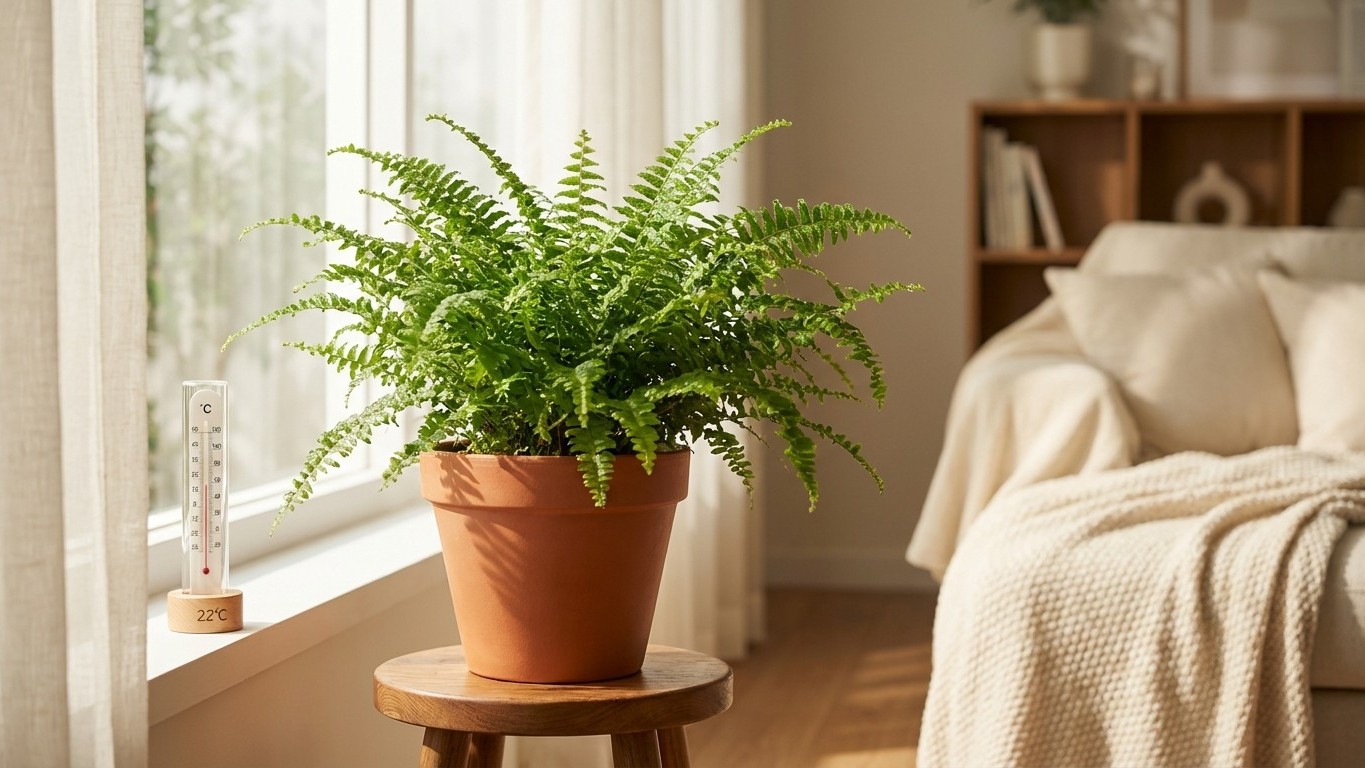
Your houseplants aren’t just sitting there looking pretty. Every second, they’re breathing, converting light into energy, and running thousands of biochemical reactions that keep them alive. Temperature sits at the heart of all these processes, acting as the invisible conductor of your plant’s internal orchestra. Get it wrong, and the music stops.
Why Temperature Matters for Indoor Plant Health
Plants don’t have thermostats. They can’t grab a blanket when it’s cold or turn on a fan when it’s hot.
For most plants, photosynthesis and respiration operate best between 15-30°C. When the temperature falls outside this range, the rate of photosynthesis decreases, leading to stunted growth, and respiration decreases, leading to decreased energy production.
Cycle biologique et respiration des plantes
If temperatures become too high, respiration can overtake photosynthesis, causing the plant to consume energy faster than it can produce it, leading to wilting or death.
Picture this as a bank account: photosynthesis deposits money, respiration withdraws it. Your plant needs more deposits than withdrawals to stay healthy.
Warmer temperatures speed up the respiration process.
During the day, this works fine because photosynthesis keeps pace. But at night, when the lights are out and your plant can’t photosynthesize,
the plant’s metabolism slows down, and they conserve food and water collected throughout the day.
This explains why slightly cooler nighttime temperatures actually benefit most houseplants.
Understanding this biological rhythm helps you make smarter decisions about where to place your plants. For a deeper dive into all the factors that keep your green companions thriving, check out our guide on indoor plant care.
Temperature Thresholds for Houseplants: General Guidelines and Common Examples
So what’s the magic number?
The ideal temperature range for indoor plants is usually between 18 and 24 degrees Celsius. In general, this is a safe range for most species.
That’s roughly 65°F to 75°F. Conveniently, this overlaps with what most humans find comfortable.
Minimum and Maximum Temperatures Tolerated
In general, foliage indoor plants grow best between 70° and 80°F during the day and from 60° to 68°F at night; most flowering indoor plants prefer the same daytime range but grow best at nighttime temperatures of 55° to 60°F.
Above 75°F (24°C) is too high for most plants indoors. The main reason they are intolerant of higher temperatures indoors is because they don’t have the same conditions, such as air humidity and sunlight which promotes growth without confining the heat.
On the cold end,
most houseplants start to get uncomfortable when temperatures dip below 10°C (50°F). Some might tolerate a bit lower, but others can start showing signs of stress even above this threshold.
Specific Cases: Tropicals, Succulents, and More
Tropical plants often need warmer temperatures to thrive. However, if you keep them indoors, they can tolerate somewhat cooler temperatures as long as they do not drop below 10 degrees Celsius.
Think philodendrons, monsteras, peace lilies, and pothos. These forest-floor dwellers originally come from regions where frost simply doesn’t exist.
Flowering plants do best in warmer daytime temperatures and lower nighttime temperatures between 55 to 60°F. This lower range helps the plant recover from water loss during the day and increases flower longevity.
Succulents and cacti play by different rules.
Generally speaking, most succulents and cacti will do very well when kept in temperatures between 45-85°F (7-29°C). Most succulents actually prefer drops in night temperatures and do very well when there is a marked nighttime temperature difference.
Some cold hardy species like Sempervivum can tolerate frost and enjoy cool temperatures from 30 to 40°F, while other tropical species like Euphorbia and Lithops prefer temperatures of at least 50-60°F.
For more information on caring for different plant varieties, explore our complete guide on indoor plants care varieties houseplants.
What Happens When Temperature Goes Wrong
Your plant can’t text you when something’s off. But it will send signals through its leaves, stems, and growth patterns.
Signs of Thermal Stress
One of the first signs plants are too cold is the wilting or drooping of leaves. Normally resilient and perky, leaves that begin to droop or wilt can indicate that the plant is unable to properly regulate water within its tissues. This symptom occurs because cold temperatures can disrupt the plant’s water uptake system, causing cells to lose their turgidity. The leaves might not only droop but can also feel softer to the touch.
If your plant’s leaves are starting to curl or droop, it’s too cold for that plant. The cold creates cell damage in the leaves that causes plants to lose their structure. Look for white, yellow, or red marks near the veins in the leaves. These are spots of dead cells killed by frost.
Cold-sensitive plants upon exposure may develop brown spots on the veins of their leaves, or brown to black margins on the leaf ends, especially the newest growth. Foliage may also appear to have wet spots on them, when in fact they are dry.
In severe cases, cold temperatures can cause tissue necrosis, leading to blackened or dead patches on leaves. This happens when frost or freezing conditions actually kill the plant cells.
Heat stress looks different.
Wilting leaves and stems, flowers fading rapidly, edges of leaves drying up and becoming crispy, and constantly needing water
all point toward temperatures that are too high.
If the leaves turn yellow and fall, the likely cause could be dramatic temperature drops.
Drafts, Variations, and Microclimates: Protecting Your Plants
The thermometer on your wall tells only part of the story. Within a single room, temperatures can vary by 10 degrees or more depending on location.
Effects of Hot and Cold Drafts
The majority of indoor plants can tolerate temperatures above and below what they prefer. However, the real problem that will cause plant growth issues is a sudden drop in temperature or prolonged periods of cold. Between 5 – 10°F changes are tolerated, but above this, your plant could be having problems.
Most common indoor houseplants don’t do well with rapid temperature changes, and they’re especially not fond of cold air drafts. This means that your plant’s favorite spot in your window sill could be seriously stressing them out during the winter months!
Cold shock can occur indoors as well. Perhaps a houseplant is located too close to the main entrance of your home where the cold outdoor air hits it every time someone enters or leaves.
A tropical plant can suffer cold shock when temperatures drop below 50 degrees.
Strategic Plant Placement Near Doors and Windows
Windowsills make a great place for plants to sit in summer because of the light and warmth supply – during the winter drafts can cause certain plant problems. You may want to bring your plant back a few inches or so or draft-proof the window.
Perhaps you have a plant that needs full sun and you have placed it on a windowsill to give it the best sunny spot. The window could allow cold outdoor air to infiltrate into the home, and if the glass isn’t insulated, damage to your plant can occur to any foliage that is in contact with the glass.
Keep foliage out of direct hot air from vents and off hot surfaces (radiators, baseboard covers). Don’t let leaves press on winter-cold windows – overnight temps at the glass can damage tissue.
Place your houseplants in areas that naturally stay warmer in your home, away from drafty windows, exterior doors, and unheated rooms. Even the cold air from opening and closing doors can stress plants, so areas like living rooms or kitchens, which generally maintain stable warmth, are good choices. Keep them close to windows for light, but make sure they’re not touching cold windowpanes.
Light plays a major role in where you position your plants. Learn more in our article about the best light for indoor plants (low light vs bright indirect).
Domestic Heating and Houseplants: Risks and Practical Advice
Winter brings a cruel irony. We turn on the heat to stay warm, but that same heat can devastate our plants through multiple mechanisms.
Electric Heaters, Radiators, Underfloor Heating: What to Watch For
The issue is that central heating results in a lack of humidity, making the air drier which is bad for your plants.
Fireplaces and radiators can cause your plants to suffer from intense heat and wither. Ensure to move your plants as far as possible away from such heating sources. As a general rule, if you can feel the heat from one of these sources with your hand, that means your plant is too close.
Some plants can dry out, turn yellow and then fall due to direct heat. This heat, although pleasant for us, can cause important thermal stress to plants, making them more fragile and vulnerable to diseases.
Underfloor heating can dry out a plant’s roots, causing stress. Additionally, when the heating is off and the floor gets cool again, the dramatic fluctuations in temperature can shock your plants. One way to protect your plants if your home has underfloor heating is to move them up higher such as placing them on a table, dresser, or shelf.
In general, easy-care plants should be ok near a radiator – Pothos, Monstera, peperomia, those guys. They might not love being near a radiator, but they won’t necessarily suffer.
The usual suspects, Calathea and Alocasia, of course. Which is annoying because they like warmth and humidity. They would probably be fine three feet or more away from a radiator, but I wouldn’t put them closer than that.
Tips for Maintaining Stable Temperatures Year-Round
Avoid placing plants near heat vents, radiators, drafty windows, or doors that are opened regularly. Frequent temperature changes can stress plants, causing leaf drop or slowing growth.
When you’re using central heating, your houseplants will lose water through their leaves more quickly, which means that you will need to water them more often. It’s equally important, however, to ensure that you’re not overwatering your plants as this can also cause them harm. Always check the soil with your fingers or a chopstick, and adjust the watering frequency accordingly.
Speaking of watering, temperature directly affects how often your plants need water. Our guide on how often to water houseplants covers seasonal adjustments in detail.
Aim for 40 – 60% relative humidity for most foliage plants. Winter homes can drop to 10 – 20% – no wonder edges crisp up.
Solutions include:
- Placing a tray with water and pebbles under your plant pots. As the water evaporates, it increases the humidity around the plants. Ensure the pots are sitting on the pebbles and not in the water to prevent root rot.
- Grouping plants together to create a micro-environment, which will increase the humidity around the plants.
- Using a humidifier in plant-heavy rooms during heating season
FAQ: Common Questions About Houseplant Temperatures
Can You Leave Houseplants Outside in Summer?
Yes, with precautions.
It’s safe to move your plants outside when the outdoor temperatures stay consistently above 50°F. Pay attention to the weather report. If nighttime temperatures are set to fall below 50°F, bring your plants in for the night.
When nighttime temperatures start to dip consistently to around 50°F in the fall, it’s time to bring houseplants back indoors. Most houseplants are native to tropical areas and will not tolerate freezing temperatures. Several species of indoor plants will see damage when temperatures drop below 45°F, and nearly all will die if exposed to below-freezing temperatures.
Most houseplants should be brought in when the outside temperature goes below 45°F. Tropical plants are more sensitive so bring them inside when the temperature is 50°F or below.
How to Measure and Regulate Temperature at Home?
A simple digital thermometer placed at plant level gives you accurate readings. Remember, temperatures at floor level or near windows can differ significantly from the center of the room where your thermostat sits.
Invest in a programmable thermostat or smart AC controller. You can set the daytime temperature range and lower it in your night range. Also, some smart thermostats allow you to connect them with your phone if you are outside. You can constantly adjust the temperatures for your plants while on the move.
What Tools Help Maintain the Right Temperature?
Consider these practical accessories:
- Digital hygrometer-thermometer combos that display both humidity and temperature
- Insulating mats for plants on cold floors or near drafty windows
- Heat mats designed for seedlings, useful for cold-sensitive tropicals in winter
- Draft stoppers for windows and doors
- Humidity trays for counteracting dry heated air
Can a temperature drop kill an indoor plant? Absolutely.
Very few houseplants (if any) like very cold conditions and even the briefest exposure to frost can be fatal to tropical plants.
Even a small overnight frost or freeze can turn your prized specimen into a mushy slimy mess overnight.
The cells burst as water inside them freezes, causing irreversible damage.
But don’t panic at every temperature fluctuation.
Many plants will still grow even outside of this ideal range, just a little slower. This is good news for plant owners, because generally our homes are likely to have spaces that provide this “optimal” temperature all year round.
Temperature control sits alongside light, water, and humidity as the four pillars of successful indoor gardening. Master these variables, and you’ll transform from someone who “keeps plants” into someone whose plants actually thrive. The difference shows in every unfurling leaf and fresh bloom. What temperature challenges are you facing in your space, and which plants have tested your patience the most?