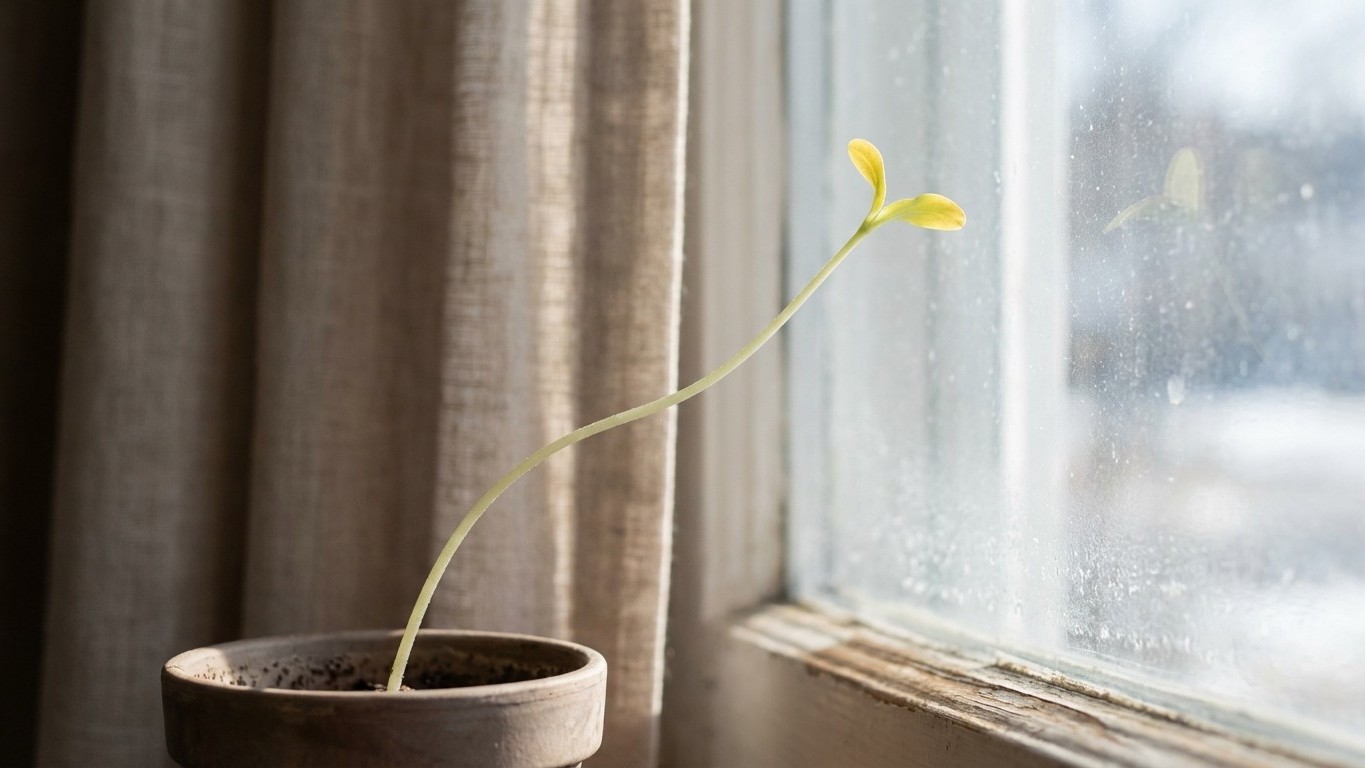
March feels like a green light. The days are getting longer, seed catalogs have been dog-eared for months, and every windowsill suddenly looks like a promising growing station. So you sow. You water. You wait. And then, around week three or four, something goes quietly wrong, your seedlings stretch toward the light like they’re trying to escape, or they collapse at the soil line, or they simply stop growing as if they’ve given up. The mistake is almost always the same one, even among gardeners who’ve been doing this for years: starting too warm and too soon, Without accounting for the light gap.
Key takeaways
- March windowsill light is only 4-6 hours, but seedlings need 14-16 hours—the gap creates the ‘stretching’ problem most gardeners blame on temperature
- Starting on a traditional schedule can backfire without supplemental light; expert growers often start later with better conditions rather than earlier with worse ones
- A cheap fan and modest grow light setup transforms everything, but the real secret is accepting that less is more—fewer trays, better attention, higher success rates
The Light Problem Nobody Talks About in March
Here’s a number worth sitting with: on a March day in most of the northern United States, a south-facing windowsill receives roughly 4 to 6 hours of usable light. That sounds reasonable until you realize that tomatoes, peppers, and most popular Seedlings need 14 to 16 hours of light to develop properly. The difference between those two numbers is the difference between a seedling that thrives and one that etiolates, the botanical term for that sad, pale, leggy stretching that signals a plant in distress.
Most gardeners understand they need light. Fewer understand how different the light is in March versus May. The sun angle is still low. Window glass filters UV. Overcast days, common in March across the Midwest and Northeast, can cut available light intensity by 70 to 80 percent. Your seedlings are essentially trying to run a marathon on a granola bar.
The result? Plants that look alive but aren’t actually building the cellular structure they need. When they eventually get transplanted outside, they struggle, sunburn easily, and never quite recover the vigor they should have had. Three months of effort, undone by six weeks of inadequate light.
Why Timing Is the Underrated Variable
The conventional wisdom says to count backward from your last frost date. Plant tomatoes 6 to 8 weeks before that date. Simple enough. But that calculation assumes your seedlings will be growing under ideal conditions, which a windowsill in March is not. When light is limited, seedlings grow more slowly and unevenly, which means a 6-week-old seedling might have the development of a 4-week-old seedling grown under proper light. You end up with overgrown, root-bound plants desperately waiting for outdoor conditions that won’t arrive for weeks.
Peppers are the clearest example of this trap. They germinate slowly, they’re cold-sensitive, and they genuinely do need a long head start indoors. So gardeners start them in late January or early February. By March, they’re already leggy. By May transplant time, they’re stressed, overgrown, and often stunted for the rest of the season. The fix isn’t starting later, it’s starting with better light from day one.
A grow light changes the math entirely. A basic full-spectrum LED setup running 14 to 16 hours a day in late February or early March can produce seedlings that look weeks ahead of their windowsill counterparts. The investment (typically under $50 for a starter setup) pays for itself in the first season just in seedling survival rates alone.
The Damping Off Disaster
Even gardeners who solve the light problem often run straight into the second March mistake: overwatering in cool conditions. Damping off, caused by a range of soil fungi including Pythium and Rhizoctonia — is the reason seedlings mysteriously fall over at the soil line, looking pinched and water-soaked at the stem. It spreads fast. One day you have a tray of healthy sprouts; 48 hours later, half of them have collapsed.
The conditions that cause damping off are exactly the conditions most people create in March: wet soil, cool room temperatures (under 65°F), low airflow, and the kind of anxious daily watering that comes from staring at a tray of seeds you really, really want to succeed. The fungus isn’t waiting for you to make a mistake. It’s already in most potting mixes, dormant, ready to activate the moment conditions favor it.
The practical fix is almost insultingly simple: water less, and add a small fan. Even a gentle breeze from a desk fan running on low for a few hours a day dramatically reduces surface moisture and strengthens seedling stems through a process called thigmomorphogenesis, essentially, plants respond to physical movement by growing stronger cell walls. It’s the same reason trees in windy locations develop thicker trunks. Your seedlings need that resistance, and in the still air of a March indoor setup, they don’t get it naturally.
What the Experts Actually Do Differently
Experienced growers tend to do something counterintuitive in March: they slow down. Rather than cramming every surface with seedling trays, they prioritize fewer species, grown better. They sow in smaller batches, two or three trays at a time, so they can give each one proper attention, proper light positioning, and proper airflow. They also accept that not every seed needs a long indoor head start.
Cool-season crops like lettuce, kale, and broccoli are often direct-sown or started just 3 to 4 weeks before transplant. Starting them in late January just creates problems. Warm-season crops like tomatoes and squash generally do better with 4 to 6 weeks of quality indoor time, not 8 to 10 weeks of marginal indoor time. The plants that go into the ground compact, stocky, and green almost always outperform taller, older seedlings that spent too long under a south window.
There’s a certain humility in accepting that March light, in most of the country, is genuinely not enough for ambitious seed starting without supplemental help. The Gardeners who get frustrated every spring are often the ones fighting that reality. The ones who adapt to it, with a grow light, a fan, a tighter sowing schedule, tend to find that April and May transplanting goes so smoothly it almost feels like cheating.
So as you look at that windowsill this month, ask yourself whether you’re setting your seedlings up to grow or just giving yourself something to water while you wait for real spring to arrive.