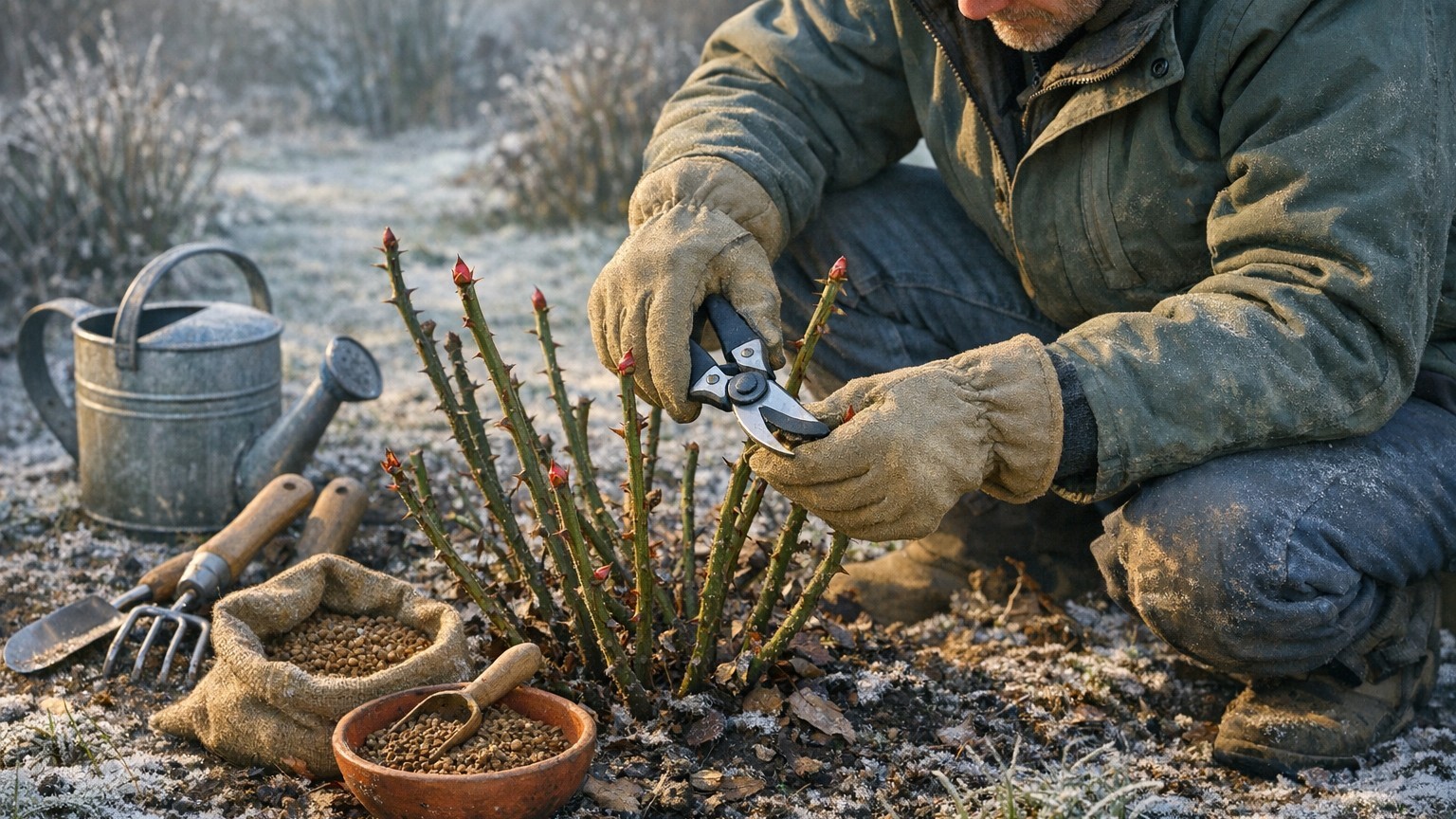
Valentine’s Day has barely faded from memory, and already the most dedicated rose growers have dirt under their fingernails. Mid-February doesn’t look like much to the casual eye—dreary, soil bare, and roses still huddled in winter’s embrace. But for gardeners who crave burst-after-burst of color come May, these chilly weeks mark the invisible starting gun. Their secret? A pruning ritual so effective, you might swear their roses were coaxed from fairy tales rather than garden beds.
Key takeaways
- Why pruning roses in mid-February sets the stage for stunning spring blossoms.
- How precise cuts and timing create healthier, more vigorous rose bushes.
- The role of fertilizer and careful care to maximize bloom size and quantity.
Why February Pruning Changes Everything
Startling, but true: The lushest blooms owe their bounty not to warm spring sunshine but to decisions made while the air still tastes of frost. Pruning roses in mid-February—yes, while many shrubs remain asleep—sets in motion a physiological chain reaction. Remove the old wood and the dormant, brittle stems, and suddenly, the plant’s energy surges to its healthiest canes. It’s the rose bush’s version of a fresh coffee shot after weeks of winter slumber.
Consider the science. Left untouched, last year’s growth crowds your bush, stealing light and airflow. Fungal diseases adore this scenario—a fact proven by university horticulture departments again and again. Roses, under such conditions, struggle to breathe and produce tentatively in spring, like waking up from a bad dream. Enter February pruning. With thoughtful cuts, you not only clear space but invite spring’s warmth deep into the rose’s core. New shoots erupt in response, increasing both the number and size of your future blooms.
It may sound like a gamble—scissors on bare branches, in fickle weather. But look at old English rose gardens or even your neighbor’s best specimen. Year after year, the earliest and most dramatic roses always belong to those who faced down the midwinter gray and gave their plants a new lease on life. Not an accident. A strategy.
The Ritual: More Than Just Shears
If you picture a few random snips, think again. The February pruning ritual resembles a choreographed dance. Gloves come first—the type thorn-proof enough to thwart even a determined climber. Shears, sharp as a New Yorker’s wit, are sterilized (a step the lazier ignore). Before a single cut, experienced gardeners eye each rose with a realist’s gaze. Is there blackened wood? Crossed canes? Spindly stems thinner than a pencil? Out they go, one by one.
This is the time for boldness, not timidity. Intimidated by the plant’s exposed appearance? Take heart—it’s not cruelty, it’s science. Heavy pruning directs energy where it counts. Picture a respected French chef reducing a sauce: what’s left is powerful, concentrated, transformative. So too with your roses. Most reliable experts, from local garden clubs to cooperative extensions, suggest trimming hybrid teas and floribundas by a solid third to half. Old garden types get a lighter hand, but no one escapes unscathed.
But here’s where myth falls away from fact. Truly savvy rose whisperers don’t just hack indiscriminately. They angle their cuts a quarter-inch above a healthy outward-facing bud, slanted downward, so spring’s rains run away from the wound. Hidden in these details is the real alchemy: risk of rot minimized, new growth outward and open, future flowers posed for maximum sun and airflow. The difference? A bush blooming like a fireworks finale, not a damp little sparkler.
Fertilizer: The Unsung Partner
Pruning gets all the applause, but a crucial partner waits in the wings: the right dose of nutrition, timed to perfection. As February pruning winds down—never before, always after—veterans dust in a slow-release rose fertilizer, or compost if you prefer, working it gently into the soil at the dripline. Why so soon? Because it’s not just what you feed, but when you feed that sways the outcome. Mid-February’s chill fools newcomers, but the rose’s roots are already stirring long before leaves appear. Miss this window, and you’re playing catch-up while the growing season accelerates without you.
One might recall the story of a San Jose gardener who, by waiting until March, always trailed her rivals by at least two weeks. Her blooms, lovely in June, never quite reached that first euphoric flush. Meanwhile, her neighbor—discipline personified—enjoyed vases overflowing by Memorial Day. Not magic; just timing honed to the minute.
Spring Surges: Results and Risks
By April, the effort pays dividends. Pruned and fed, rose bushes pulse with glossy red shoots. Buds balloon. It’s not uncommon for a patient February caretaker to harvest double the roses their idle peer manages—not that anyone’s keeping score. Still, surprises abound. Sometimes, a late frost threatens the new growth, though rarely enough to offset the gains. Some gardeners wrap sensitive varieties in burlap or fleece as a “just in case”—a ritual balancing paranoia and prudence.
There is no one-size-fits-all formula, of course. Every region, every microclimate tweaks the calendar, sometimes by a fortnight. But across zones, the gospel holds: don’t sleep through February if spectacular roses are your goal. The flowers you envy in Instagram feeds started with a chilly morning and a confident clip.
Next time you walk past a dormant, thorny tangle—coffee in hand, sun still a rumor over the horizon—consider what you aren’t seeing. The best arrivals of spring are engineered behind winter’s back. And for those with ambition, the real question isn’t how glorious your roses will be this year, but just how soon you’ll have bouquets enough to share, and who will be the first to ask your secret.