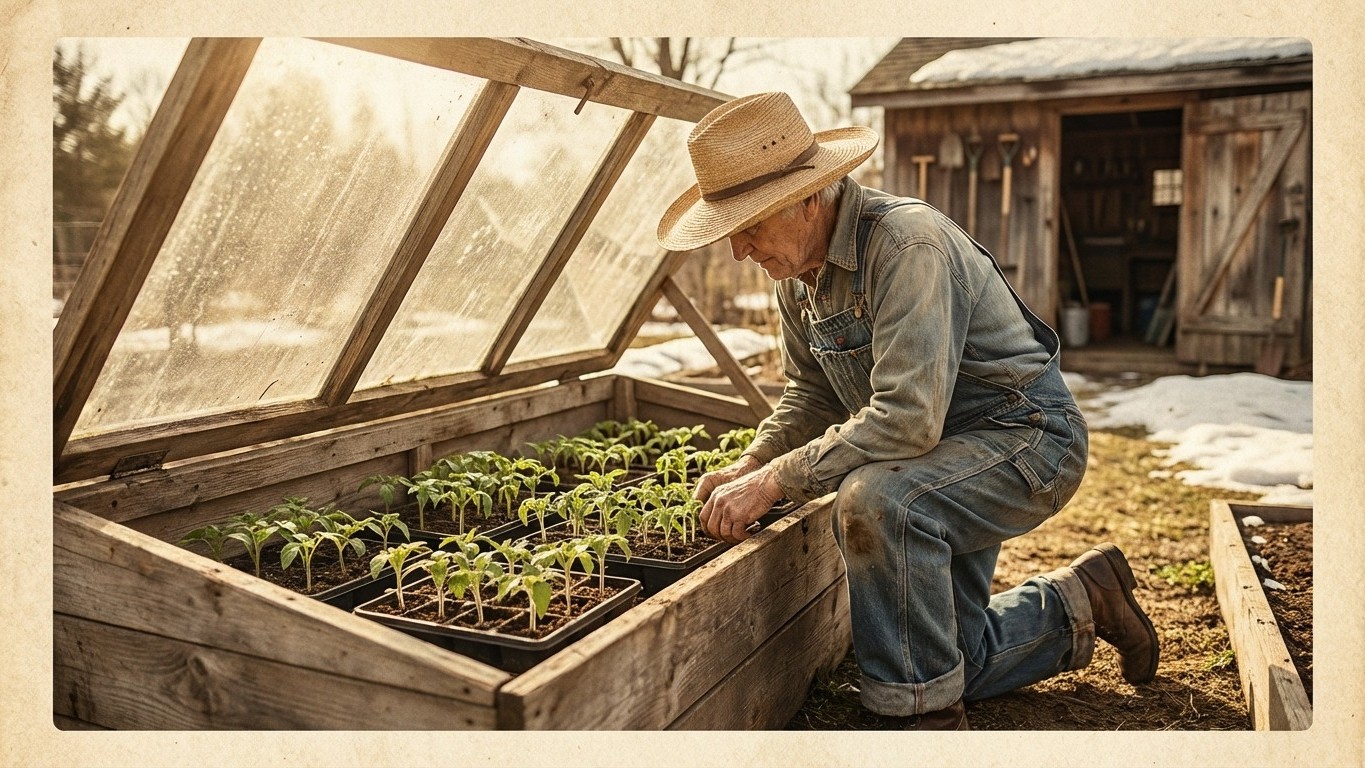
Every spring, there were always those gardeners who seemed to possess a mysterious advantage. While their neighbors were still shopping for seedlings in May, these old-timers were already harvesting plump, vine-ripened tomatoes by early July. Their secret wasn’t expensive equipment or special fertilizers—it was a precise timing strategy passed down through generations, centered around starting tomato seeds at a very specific moment in February.
The Magic Window: Late February Indoor Sowing
For much of western Europe and large parts of the US, this “magic window” often falls around the second half of February for indoor sowing, then slides into March or early April in colder regions. Traditional gardeners understood something crucial: starting your tomato seeds at the right moment can move your first harvest forward by two to four weeks. But this timing required careful attention to local climate patterns and frost dates.
The real lesson from older gardeners isn’t just a magical date on the calendar. It’s the way they read their local climate, worked backwards from the last frost, and combined that timing with resilient, early varieties and careful, almost daily attention to their seedlings. They calculated that tomatoes usually need 6–8 weeks from sowing to reach sturdy transplant size, checking average last frost dates for your area, then moving your sowing date back by those 7–9 weeks.
Modern gardening advice often suggests waiting until March or even April to start tomato seeds, but experienced growers knew that for many gardeners, that calculation still lands roughly around late February to mid March for sowing under cover. That’s the “old” timing people recall from grandparents and allotment elders.
Why February Beats Later Starts
The conventional wisdom warns against starting seeds too early, citing leggy growth and poor conditions. However, old-timers understood that proper technique matters more than perfect timing. A 2013 study found that seedlings with 7-8 leaves at transplanting produced 26% more fruit than tomato seedlings transplanted at 5-6 leaves, and that tomatoes started producing earlier when transplanted with at least 7 leaves. This research validates what traditional gardeners knew instinctively—older, more mature transplants outperform younger ones.
The key insight from experienced growers was understanding the difference between starting early and starting smart. One sows on 1 February on a cold, dim windowsill. The other waits until 10 March but uses a warm room and a cheap LED light. The first gardener ends up with tall, pale seedlings flopping against the glass. The second has short, sturdy Plants with thick stems. Plant them outside on the same day in May and the later-sown, stronger batch usually wins the race to the first ripe fruit.
This comparison reveals the crucial element: proper growing conditions matter far more than the exact date. Old-timers who succeeded with February sowing had mastered the art of providing adequate warmth and protection during the vulnerable early weeks.
The Cold Frame Advantage
The secret weapon of traditional early starters wasn’t just timing—it was protection. Many relied on cold frames and simple shelters to bridge the gap between indoor starting and outdoor growing. Double protected culture is when you combine two protected culture methods together. He believes that this two layer system increases the growing temperature to the point where it’s the same as moving your lettuce two USDA plant zones to the south.
Gardening guru Eliot Coleman asserts that “the basic cold frame is the most dependable, least exploited aid for the four-season harvest.” Last winter, my humble box built of 2-by-4s topped with an old shower door added a month to the front end of salad season, but the best part was being able to sow some of my spring seeds directly into the frame. This made more space available under lights indoors for tomatoes and other crops that don’t like chilly conditions.
These protective structures allowed early-sowing gardeners to start seeds in February while gradually acclimating them to outdoor conditions. Late winter and early spring are the best times to winter sow tomatoes. Avoid doing so in early and midwinter when frost is abundant. Optimal varieties for this method are cold-tolerant species from northern regions.
Choosing the Right Varieties
Traditional gardeners understood that variety selection was just as important as timing. Older gardeners also chose varieties that mature fast, especially in cooler areas. ‘Early Girl’: Compact habit, classic red fruits, often ready around 50 days after transplanting in warm conditions. ‘Siberian’: Bred for cold tolerance, copes with cooler nights and matures quickly.
Early-maturing cultivars such as ‘Early Girl’ may be slightly less flavorful but will produce fruit 2 to 3 weeks earlier than mid or late-season cultivars. These varieties were specifically chosen to complement the early sowing strategy, ensuring that the extra weeks of growth translated into earlier harvests rather than just larger plants.
The wisdom of traditional gardeners lay not in any single technique, but in understanding how timing, protection, variety selection, and careful attention worked together. That mix of observation and patience is still the fastest route to tomatoes on your plate Before everyone else. Their February sowing strategy succeeded because it was part of a comprehensive approach that respected both the plants’ needs and the realities of local climate—a lesson that remains as valuable today as it was for generations past.