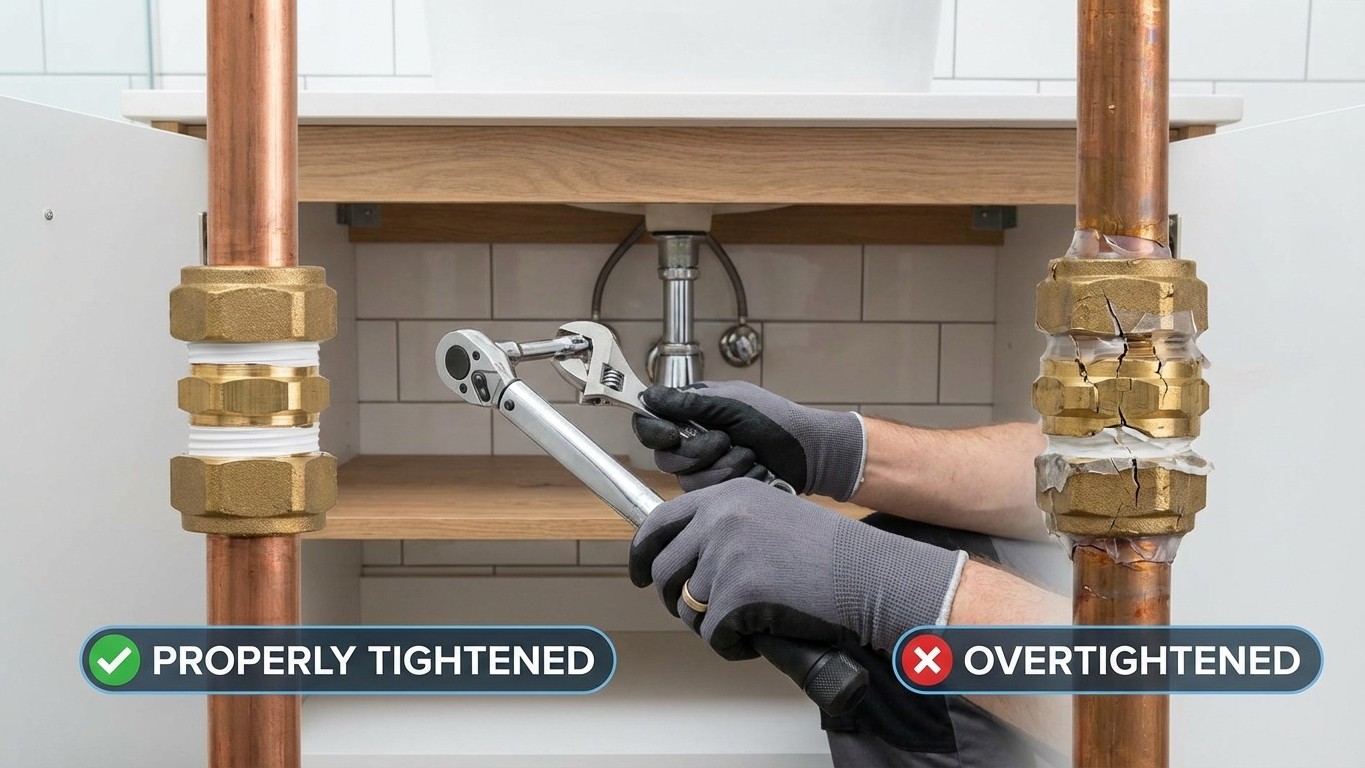
Walk into any bathroom with a professional plumber, and within seconds they’ve sized up your DIY competence. While you might think they’re admiring your new tile work or noticing that upgraded showerhead, they’re actually zeroing in on something far more telling. The number one mistake that screams amateur to every professional plumber? Overtightened connections.
This seemingly insignificant detail tells an entire story about whether you understand the fundamentals of plumbing — or if you’re just muscling your way through repairs. Every experienced plumber has walked into countless bathrooms where well-meaning homeowners have cranked down on connections with the misguided belief that “tighter is better.” The reality couldn’t be more different.
The Physics Behind Proper Connection Torque
Supply lines, pipes, and toilet bolts don’t require excessive force to create water-tight seals. Professional plumbers understand that modern plumbing components are engineered with precise tolerances. When excessive force is applied, micro-cracks can form that may not manifest as leaks immediately, but will eventually cause failures weeks or months later, potentially resulting in costly floods.
The experienced eye immediately recognizes the telltale signs: slightly deformed plastic fittings, stress marks around connection points, or that subtle irregularity in how components sit together. Overtightened toilet bolts can actually crack porcelain, destroying the entire fixture. What seems like thoroughness to a DIYer appears as fundamental ignorance to a professional.
Consider the mechanics of modern plumbing tape and thread systems. PTFE thread tape must wrap clockwise around threads to function properly. When homeowners understand this principle and apply appropriate torque, connections seal perfectly with hand-tightening plus just a quarter to half turn with a wrench. The professional approach starts with hand-tightening fittings until snug, then adds minimal wrench pressure.
The Cascade of Amateur Mistakes
Once a plumber spots overtightened connections, they know to look for other characteristic DIY errors. Improper shower floor slope is another dead giveaway — shower stalls with tile floors need precise angles for proper drainage, relying on gravity to prevent water pooling and grout damage. Professional plumbers typically recommend shower slopes of a quarter inch per foot.
Improperly installed toilets often result from forgotten wax rings or misaligned positioning on the flange. These mistakes create the perfect storm for water damage that may go unnoticed until significant structural problems develop. The trained eye spots these installation errors through subtle signs: slight toilet movement, irregular spacing from walls, or that imperceptible gap that shouldn’t exist.
The distinctive banging sounds coming from walls typically indicate another amateur mistake — failing to properly secure pipes during installation. Professional installation includes hanger straps or tube straps to prevent movement, but DIYers often focus solely on the visible connections while ignoring the infrastructure behind walls.
Reading the Professional Signature
Conversely, professional work leaves unmistakable signatures that trained plumbers recognize instantly. Professionals always use appropriate tools for specific applications — the right basin wrench for faucet installation, proper pipe wrenches for stubborn connections, and tubing cutters for clean, square cuts rather than hack saws.
The quality difference extends beyond tools to materials and technique. Professional installations use correct connectors when joining different pipe types, such as dielectric unions to prevent galvanic corrosion between dissimilar metals. Every system undergoes proper leak testing before walls are sealed, preventing hidden problems that amateur installations often miss.
Professional spacing and measurements reveal themselves through perfectly positioned fixtures, appropriate clearances, and logical pipe routing. Amateur installations frequently result in cramped spaces where cabinet doors can’t open completely or toilets become uncomfortable to use due to poor planning.
The Cost of Getting It Wrong
Understanding why professionals spot these details matters for more than pride. Overtightened connections can fail catastrophically, causing floods and extensive property damage. DIY repair attempts often exacerbate existing problems and lead to costly damage, forcing homeowners to pay for both the original fix and remediation of their mistakes.
The financial implications extend beyond immediate repairs. A single running toilet can waste up to 200 gallons of water daily, while improper installations may violate building codes, creating problems during home sales or insurance claims. Professional plumbers recognize these issues because they’ve seen the expensive aftermath countless times.
The next time a plumber enters your bathroom, remember they’re reading a story written in connection torque, pipe slopes, and installation details. Experienced plumbers always shut off water supplies during work and understand that proper technique prevents problems rather than creating them. The difference between amateur and professional work isn’t just visible to trained eyes — it’s built into every connection, every angle, and every detail that determines whether your plumbing will serve you reliably for decades or fail when you least expect it.