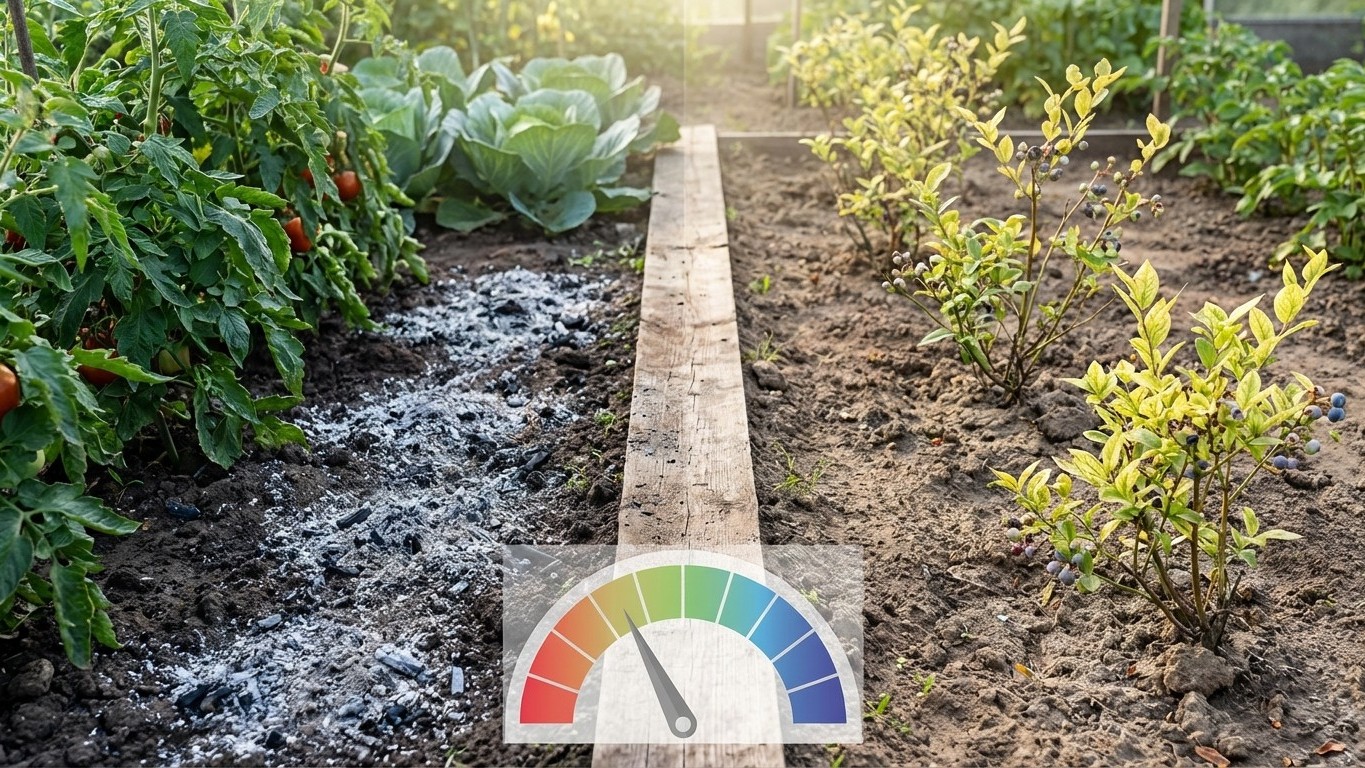
For fifteen years, I’ve scattered the gray remnants of winter fires across my vegetable beds. Each spring, I’d rake those powdery ashes into the soil with the confidence of someone following grandmother’s wisdom. My tomatoes flourished. My beans climbed higher. But my blueberry bushes? They looked perpetually sullen, their leaves yellowing despite my best efforts.
The revelation came during a particularly disappointing harvest season. While my neighbor’s acid-loving plants thrived, mine struggled in what I thought was perfectly amended soil. The culprit wasn’t poor drainage or insufficient sunlight—it was those innocent-looking ashes I’d been so generously applying.
Key takeaways
- A common gardening practice that seems harmless is actually destroying certain beloved plants—here’s what’s really happening in the soil
- The invisible enemy isn’t pests or disease—it’s a chemical reaction that occurs whenever you spread those innocent-looking ashes
- What works brilliantly for one plant can completely devastate another, and most gardeners have no idea which camp their plants fall into
The Chemistry Behind the Controversy
Wood ash transforms soil chemistry in ways that make some plants dance with joy while others wither in silent protest. The key lies in pH—that invisible factor determining whether nutrients become available or locked away from hungry roots.
Fresh wood ash typically registers between 9 and 13 on the pH scale. That’s more alkaline than baking soda. When you spread ashes across your garden, you’re essentially giving your soil a powerful antacid treatment. For plants adapted to neutral or slightly acidic conditions, this can be beneficial. Potassium, phosphorus, and trace minerals become more readily available.
But acid-loving plants experience this pH shift as a nutritional disaster. Blueberries, azaleas, rhododendrons, and camellias evolved in naturally acidic soils where iron, manganese, and other micronutrients remain soluble. Raise the pH above 6.5, and these essential elements bind with other compounds, becoming unavailable despite being physically present in the soil.
The result? Chlorosis—that telltale yellowing of leaves as plants struggle to access iron. Growth slows. Flowering diminishes. Fruit production plummets.
Beyond pH: The Mineral Avalanche
Wood ash doesn’t just alter acidity levels—it delivers a concentrated dose of minerals that can overwhelm sensitive plants. A single pound of hardwood ash contains roughly 10% potassium, 25% calcium carbonate, and smaller amounts of phosphorus, magnesium, and trace elements.
While this mineral wealth benefits heavy feeders like brassicas and root vegetables, it can create imbalances elsewhere. Excessive potassium interferes with calcium and magnesium uptake. Too much calcium can tie up phosphorus. These nutrient lockouts manifest as stunted growth, poor fruit development, and increased susceptibility to disease.
Consider the delicate ecosystem of your soil microbes. These microscopic partners help plants access nutrients and protect roots from pathogens. Sudden chemical changes from ash applications can disrupt these relationships, leaving plants more vulnerable even as you’re trying to help them.
The Ash Application Arsenal
Smart ash use requires matching the amendment to the plant. Heavy clay soils benefit from ash’s ability to improve drainage and add essential minerals. Alkaline-tolerant vegetables like asparagus, spinach, and members of the cabbage family thrive with moderate ash applications.
Timing matters enormously. Fall applications allow ash to integrate slowly over winter months, moderating its immediate impact. Spring applications deliver a more immediate pH boost but risk shocking sensitive plants just as growing season begins.
The golden rule? Less is always more. A light dusting—perhaps 10 pounds per 1,000 square feet—provides benefits without the drawbacks. Heavy applications can raise pH so dramatically that it takes years for levels to normalize, even with acidifying amendments.
Never apply ash around newly planted trees or shrubs. Their developing root systems lack the established networks needed to cope with sudden chemical changes. Wait at least a year after planting before considering ash amendments in these areas.
Reading Your Garden’s Response
Plants telegraph their ash tolerance through subtle signals most gardeners overlook. Vigorous growth and deep green foliage indicate compatibility. Yellowing leaves, particularly between the veins, suggest pH-related nutrient lockout. Stunted growth despite adequate water and sunlight often points to mineral imbalances.
Soil testing removes guesswork from ash applications. A simple pH meter reveals whether your garden needs alkalizing or already sits in the optimal range for your chosen plants. Test multiple areas—pH can vary significantly across a single garden depending on previous treatments, organic matter content, and natural soil composition.
Some gardens benefit from strategic ash zones. Create alkaline pockets for vegetables that appreciate higher pH while maintaining acidic areas for berries and ornamental shrubs. This targeted approach maximizes ash benefits while protecting sensitive plants.
My blueberry revelation transformed my entire approach to garden amendments. Those struggling bushes now occupy a dedicated acidic zone, mulched with pine needles and treated with sulfur when needed. My ash pile still gets distributed each spring—but only where plants can truly benefit from its alkaline embrace.
What assumptions about “good for the garden” practices might you be carrying forward without question? Sometimes the most helpful thing we can do for our plants is step back and let them tell us what they actually need.