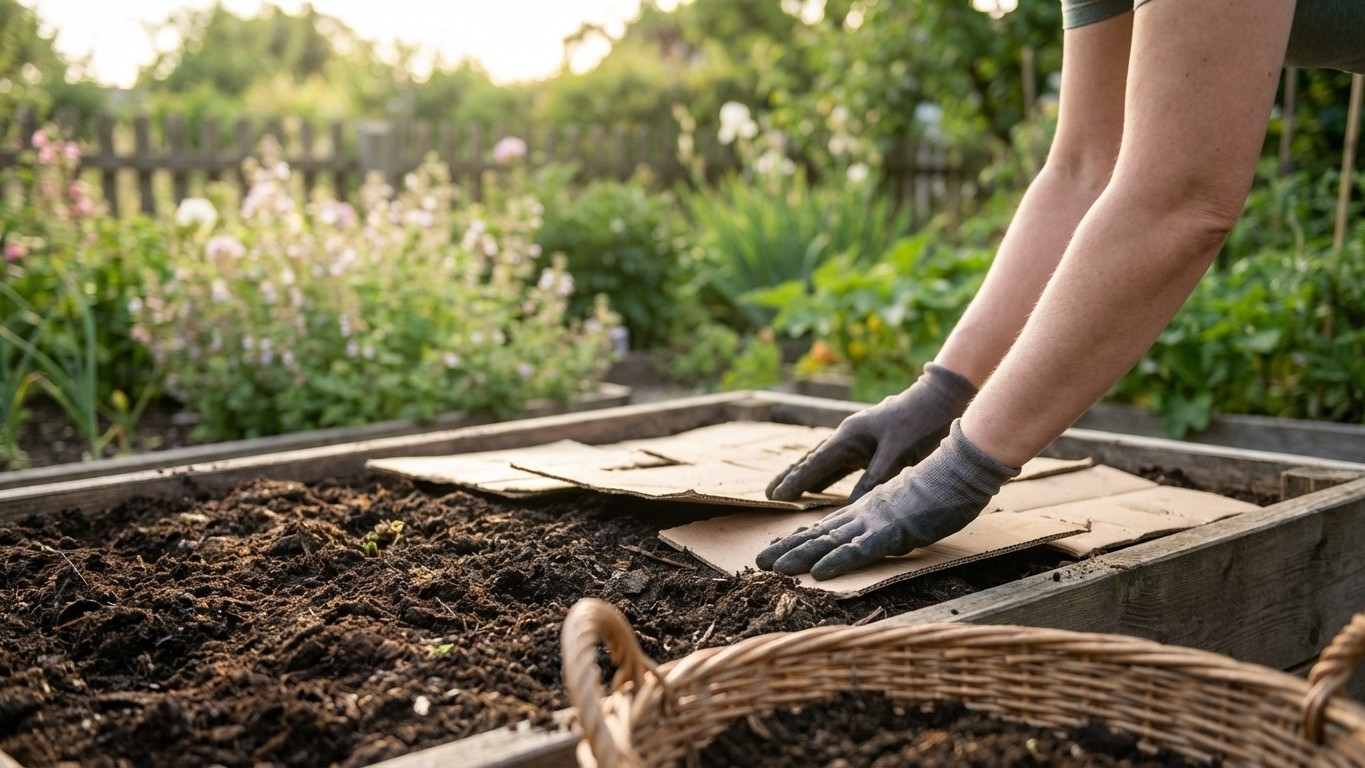
Not a single spade. That’s how many tools have slipped into my garden’s soil in the last three years. Odd, maybe, for someone who still manages to pull carrots and dahlias from the same plot. But since testing a layering method that leaves earthworms, and my back, undisturbed, Digging feels as dated as rotary dial phones.
Key takeaways
- Discover why digging harms your garden’s hidden ecosystem
- Learn the simple layering hack that nourishes soil naturally
- See how this method turns turf into fertile ground, no spade needed
The Science of Not Disturbing the Soil
Soil isn’t just “dirt.” Under your lawn shoes, a hidden metropolis teems with workers, bacteria, fungi, insects, all collaborating in a system billions of years older than the internet. Tilling, that ritual of flipping the earth, wrecks their intricate networks. Slicing through a mycorrhizal hypha (the fungal threads that act as plant internet cables) does more damage than a cut phone line during a thunderstorm. Turns out, leaving those connections intact results in healthier, better-fed plants. No surprise that this “no-dig” philosophy has roots stretching back centuries, but only recently has research caught up, quantifying the benefits for everything from tomatoes to apple trees.
Modern studies (check Norway’s deep-Digging research from 2024) underline a critical fact: tilling decreases soil organic matter, releasing carbon stored underground straight into the air. So, every time the spade comes down, your garden coughs up a bit more CO2. Small act, big impact, especially when multiplied by millions of home gardens worldwide.
The Layering Trick : Lasagna for the Garden
Think of your garden bed as a casserole, not a trench. Instead of turning soil, layer materials atop the surface in intentional order: cardboard, compost, straw, even autumn leaves. Some gardeners call it “sheet mulching;” close friends jokingly dubbed it the lasagna garden. And the structure sticks, the layers gently break down, worms shuffle between sheets, and seeds find an easy runway to sprout.
First layer? Cardboard or thick newspaper, slightly damp. This blocks weeds and invites worms. Next, a generous mound of compost, homemade kitchen scraps work, or buy from a local recycler who lets their piles heat up enough to kill weed seeds. Add a carbon layer: dry leaves, hay, or shredded straw. Cap with another inch or two of rich compost. During the first rain, you’ll spot robins pecking—already hunting the invertebrate buffet that quickly makes these layers home.
I tried it first in a four-by-eight foot vegetable patch, wary it was garden heresy. A neighbor, skeptical of my bedsheet landscaping, popped by as bean sprouts shoulder-checked their way into the sun just weeks later. My verdict? Fewer weeds, richer soil, and zero backaches from hauling a full spade. Earthworms multiplied, an army underfoot, doing quiet work better than any rototiller ever could.
Everyday Benefits (and Misconceptions)
The true magic? You can build a new flowerbed over turf, skipping sod removal entirely. One spring, inspired by the unruly grass behind my shed, I doubled my growing area in an afternoon, no sod-cutting, no sweating, no regrets. By midsummer: poppies bloomed, the lawn simply composted under the layering, transformed into plant-ready loam.
People often ask, “Doesn’t this just attract slugs and make a mess?” Fact: yes, some slugs will try. But nature balances out. Birds and beetles soon discover the buffet. In my experience, handpicking the worst offenders in the first season buys you time; by the next year, their numbers dwindle. As for “mess”, well, composting is nature’s tidying system, just slower than a vacuum cleaner. The layering method mimics the forest floor, producing loose, crumbly earth that smells rich and woody. No “mud pit” in sight.
And those claims that you’ll lose crops to weeds unless you till? Not in my backyard. With a thick enough bottom layer and slow-release nutrients, weed pressure drops dramatically after the first year. If something sneaks through, it pulls out easier, roots loosened by a bustling, undisturbed underground community.
How to Start : Even if You’re Not a Gardener
This method isn’t just for the “already green-thumbed.” It fits a rented patio just as well as a suburban half-acre. No need for a truckload of soil amendments; materials often emerge from your daily life. Packaging boxes from Amazon orders, grass clippings after a mow, leaves swept from the sidewalk, these all have their place in the garden lasagna.
On a concrete balcony? Start a raised bed with the same principle: cardboard at the bottom, food scraps, coffee grounds, shredded paper, then compost and potting mix. Within weeks, kitchen waste transforms into fluffy, fertile soil, almost alchemy. Want proof beyond the anecdotal? Community gardens in Brooklyn adopted this system en masse in 2025 to save money on soil deliveries. By autumn, their tomatoes outperformed traditional tilled beds by twenty percent. Skeptics bit into blight-free fruit, then quietly adopted the technique.
Maintenance stays minimal. Top up with compost or mulch at the end of each season. No more double-digging or wrestling with ergonomic shovels. No clouds of dust or sore backs. Just time spent choosing the next thing to plant. To me, that’s yardwork as it should be, creative, accessible, and a little bit rebellious.
Recent drought and flooding cycles across the U.S. have made resilient, moisture-retaining soil more valuable than ever. Layered beds act like a sponge, holding on to rain and releasing it slowly during dry spells. Your plants weather the rollercoaster, even as lawns brown and Neighbors lament another failed crop. A small adjustment, big payoff: tastier vegetables, healthier perennials, and a plot that earns envious glances from the sidewalk crowd.
Have we reached the end of garden digging forever? Hardly. There will always be a place for tradition, for turning earth to unearth lost toys or rediscover a favorite trowel. But for the millions trading spades for cardboard, the garden is a wilder, more generous space. Maybe it’s time to leave that spade in the shed, just this once, and see what happens above, and below, the surface.