Sleep quality is one of those things you don’t think about until you’ve lost it. A year ago, I started an experiment born out of sheer frustration with restless nights and 3 a.m. ceiling-staring sessions. The idea was simple: bring plants into the bedroom, track what changes, and resist the urge to romanticize the results. What followed was more nuanced than I expected, and occasionally surprising in ways no wellness blog prepared me for.
Key takeaways
- A ritualistic wind-down routine emerged that had nothing to do with the plants’ air-filtering properties
- Measurable humidity increased 5-8%, reducing nighttime respiratory irritation and disrupted sleep
- Living with growing plants created an unexpected psychological shift that reshaped the entire sleep experience
The Plants I Chose, and Why
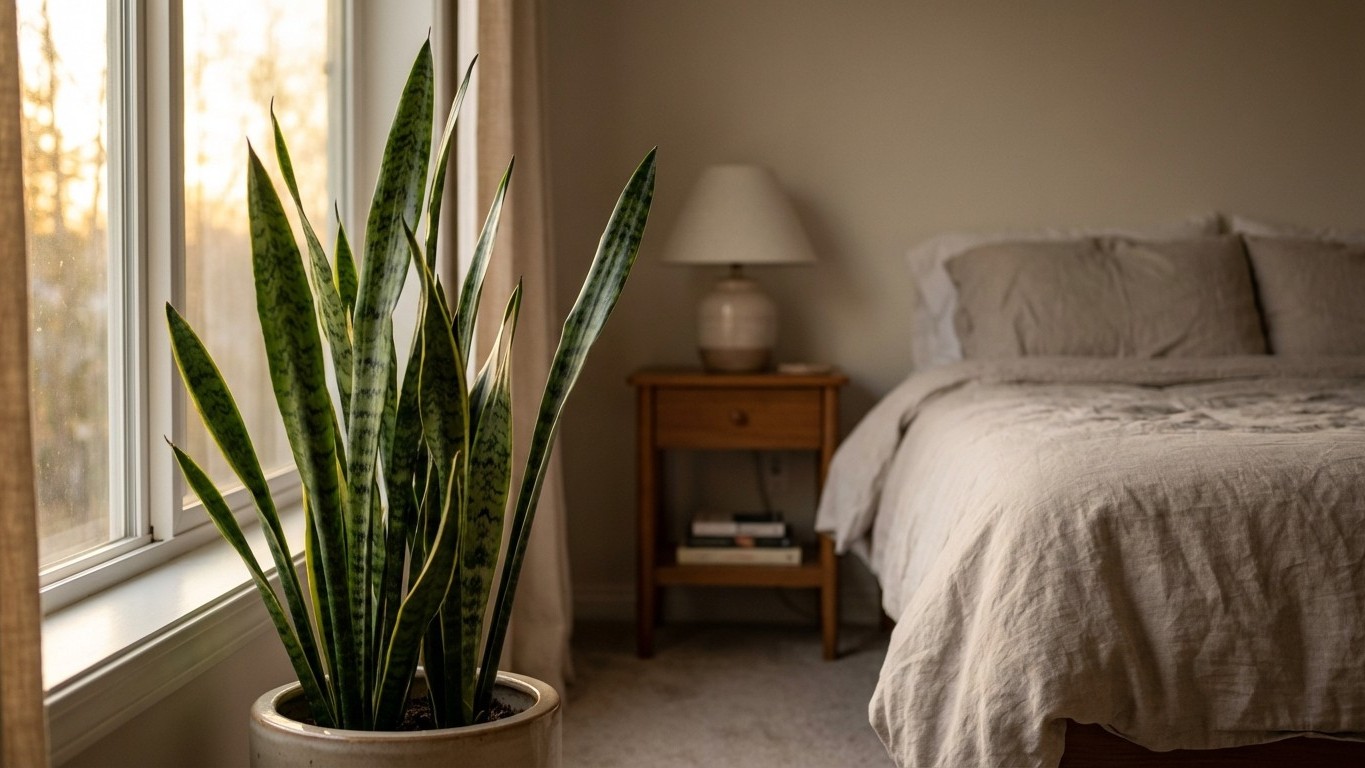
The selection wasn’t random. I wanted species with documented properties rather than just aesthetic appeal. A snake plant (Sansevieria trifasciata) took the corner near the window, one of the few plants that continues releasing oxygen and absorbing carbon dioxide at night, rather than reversing the process after dark. A peace lily sat on the dresser, chosen for its well-known ability to absorb airborne volatile organic compounds like benzene and formaldehyde. And a pothos vine trailed from a shelf, because it’s practically unkillable and keeps humidity levels from dipping too low in dry indoor air.
Worth mentioning: the research on houseplants and air quality is real but often overstated. NASA’s famous 1989 clean air study found genuine filtration effects, but a 2019 analysis in the Journal of Exposure Science and Environmental Epidemiology pointed out that you’d need somewhere between 10 and 1,000 plants per square meter to match what a cracked window does. I kept three plants in a 150-square-foot room. I had no illusions about miraculously purifying the air.
What Actually Shifted Over Twelve Months
The first thing I noticed had nothing to do with air. It was the ritual. Watering the plants every few days, trimming yellowed leaves, rotating pots toward the light, this ten-minute routine before bed became something I genuinely looked forward to. Sleep researchers often talk about “wind-down anchors,” small, predictable behaviors that signal to the nervous system that the day is closing. The plants gave me one I hadn’t manufactured intentionally. That felt like a quiet win.
By month three, I started sleeping through the night more consistently. Now, I can’t attribute this cleanly to the plants : I’d also stopped taking my phone to bed around the same time, and winter light was fading earlier. But there’s decent science suggesting that interactions with nature, even passive ones like looking at greenery, lower cortisol levels and reduce physiological arousal. A study published in Frontiers in Psychology found that hospital patients with plants in their rooms reported lower anxiety and shorter perceived recovery times. My situation was less dramatic, obviously, but the principle held in a mundane way.
Humidity was the most measurable change. My bedroom air in winter, with the heating running, was dropping to around 30% relative humidity, well below the 40-60% range considered comfortable for sleep and respiratory health. The peace lily and pothos both transpire moisture through their leaves. With a cheap hygrometer on my nightstand, I tracked a consistent 5-8% increase in ambient humidity during the months I kept all three plants actively growing. Not revolutionary. But dry throats and irritated sinuses at night became noticeably less frequent, and that has a real downstream effect on sleep architecture.
There was one unexpected downside: gnats. Fungus gnats, to be specific, are attracted to moist soil, and by month two the peace lily had become a small ecosystem I hadn’t signed up for. Switching to a well-draining soil mix and letting the top layer dry out between waterings fixed the problem, but for about three weeks it was irritating enough that I almost abandoned the whole experiment. Nobody mentions this in the “plants for better sleep” content. They should.
The Psychological Dimension Nobody Talks About
Here’s where things get harder to quantify. Living with plants changes the visual texture of a room in a way that feels slower and more alive than a painting or a piece of furniture. The snake plant grew two new leaves over the year. The pothos doubled in length and started curling around the curtain rod. Watching something grow in a space you occupy daily creates a low-grade sense of continuity and care that I think matters more than we give it credit for.
There’s a concept in environmental psychology called “restorative environments”, spaces that help the mind recover from the fatigue of directed attention (work, screens, decision-making). Natural elements are consistently identified as contributors to restoration. A bedroom that contains living things, even just three modest houseplants, starts to feel less like a dormitory and more like a refuge. Whether that’s placebo or physiology, the sleep got better. And at some point, the distinction stops mattering.
The pothos now reaches almost to the floor. The snake plant looks almost architectural against the white wall. The peace lily bloomed twice, which apparently signals it’s happy, or at least, not dying. I’m sleeping around seven hours a night fairly reliably now, up from a jagged five or six. I can’t hand all the credit to three houseplants. But I’m not taking them out of the room to find out what happens.
The more interesting question might be this: if something as cheap and low-effort as a snake plant in the corner contributes to a better night’s sleep, what else are we overlooking in our bedrooms because it doesn’t come in an app or a supplement bottle?