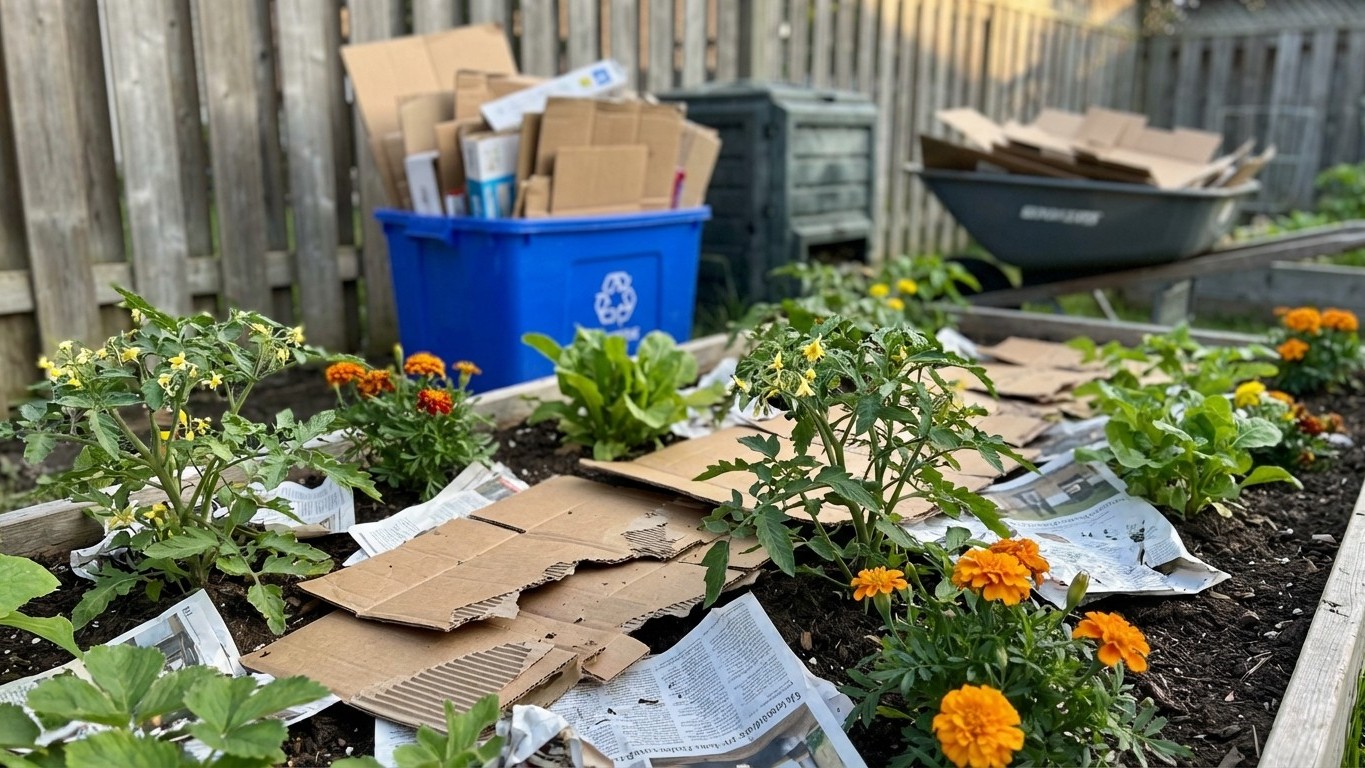
For over a decade, I dutifully hauled bag after bag of expensive mulch from garden centers, watching my landscaping budget drain with each spring refresh. The irony only hit me last year when I noticed how much cardboard, newspaper, and other materials I was religiously sorting into recycling bins. These same materials I was discarding could have been blanketing my garden beds, suppressing weeds, and enriching my soil naturally.
The revelation came during a particularly costly mulch-buying spree. Standing in the garden center with my cart loaded with premium bark chips at $4.50 per bag, I calculated that covering my modest garden would cost nearly $200. That evening, as I broke down Amazon delivery boxes for recycling, the lightbulb moment struck. This cardboard wasn’t waste – it was free mulch waiting to be used.
The Hidden Mulch Goldmine in Every Home
Our recycling bins contain a treasure trove of mulching materials that work just as effectively as commercial options. Cardboard boxes, particularly the large ones from appliance deliveries or online shopping, create excellent sheet mulch. When laid flat and overlapped slightly, they form an impermeable barrier against weeds while slowly decomposing to feed soil microorganisms. The key is removing all tape and staples, then soaking the cardboard thoroughly before placement.
Newspapers offer another fantastic free mulching option. The thick Sunday editions work particularly well, but even daily papers can be layered effectively. Despite common concerns, modern newspaper inks are soy-based and completely safe for gardens. I’ve found that six to eight layers of newspaper, weighted down with stones or soil, create a mulch barrier that lasts through most of the growing season. The paper gradually breaks down, adding organic matter to the soil beneath.
Office paper and old magazines also serve as temporary mulching materials, though they’re best mixed with other organic matter rather than used alone. Shredded documents work particularly well around established plants, though avoid glossy materials that don’t decompose readily.
Strategic Application Techniques
Successfully using recycled materials as mulch requires understanding how different materials perform in various garden situations. Cardboard excels as a foundation layer for new garden beds, effectively killing existing grass and weeds through light deprivation. I typically lay cardboard in fall, then add a thin layer of compost or soil on top to prevent it from blowing away. By spring, the cardboard has begun decomposing, the underlying vegetation has died back, and the bed is ready for planting.
For established beds, newspaper works more effectively than cardboard since it’s easier to work around existing plants. I tear the paper into manageable sections, then tuck it carefully around plant stems, leaving a few inches of clearance to prevent moisture-related issues. The paper naturally conforms to irregular spaces that rigid cardboard cannot accommodate.
Timing matters significantly when using these materials. Spring application works best because soil moisture helps the materials stay in place and begin decomposition. Dry materials applied during hot summer months tend to blow around and look unsightly until they weather naturally.
Long-term Benefits Beyond Cost Savings
The financial advantages of using recycled materials for mulch extend beyond the obvious elimination of purchase costs. Over time, these materials improve soil structure and fertility as they decompose, reducing the need for soil amendments and fertilizers. My soil tests show consistently higher organic matter content in beds mulched with cardboard and newspaper compared to areas using commercial bark mulch.
Water retention improves dramatically with paper-based mulches. The materials initially shed water, directing it toward plant roots rather than evaporating from the surface. As they begin decomposing, they absorb and hold moisture like a sponge, reducing irrigation frequency during dry spells.
Environmental benefits compound the economic advantages. Every cardboard box and newspaper used in the garden is one less item requiring industrial recycling processes. The transportation costs and energy consumption associated with commercial mulch production and distribution disappear entirely when materials come from your own recycling bin.
Making the Transition Work
Successfully switching from purchased mulch to recycled materials requires adjusting aesthetic expectations initially. Fresh cardboard and newspaper don’t provide the polished appearance of commercial bark chips or decorative stone. However, within a few weeks of weathering, these materials develop a natural, earthy appearance that blends seamlessly with garden surroundings.
For front yard areas where appearance matters most, I’ve found success combining recycled materials with small amounts of traditional mulch. A foundation of cardboard topped with a thin layer of bark chips provides both functionality and curb appeal while still dramatically reducing costs.
The key to success lies in consistent material collection and preparation. I now save all suitable packaging materials year-round, storing flattened cardboard in my garage and keeping newspapers dry in sealed containers. This preparation ensures adequate mulching materials are available when needed, eliminating last-minute garden center runs.
After two full seasons of using primarily recycled materials for garden mulching, my landscaping costs have dropped by roughly 75% while soil health has noticeably improved. The transformation required nothing more than recognizing that effective mulch was literally being thrown away every week. Sometimes the best gardening solutions are hiding in plain sight, waiting in the recycling bin beside the kitchen door.