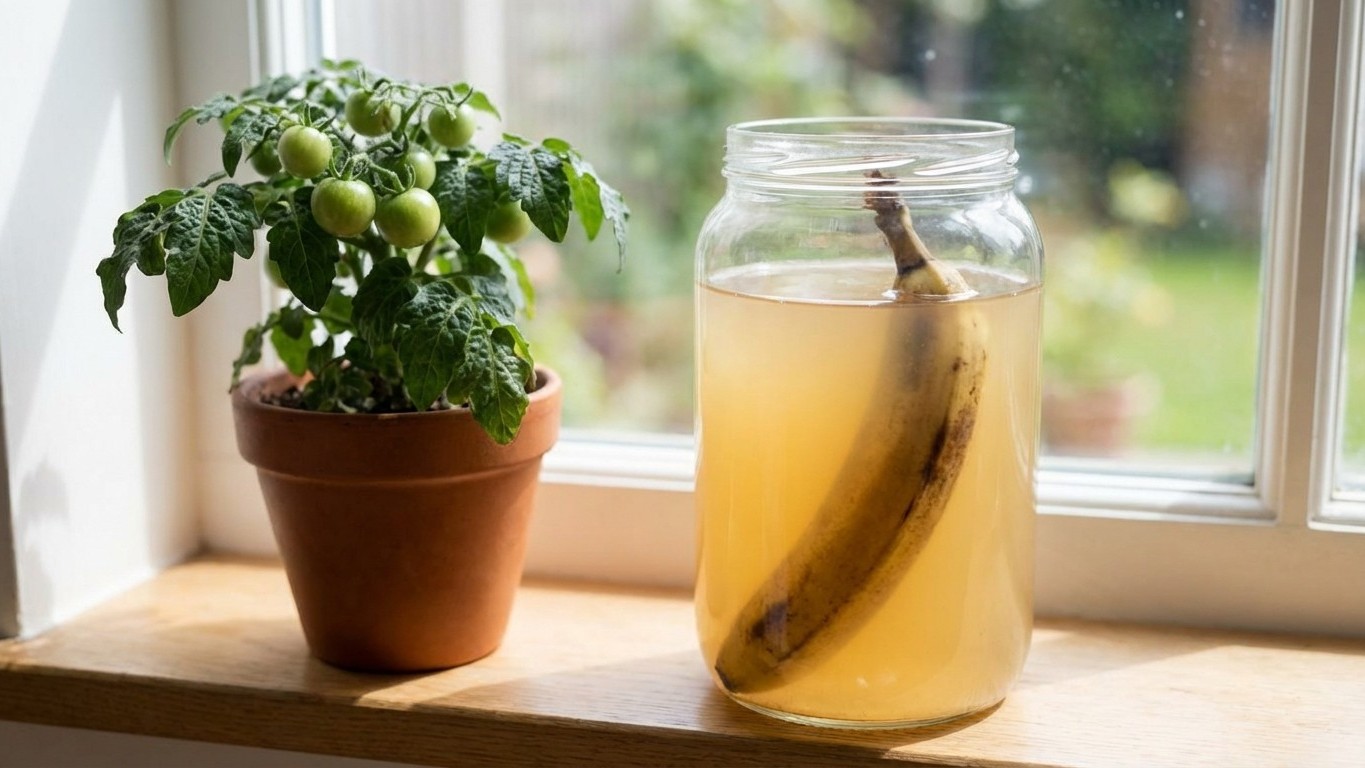
Coffee grounds get all the glory. Eggshells have their devoted fans. But there’s one kitchen scrap that most people rinse down the drain without a second thought, and it might be the single most effective thing you can add to your indoor tomato containers. Banana peels. Specifically, the water you soak them in.
I started growing tomatoes indoors about three years ago, out of stubbornness more than strategy. My apartment faces north-northwest, I have a grow light that’s seen better days, and I refuse to give up on homegrown fruit just because I lack a yard. The results were underwhelming for the first two seasons, leggy plants, slow fruit set, pale leaves that quietly suggested the soil wasn’t cutting it. Then I started using banana peel tea, and the difference in the third season was genuinely difficult to explain away.
Key takeaways
- A single kitchen scrap contains the exact nutrient tomatoes deplete fastest in containers
- The extraction method takes 5 minutes of prep time but delivers results within 3 weeks
- Indoor tomato growers report flower clusters and fruit set where previous seasons showed nothing but green leaves
Why Banana Peels Work Where Other Scraps Fall Short
Tomatoes are heavy feeders. That phrase gets thrown around in gardening circles, but what it actually means is that tomatoes burn through potassium, phosphorus, and calcium at a pace that most indoor Potting mixes can’t sustain beyond the first few weeks. Commercial potting soil is typically pre-loaded with fertilizer, great for the first month, useless after that. The nutrients leach out every time you water, and in containers, that happens fast.
Banana peels are exceptionally high in potassium. A single peel can contain somewhere between 78 and 100 milligrams of potassium, along with meaningful amounts of phosphorus, magnesium, and calcium. Potassium specifically drives fruit development and disease resistance in tomatoes, it’s what helps the plant move sugars from leaves into developing fruit. Without enough of it, you get beautiful foliage and disappointing harvests. Sound familiar?
The trick is extraction. A raw peel buried in a pot will decompose eventually, but in an indoor container, that process is slow and can attract fungus gnats (the bane of every indoor gardener’s existence). The smarter approach is liquid extraction, letting the nutrients leach into water over 24 to 48 hours, then applying that water directly to your plants.
The Method That Actually Made a Difference
The process is almost embarrassingly simple. Take two or three banana peels, drop them into a jar or pitcher with about a liter of water, and leave them to soak at room temperature for 24 hours. The water turns faintly yellow-brown. That’s your fertilizer. Remove the peels (compost them if you can), dilute the liquid by half with plain water, and use it to water your tomatoes once a week.
A few things matter here. Organic bananas are preferable, conventional peels can carry pesticide residue, and while dilution reduces risk, it doesn’t eliminate it. Cold water slows the extraction, so room temperature is the target. And don’t let it sit longer than 48 hours, especially in summer, because the water will start to ferment and the smell will follow you around the kitchen in ways you will not enjoy.
The dilution step is worth taking seriously. Concentrated potassium can actually lock out other nutrients at the root level, particularly magnesium and calcium, which tomatoes also need badly. Half strength, once a week, is not a conservative suggestion, it’s the right dose.
What I Observed Over Eight Weeks
By week three of regular banana peel tea applications, the pale yellowing on my lower leaves had cleared noticeably. By week five, I had visible flower clusters forming on two plants that had shown zero interest in flowering the previous season. By week eight, I was watching small green tomatoes develop on a plant sitting four feet from a window in a Chicago apartment in January.
To be fair, I also adjusted my watering schedule slightly and added a single overhead grow light session per day. So I can’t attribute everything to the banana water alone. But I had grown the same variety (a compact determinate cherry type) under similar light conditions the previous year with standard watering, and the contrast was stark enough that the banana tea deserves significant credit.
Other indoor gardeners in online communities report similar patterns. The recurring theme is faster fruit set and deeper green foliage, both of which are consistent with improved potassium availability. A few report that plants treated with banana peel water also show more resistance to leaf curl, which can be a stress response to inconsistent watering or nutrient imbalance.
Pairing It With What Your Tomatoes Already Need
Banana peel tea is not a complete fertilizer. Think of it as targeted support for a specific gap, the potassium and phosphorus that depletes fastest in containers. For a more complete feeding routine, alternating banana peel tea with a diluted balanced liquid fertilizer (something with a roughly equal NPK ratio) covers the nitrogen that peels don’t provide. Nitrogen drives leafy vegetative growth, and tomatoes need a solid foundation of leaves before they’ll commit energy to flowering.
Crushed eggshells worked into the top layer of soil also complement this approach well, providing slow-release calcium that prevents blossom end rot, that frustrating condition where tomatoes develop a dark, sunken patch at the base. It’s a calcium deficiency issue, not a watering one, despite what many gardening blogs still claim. The eggshells won’t fix an active deficiency quickly, but they help prevent one from developing.
If you’re already growing tomatoes indoors and wondering why the results don’t match the effort you’re putting in, the soil chemistry is almost always where the answer lives. The plants look fine right up until they don’t, and by then the nutrient deficit is weeks old. Starting banana peel tea applications early in the season, before any symptoms appear, is the version of this that actually works. The peel you were About to Throw Away This morning might be the variable your plants have been waiting for.