
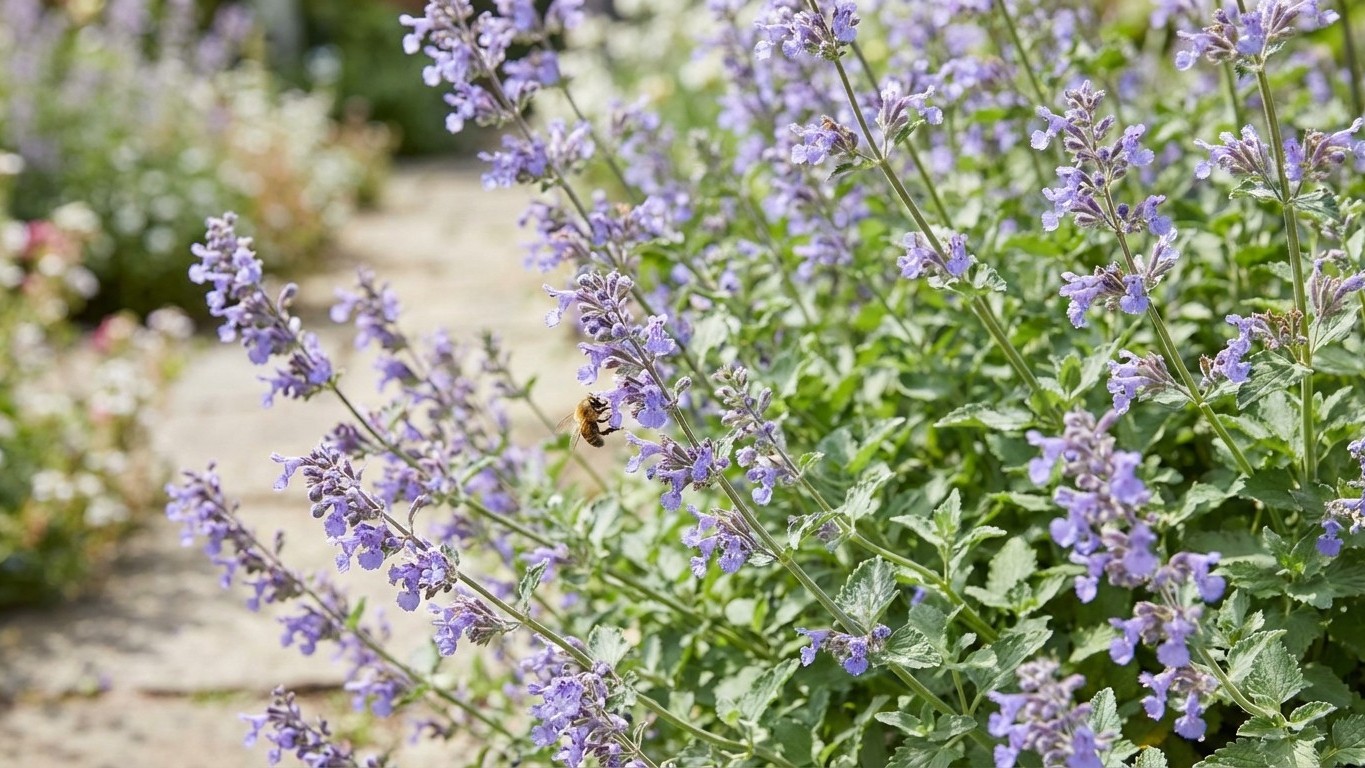
Orchids were my weakness. For years, I brought one home every few months, nursed it back from post-bloom silence, and waited. And waited. Weeks of bare stems, months with nothing. Then I found catmint. One plant. Still blooming six months later. That was enough to change everything.
Key takeaways
- What makes orchids so frustrating for home gardeners despite their exotic beauty
- How catmint delivers six months of continuous blooms without the fussiness orchids demand
- The surprising trick that keeps catmint flowering all season long
The Orchid Trap We All Fall Into
Orchids regularly enter vegetative rest phases lasting two to six months, especially after blooming or during cooler, drier seasons. During this time, they focus on root and leaf development, not flowers. The plant looks alive. It just doesn’t act like it. For most home gardeners, that’s the deal-breaker. You water, you fertilize, you rotate the pot toward the window, and still, nothing. Retailers often market orchids as seasonal gifts, wrapped in foil, potted in sphagnum moss Without drainage, and sold without care instructions. This presentation encourages one-time enjoyment, not long-term cultivation. You end up buying a new one every season rather than coaxing a rebloom. The math adds up fast.
The real issue isn’t that orchids are bad plants. Lack of reblooming is usually due to insufficient light, improper temperature drops at night, or inadequate nutrition. Many orchids require a slight drop in nighttime temperatures of five to ten degrees Fahrenheit for several weeks to initiate flower spikes. Few American homes naturally provide those conditions. So you end up with a gorgeous sculptural object that flowers once, maybe twice with luck, while your windowsill quietly collects spent spikes and dried root tips.
Enter Catmint: The Perennial That Refuses to Stop
Catmint (Nepeta) is a perennial in the mint family with blue and purple flowers that bloom in late spring, and with proper care, they don’t stop until fall. It’s one of the best-selling perennials among gardeners of any skill level for a good reason. That “good reason” is embarrassingly simple: you plant it, give it sun, and it flowers from roughly March through September with almost no intervention. No humidity trays. No bark medium. No temperature calculations.
Bloom occurs from late spring into fall, with the small tubular flowers attracting hummingbirds, bees, Butterflies and other insect pollinators. Catmint is drought tolerant and thrives on neglect, making it good for beginning gardeners, low-maintenance landscapes and water-wise borders. Hardy in USDA zones 3–8, plants are virtually pest and disease-free, while the mint-like scent repels deer and rabbits. That last point is worth lingering on. Deer resistance, pollinator magnetism, drought tolerance, and a six-month bloom window, all in one plant that costs a few dollars at any garden center.
The ‘Cat’s Meow’ catmint (Nepeta ×faassenii) was named the 2025 Landscape Perennial of the Year. That’s not marketing hype, it reflects something real gardeners across the country have been quietly discovering for years. Some compact varieties are covered from May to September with bright lavender flowers, held in dense clusters above attractive mounds. Six months of color. Your orchid can’t say that.
How to Get the Most Out of It
The one trick catmint asks of you is a mid-season shearing. Unlike many perennials with a brief flowering window, catmint keeps blooming for months on end. With proper care, such as removing spent flower spikes or shearing back the plant mid-season — catmint can continue to produce blooms through summer and even into early fall. Think of it like a haircut, not a surgery. Cut it back by about a third after the first flush fades in early July, and within two to three weeks, a fresh wave of lavender-blue spikes pushes back up.
Catmint is drought-tolerant and thrives in dry soils once established. Plant in average, dry to medium, well-draining soil and avoid excessive moisture. This perennial grows best in full sun, needing more than six hours of sun per day. Poor drainage is the one real enemy, soggy roots during winter can kill the crown. Otherwise, the plant does not require a lot of fertilizer. During the first year after planting, adding a handful of compost to the base of the plant in the fall is enough. After the first year, catmint doesn’t need any further fertilization. Compare that to the precise fertilization orchids require to even consider spiking.
One more thing worth knowing: horticulturists at Rutgers University gave catmint an A-rating for deer resistance, which means it’s rarely damaged thanks to its fragrant foliage. If you’ve ever watched a deer systematically destroy a border you spent weeks building, that rating alone might be the most compelling argument in this entire article.
Pairing It for a Full-Season Show
Catmint doesn’t have to work alone. Coreopsis (tickseed) is a long-blooming perennial that flowers from early summer until fall frost, planted in fall or spring, this deer-resistant native is beloved by bees and butterflies. Combine the two and you get contrasting textures: catmint’s soft lavender haze against coreopsis’s bright golden daisies. The effect is more cottage garden than botanical garden, in the best possible way.
Hellebores are one of the first plants to bloom, typically in March, and their blooms last into June. They form low mounds of leathery, dark, evergreen foliage, so they also provide fantastic winter interest. Plant hellebores in front of catmint and you’ve essentially got color from the first thaw straight through to the first frost, without a single orchid in the picture.
The deeper question here isn’t really about catmint versus orchids. It’s about what we Actually want from plants in our homes and gardens. Orchids promise exotic drama with strings attached, a spectacular show followed by months of waiting and second-guessing your care routine. Catmint promises something less glamorous but more honest: it just keeps showing up, reliably, all season long. Maybe that’s the better deal after all. Or maybe there’s still a place for both — just with very different expectations attached to each one.