
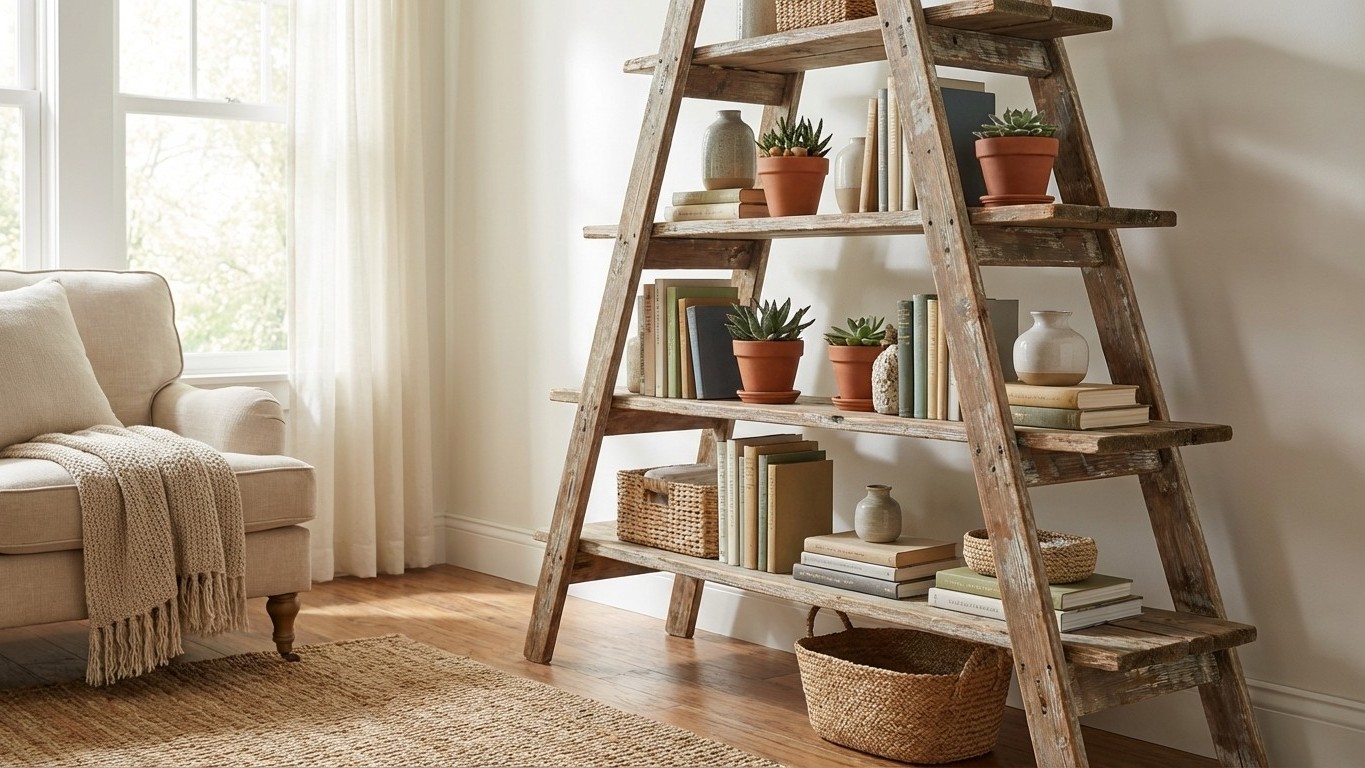
When I inherited my grandmother’s weathered wooden ladder last spring, I knew it deserved a second life rather than a trip to the landfill. That rickety old stepladder, with its chipped paint and loose rungs, seemed destined for the garage sale pile until inspiration struck during a particularly frustrating afternoon of apartment hunting. Faced with tiny rooms and zero built-in storage, I realized this humble ladder could become the perfect space-saving shelf unit—and the best part? I could transform it using nothing but basic hand tools.
The Magic of Manual Methods
Working without power tools isn’t just about necessity—it’s about reconnecting with traditional craftsmanship while creating something uniquely personal. The gentle rhythm of hand sanding reveals wood grain that aggressive power sanders might obliterate, while the precise control of manual tools allows for delicate adjustments that machines simply can’t match. My grandmother’s ladder had character in every scratch and dent, and I wanted to preserve that history while giving it new purpose.
The transformation began with careful assessment of the ladder’s structural integrity. Each rung needed testing for stability, and I discovered that two rungs required minor repairs—nothing that wood glue and some strategic clamping couldn’t handle overnight. The beauty of hand tools became immediately apparent as I used a simple chisel to clean out old glue residue and a manual plane to smooth rough edges. These tools allowed me to work at nature’s pace, feeling the wood respond to each careful stroke.
Preparation proved crucial for success. I started by gently cleaning decades of accumulated grime using warm water, mild soap, and plenty of patience. Once dry, I addressed the peeling paint with a hand scraper—a meditative process that revealed beautiful wood grain underneath layers of green and white paint from various decades. The scraper worked better than any power tool could have, allowing me to preserve the wood’s natural texture while removing only what needed to go.
Creative Shelving Solutions
The real magic happened when I began envisioning how this vertical structure could maximize storage potential. Rather than simply placing boards across the rungs—the obvious solution—I decided to create a more dynamic shelving system that would work with the ladder’s existing geometry. Using a hand saw, I cut reclaimed wood boards to varying lengths, creating asymmetrical shelves that added visual interest while maximizing functionality.
Each shelf required careful measurement and hand-cutting to ensure a snug fit between the ladder’s side rails. The manual saw provided incredible control, allowing me to make minor adjustments with each stroke. I discovered that slightly angling the cuts created wedge-shaped shelves that naturally stayed in place without any additional hardware—a happy accident that became a design feature.
The ladder’s inherent A-frame structure created natural compartments perfect for different storage needs. Lower rungs became ideal for heavier items like books and storage boxes, while upper sections provided perfect display space for plants, decorative objects, and frequently used items. The triangular space at the top became a cozy nook for trailing plants, creating an unexpected vertical garden element.
Finishing Touches That Matter
Hand-finishing brought out the wood’s natural beauty in ways that machine methods never could. Using progressively finer grits of sandpaper wrapped around a hand block, I smoothed surfaces while maintaining the ladder’s authentic character. The rhythmic motion of hand sanding allowed me to feel every grain pattern and adjust pressure accordingly—something impossible with powered sanders.
For protection and enhancement, I chose a simple oil finish applied with cloth rags. Each coat soaked deep into the wood, building richness gradually rather than creating the thick, artificial coating that spray finishes often produce. The oil highlighted the wood’s natural variations while providing practical protection against everyday wear. Between coats, I lightly sanded with fine paper, creating a smooth surface that begged to be touched.
The final assembly required no screws, nails, or complex joinery—just careful fitting and the occasional dab of wood glue where extra security seemed wise. The ladder’s original hardware remained functional, allowing the shelving unit to fold partially for moving or storage if needed. This flexibility proved invaluable during a subsequent apartment move, when the entire unit disassembled and reassembled without damage.
Beyond Function: Creating Connection
This project taught me that working with hand tools creates deeper engagement with both materials and process. Every cut, every sanding stroke, every finish application required attention and intention that power tools often bypass. The resulting piece carries not just my grandmother’s history but also the investment of time and care that only hand work can provide.
Today, this transformed ladder serves as both functional storage and conversation starter in my living room. Friends invariably ask about its origin, creating opportunities to share stories about my grandmother while discussing sustainable approaches to furniture needs. The piece proves that creativity and patience can transform discarded items into beloved household fixtures without requiring expensive tools or advanced skills.
Sometimes the simplest approaches yield the most satisfying results, and working with your hands connects you to generations of craftspeople who built beautiful, lasting things using nothing but skill, patience, and imagination.