
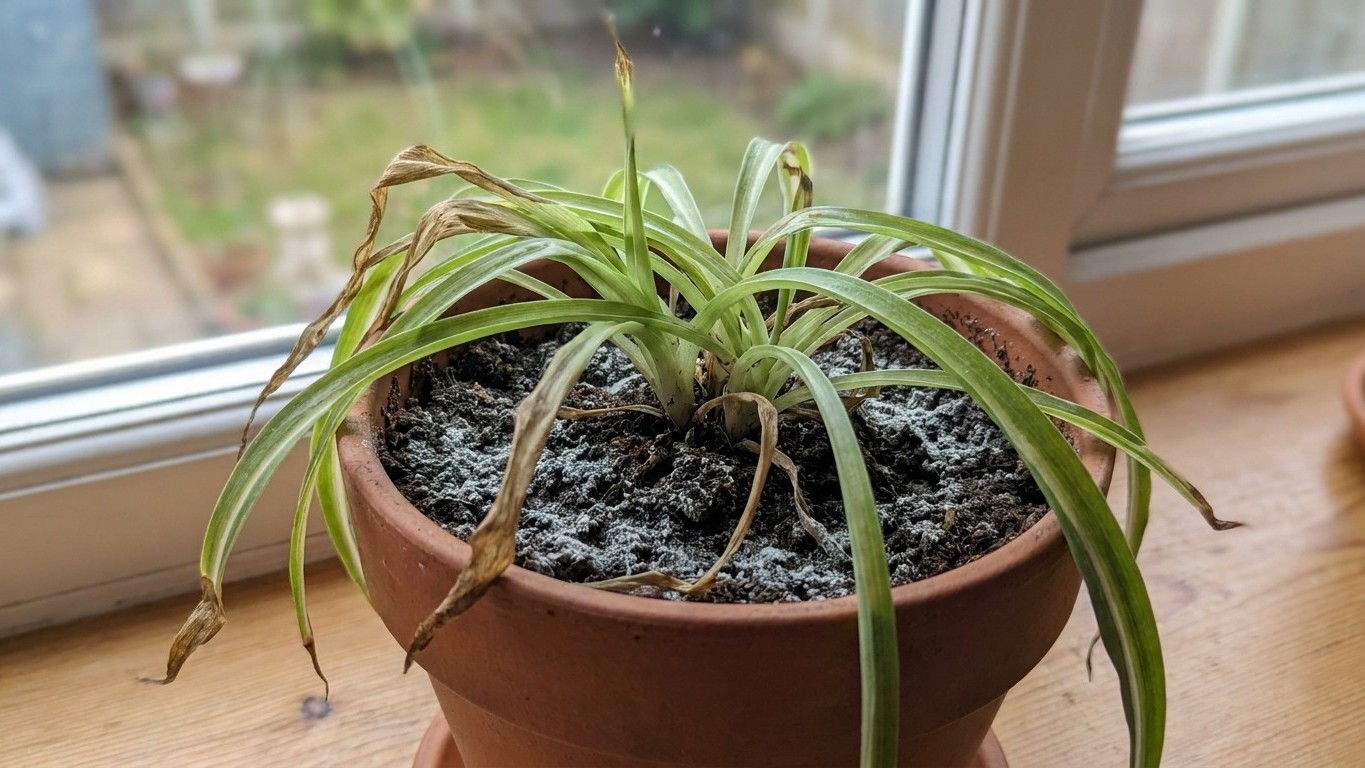
Millions of people have baking soda in their kitchen cabinets, and somewhere along the way, the internet convinced a generation of plant parents that sprinkling it on houseplant soil was practically a superpower. Fight fungus. Boost growth. Sweeten tomatoes. The claims multiplied faster than powdery mildew on a squash leaf. The problem? Most of them don’t hold up to scrutiny, and a few of them can quietly kill the very plants you’re trying to help.
Key takeaways
- The internet’s favorite kitchen remedy could be poisoning your plant’s soil with sodium and salt buildup
- Baking soda raises soil pH too high and locks away essential nutrients like phosphorus and magnesium
- The one thing baking soda actually does well is completely different from how most people use it
The Chemistry Nobody Tells You About
Baking soda is sodium bicarbonate, chemical formula NaHCO₃. It is a salt, and in water it separates into sodium ions and bicarbonate ions. That bicarbonate part is harmless enough, but sodium is an essential plant nutrient, except plants need only very small amounts of it. Too much sodium in soil is toxic to plants and will kill them. That’s the tension at the heart of every baking-soda-as-plant-remedy tip you’ve ever read.
Baking soda has a pH of 8.3. Most plants prefer a soil pH between 6 and 7. A pH over 7 is alkaline and less than 7 is acidic. So when you sprinkle the stuff directly around your monstera or your fiddle-leaf fig, you’re immediately pushing the soil chemistry in a direction that most houseplants find uncomfortable. Because baking soda increases soil pH, many of the important macro and micro nutrients plants need may become unavailable to them. Phosphorus, calcium, magnesium, all locked out by a shift in pH. Your plant looks fed. The soil says otherwise.
The salt buildup is the second problem, and it’s worse in pots than in garden beds. Baking soda is essentially a salt. Salts that build up in soil can cause desiccation of roots and finally leaves and stems. Wilting and stunted growth will be the first signs, and the toxicity can eventually lead to plant death. In a container, there’s nowhere for those salts to go. Every watering concentrates them a little more.
What Happens to the Soil Structure Itself
Baking soda in the garden can also contribute to soil compaction and crust build-up. This leaves the soil less porous, causing nutrients and water to move poorly through it. For a houseplant already sitting in a small pot, compromised drainage is a direct path to root rot, the very condition some people use baking soda to treat. The logic becomes circular, and the plant pays the price.
Sodium accumulation can disrupt soil structure, reducing water infiltration and drainage, a problem especially pronounced in clay soils. Potting mixes often contain peat or coco coir, which are already prone to compaction with age. Adding sodium to that equation accelerates the breakdown. Signs to watch for: leaf tip burn, stunted growth, and wilting even when the soil is moist. The leaves may also develop a bluish-green or gray color.
Acid-loving houseplants, think pothos, ferns, gardenias, or any of the citrus-family specimens people keep on sunny windowsills — are in a different category of risk altogether. Plants that prefer acidic soil, such as blueberries, azaleas, and rhododendrons, can be harmed by even small increases in pH. The sodium in baking soda can be toxic to some plants, especially if used in high concentrations.
Where the Fungicide Myth Comes From (and Where It Falls Apart)
The one claim about baking soda that has some scientific grounding is its antifungal effect, specifically on leaf surfaces, not in the soil. Bicarbonate acts by modifying the pH on the surface of leaves and stems, creating a hostile environment for the development of fungal spores and mycelia. That’s real. Spraying baking soda on the leaves makes the surface become less acidic and limits the ability of fungal spores to grow.
The critical word there is “spraying.” A diluted foliar spray applied to leaves before a fungal outbreak develops is a completely different action from dumping powder directly onto the soil around your plant’s roots. The effects of a baking soda treatment are not long-lasting. The bicarbonate of soda will inhibit spore growth but not kill the spores. Temporary suppression is the ceiling of its effectiveness. New research indicates baking soda’s effectiveness as a fungicide is limited. For anyone dealing with a serious fungal infection, the amount of baking soda needed to actually control it would be damaging to the plant itself.
The pH change baking soda produces in soil is also short-lived. The effect achieved is mild and short-lived. Materials like agricultural lime provide a sustained buffering capacity as they slowly dissolve over months or years. Because baking soda is highly soluble and easily washed out, its pH-raising effect fades quickly. So you’d need to keep reapplying it, compounding the sodium problem each time.
What to Do Instead
If powdery mildew is the actual problem, the better move is potassium bicarbonate. Potassium bicarbonate is more effective and less phytotoxic than baking soda at similar doses. It delivers the same alkaline surface disruption that slows spore germination, without loading the soil with sodium. Neem oil is another solid option: neem oil is widely available and helpful in combating many fungal diseases.
If you genuinely need to raise your soil pH for an alkaline-loving plant, the right tool is dolomite lime, not baking soda. Lime is a traditional option for raising soil pH but acts slowly, taking weeks to months to show effects. Baking soda, on the other hand, works almost immediately, making it ideal for quick adjustments. However, its effects are short-lived, typically lasting only a few weeks, whereas lime provides long-term pH stabilization. For a houseplant that will live in that pot for years, short-lived is not the goal.
The one genuinely useful role baking soda plays in the plant-care world? Testing. Take some soil on a dish and make it muddier. Sprinkle a small amount of baking soda onto the soil. If the combination bubbles, your soil is acidic. It’s a rough, informal test that costs nothing, but it doesn’t replace a proper pH kit, which runs about $10 at any garden center and actually gives you a number to work with. A reaction tells you direction. A number tells you how far to go.
There’s a broader pattern worth recognizing here: baking soda accumulated its plant-care reputation the same way most kitchen-remedy myths do, through a kernel of real chemistry stretched into wildly overclaimed applications. Baking soda is recommended for all sorts of garden uses, but much of this advice is rooted in folklore, not science. The irony is that the one thing it genuinely does well, that quick surface pH shift on a leaf, is precisely what gets misapplied to the soil, where its effects work against almost every plant you own.
Sources : agreenhand.com | thegardeningcook.com