
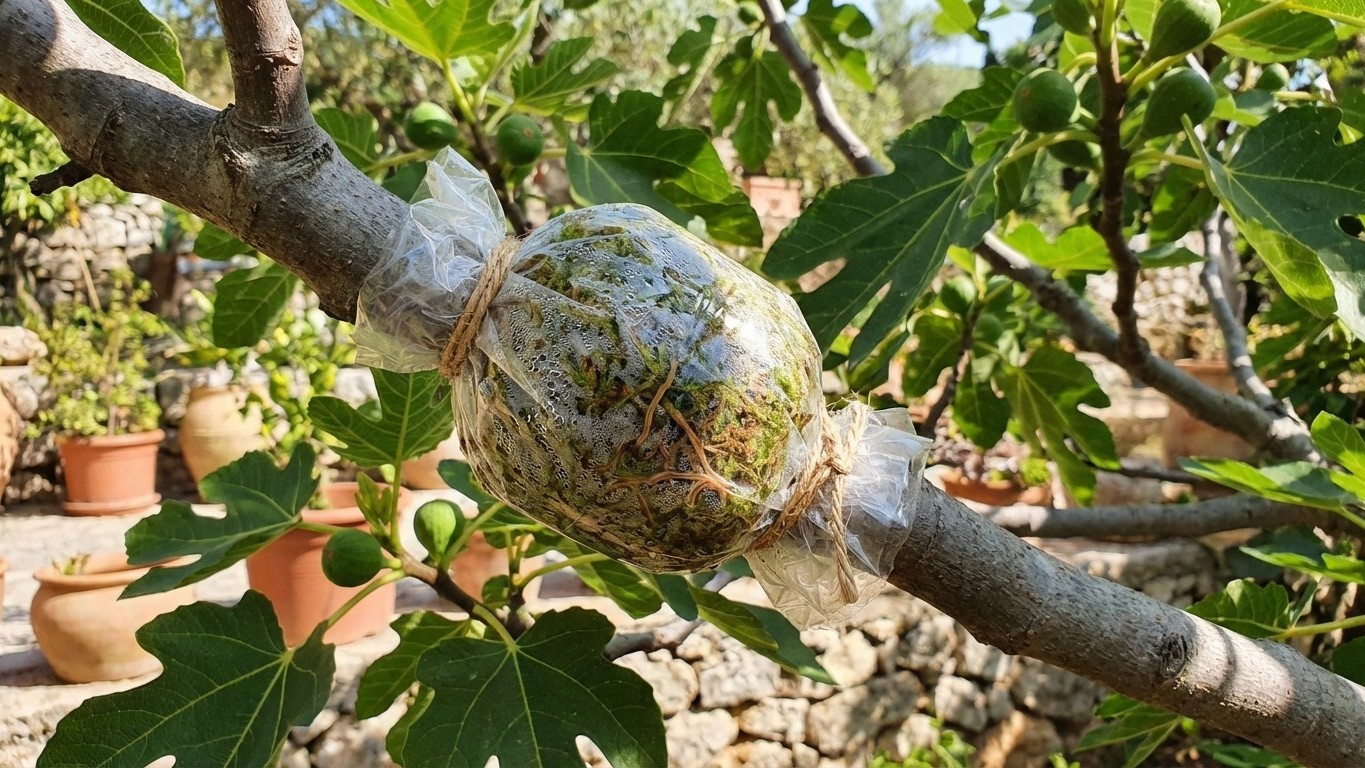
After years of struggling with fig cuttings that would either rot in water or fail to develop strong root systems, I stumbled upon a propagation method that completely transformed my approach to growing these magnificent trees. This ancient technique, practiced by Mediterranean gardeners for centuries, produces healthier, more vigorous fig trees in half the time of traditional cutting methods.
The method I’m referring to is air layering, also known as marcottage, and once you understand why it works so brilliantly for figs, you’ll never want to go back to the frustrating world of temperamental cuttings. Unlike cuttings that must survive on stored energy while desperately trying to develop roots, air layering allows the future tree to remain connected to its parent, receiving all the nutrients and water it needs while developing an impressive root system.
Why Air Layering Outperforms Traditional Fig Cuttings
The fundamental problem with fig cuttings lies in their vulnerability during the critical root development phase. Even under ideal conditions, cuttings face significant stress as they attempt to balance moisture loss through their leaves with the absence of an established root system. Many promising cuttings simply exhaust their energy reserves before roots can form adequately.
Air layering eliminates this precarious balancing act entirely. The branch continues to photosynthesize and receive nutrients from the parent tree while simultaneously developing roots at the designated point. This means you’re essentially growing a fully functional tree that’s already adapted to your local conditions, rather than hoping a stressed cutting will survive the transition.
The success rate speaks for itself. While fig cuttings typically achieve a 40-60% success rate even under careful management, air layering consistently delivers success rates above 90%. More importantly, the resulting trees establish themselves far more quickly once transplanted, often showing vigorous growth in their first season rather than spending months recovering from transplant shock.
The Traditional Mediterranean Approach
This technique has been refined over generations in fig-growing regions where these trees represent both sustenance and investment. The process begins by selecting a healthy, flexible branch from the current or previous year’s growth. The ideal candidate should be pencil-thick to thumb-thick, showing good vigor but still young enough to bend without breaking.
The magic happens through a simple wound that tricks the branch into believing it needs to develop roots for survival. By carefully removing a ring of bark about an inch wide, you interrupt the flow of nutrients back to the parent tree at that point. The branch responds by concentrating root-forming hormones and energy at the wound site, creating conditions perfect for rapid root development.
The wounded area gets wrapped in moist sphagnum moss, then enclosed in plastic to maintain consistent humidity. Unlike the sterile environment of a propagation chamber, this setup creates a living ecosystem around the developing roots. The moss provides gentle support, consistent moisture, and beneficial microorganisms that promote healthy root development.
Timing and Seasonal Considerations
The beauty of this method extends to its flexibility with timing. While spring offers optimal conditions as sap begins flowing strongly, air layering can succeed throughout the growing season. Early summer attempts often show the fastest results, as the tree’s energy is fully mobilized for growth. Even late summer layering can work, though these may require overwintering before separation.
In Mediterranean climates, many gardeners prefer starting the process in late spring, allowing the roots to develop through summer’s warmth while still giving the new tree time to establish before winter. The key indicator for readiness isn’t calendar time but root development – you’ll know success when white roots become visible through the moss, typically within 6-12 weeks.
Regional variations exist based on climate and fig varieties. Cold-climate growers often start earlier in spring and may need to provide winter protection for newly separated trees. In contrast, those in mild winter areas can layer almost year-round, giving them multiple opportunities to expand their fig collection.
Long-term Benefits and Tree Quality
The advantages of air-layered fig trees extend far beyond mere propagation success rates. These trees typically develop more robust root systems from the start, leading to better drought tolerance and nutrient uptake throughout their lives. The absence of transplant shock means they can focus energy on establishing strong scaffold branches during their crucial first years.
Perhaps most importantly, air-layered trees often fruit sooner than those grown from cuttings. Since they never experience the setback of root development while stressed, they maintain their maturity level and can often produce fruit within the first year after separation. This represents a significant advantage for gardeners eager to enjoy homegrown figs.
The technique also allows for selecting propagation material from any part of an established tree, including branches that have already demonstrated desirable characteristics like heavy fruiting or particular vigor. This selective approach enables you to essentially clone the best-performing portions of your existing trees.
After discovering this method, I’ve propagated dozens of fig trees with consistent success, sharing healthy young trees with fellow gardeners and expanding my own orchard with confidence. The initial investment in time feels minimal compared to the frustration of failed cuttings, and the resulting trees have proven themselves superior in every measurable way. For anyone serious about growing figs, this ancient technique offers a path to propagation success that modern methods struggle to match.