
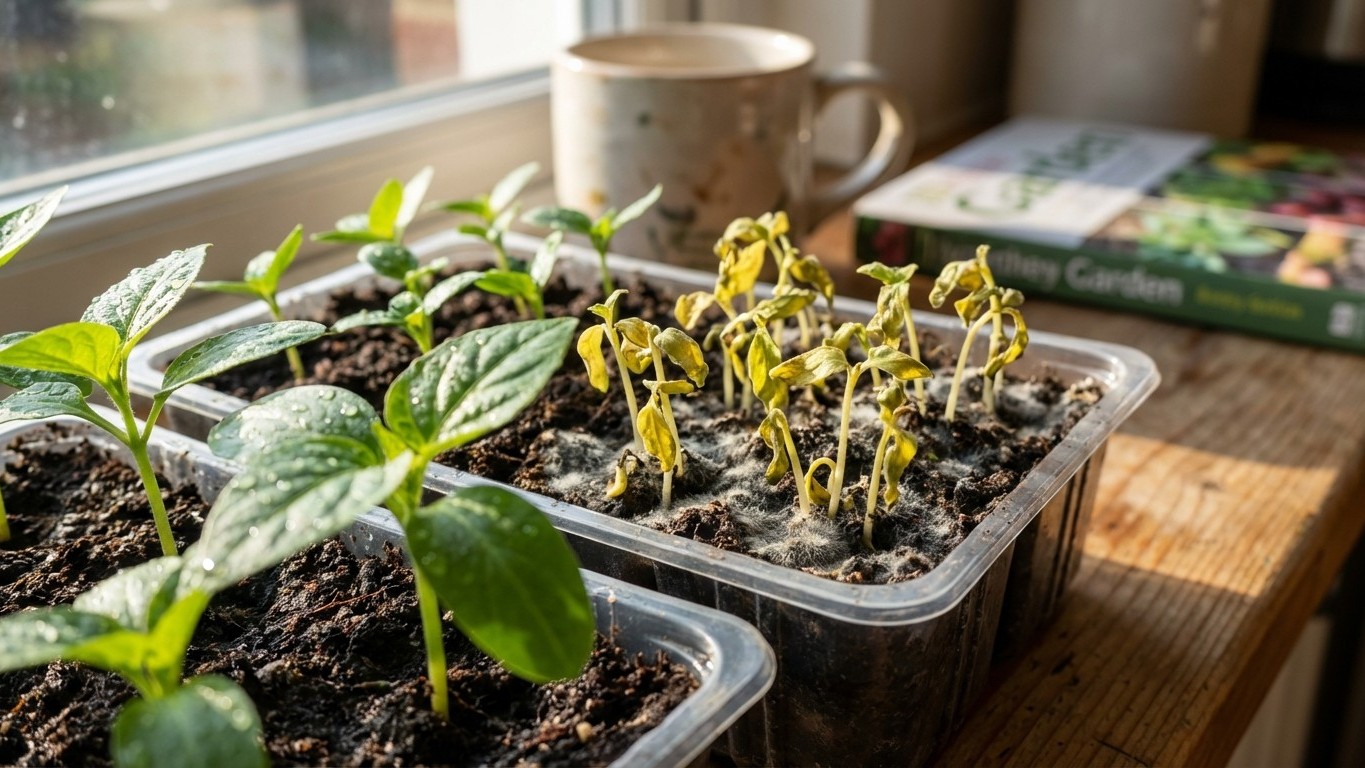
Picture this: You’re filled with February excitement, seed packets spread across your kitchen table, ready to give your spring garden the perfect head start. But within weeks, your carefully tended seedlings are wilting, yellowing, or mysteriously disappearing overnight. You’re not alone – this devastating mistake affects the vast majority of gardeners who start seeds indoors.
The killer culprit? Overwatering – the most common and damaging seed-starting mistake that leads to damping off, root rot, and weak seedlings. What makes this error so insidious is that it stems from love and care. We nurture our tiny green babies with the same protective instincts we’d show any vulnerable creature, but this well-intentioned care can suffocate seeds and seedlings, as they need a delicate balance of air and moisture to thrive.
Why February Seeds Are Particularly Vulnerable
February marks the big kick-off for most gardeners, but old farmers warn against starting seeds on specific dates during this crucial month. The winter environment creates a perfect storm for seed-starting disasters. Indoor air is typically drier, temperatures fluctuate more dramatically, and natural light remains limited – conditions that trick even experienced gardeners into overcompensating with excessive watering.
The key to successful February seed starting lies in counting backward from your intended outdoor planting date, typically 6-8 weeks, but never keeping seedlings in pots for more than 8 weeks. This timing precision becomes critical because starting Plants too early leads to enormous seedlings that can’t survive outdoor planting when weather finally cooperates.
The Maryland extension service offers a stark warning that resonates with frustrated gardeners everywhere: “DO NOT START YOUR TOMATO PLANTS IN FEBRUARY. In fact, do not start your tomato plants until late March or early April, and you will be much happier, and so will your plants.”
The Science Behind the Watering Disaster
Excess water suffocates seeds and seedlings, leading to rot, fungal issues, or damping off, because seeds need a balance of air and moisture to germinate. Think of your seed-starting mix as a sponge – you want the roots to sit in moist dirt that feels like a wrung-out sponge, not soaking wet.
Damping off is caused by fungus that thrives in environments with excessive moisture and poor air circulation, making overwatering the primary trigger for this devastating condition. The disease manifests quickly – a seedling looks healthy one day and completely withers and dies the next. Sometimes the seedlings look like they have been pinched at the soil line, a telltale sign that fungal diseases have taken hold.
Because seeds require consistent moisture to germinate, it’s easy to add too much moisture when watering, but moist soil benefits young plants while soggy, wet soil does not. The solution requires developing what experienced growers call “the touch test” – water gently or from the bottom, checking the soil before each watering session, and if the top layer is still moist, they don’t need more watering.
The Lighting Trap That Compounds the Problem
By far, the number one mistake gardeners make when trying to start vegetable or flower seeds indoors is using a sunny windowsill to provide light, which is simply a recipe for disaster. The light from the sun through a window is too far away, and winter’s arc doesn’t allow enough sun for long enough periods, causing seedlings to grow tall, spindly, and weak.
This creates a dangerous cycle where gardeners notice their struggling seedlings and instinctively increase watering, thinking moisture will compensate for poor growing conditions. The only real solution is artificial light, but it doesn’t require expensive equipment – ordinary and inexpensive LED or fluorescent shop lights work perfectly.
Ordinary shop lights set an inch above seedlings as they grow promote slow, steady growth when turned on for ten to twelve hours each day. This proper lighting reduces stress on plants, making them less susceptible to the damaging effects of both overwatering and underwatering.
Recovery Strategies That Actually Work
If you discover your February seedlings showing signs of overwatering stress, don’t panic. The earlier you catch soggy plants, the better your chances of saving them, and if this is the first time you’ve overwatered, they may recover after a few days of normal growing.
A bit of warmth speeds up growth and dries soil, so while letting soggy seedlings dry, some heat is beneficial to save the roots and remove excess moisture. Sprinkling cinnamon over the soil surface inhibits the growth of damping off fungus, while having a fan gently blowing on seedlings helps with air circulation.
For seedlings showing early signs of stress – wilting leaves despite moist soil or yellowing leaf edges – these counterintuitive symptoms often indicate overwatering due to lack of oxygen in the roots. Let young plants dry if they look healthy but their soil is wet, but avoid this approach if they have yellow leaves, mushy roots, and mold on top of the dirt.
The path forward requires patience and precision. Follow a regular watering schedule as a baseline, then water as necessary to maintain consistent moisture in the pots. Using a spray bottle or gentle watering prevents overwatering, and when unsure, touch the soil – if it feels dry to the touch, it’s time to water.
Remember, successful February seed starting isn’t about giving your plants everything you think they need – it’s about providing exactly what they require for healthy growth. By avoiding these common mistakes and implementing proper solutions, you’ll set the stage for a bountiful and thriving garden. Your Spring garden’s success starts with respecting the delicate balance that seeds need to transform from tiny specks of potential into robust, productive plants ready to flourish in your outdoor space.