
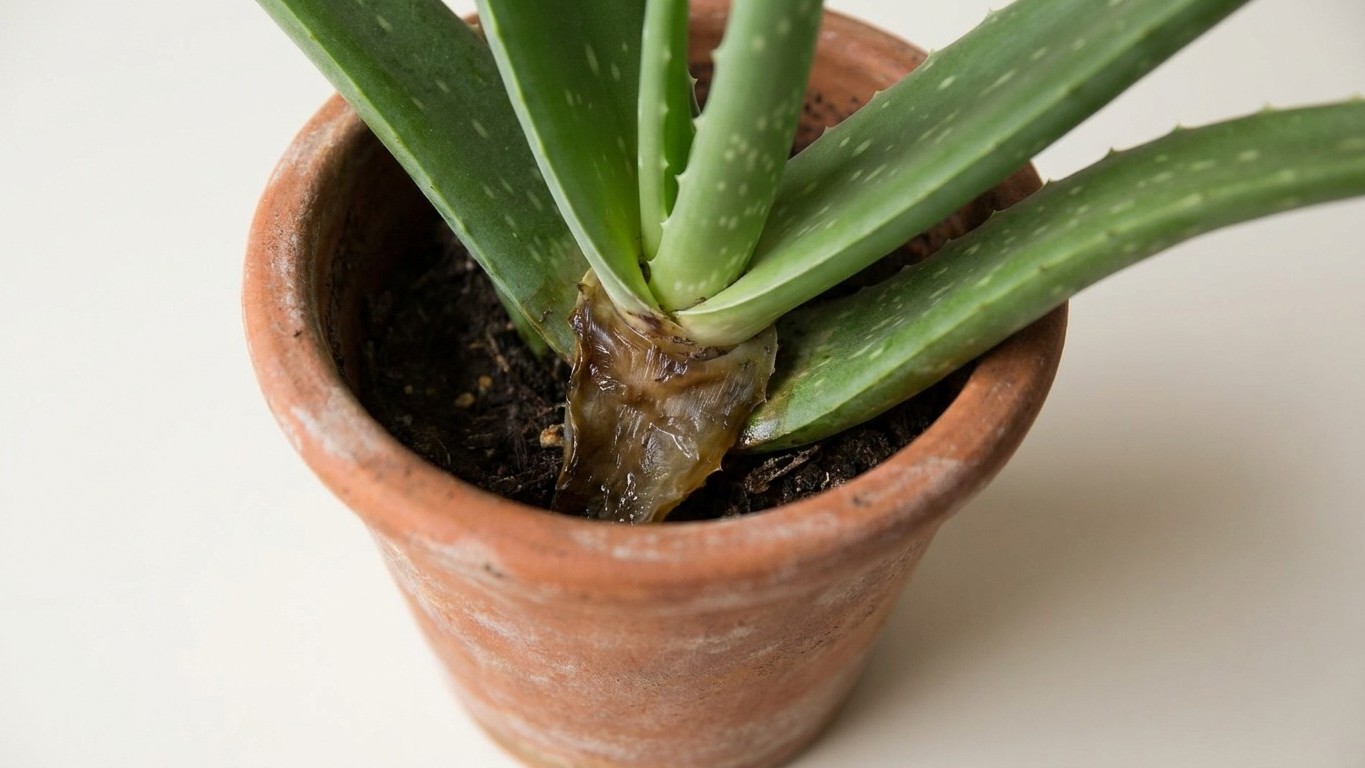
Aloe vera is one of the most forgiving plants on the planet. Drought survivor, desert native, practically immortal, until you water it on a schedule. That’s the trap. A fixed watering routine, the kind that works beautifully for your pothos or your peace lily, is quietly lethal for a succulent that evolved to go weeks without a single drop. Three weeks of weekly watering is often all it takes to tip an aloe from thriving to rotting from the inside out.
Key takeaways
- Weekly watering schedules work for most houseplants but are silently lethal to succulents evolved for drought
- Root rot spreads invisibly underground while leaves stay plump and healthy—until the entire plant suddenly collapses
- A surgical rescue is possible if caught early, but success depends entirely on one overlooked step most people skip
What “base turning to mush” actually means
When the stem or base of an aloe vera goes soft, brown, and translucent, you’re looking at root rot, a condition caused by Phytophthora and Pythium fungi that thrive in waterlogged soil. These pathogens are already present in most potting mixes; they just need standing moisture to explode in population. By the time the base looks mushy to the naked eye, the root system beneath it has likely been compromised for weeks. The rot works from the roots upward, which is why the leaves can look perfectly healthy right up until the moment the whole plant collapses.
The deceptive part is that overwatered aloe doesn’t immediately look overwatered. The leaves stay plump, they’re storing the excess water they can’t process, but underneath the soil, oxygen has been displaced by water in the root zone, and the roots are essentially drowning. A plant that looks fine on a Tuesday can be unsalvageable by Friday.
The “water everything on Sunday” mistake is extremely common
Batch watering is a perfectly rational system. You’re busy, you want one task on one day, and you work through every pot on the windowsill like a checklist. The problem is that you’re applying human scheduling logic to organisms with completely different metabolic rhythms. A spider plant and an aloe vera sitting side by side on the same shelf have almost nothing in common in terms of water needs.
Aloe vera in a home environment, moderate indoor humidity, typical room temperatures between 65°F and 80°F — generally needs watering every two to three weeks in spring and summer, and as infrequently as once a month in fall and winter. That’s not a typo. One watering per month is sometimes the correct answer. The soil should be allowed to dry out completely between waterings, not just at the surface but several inches down. Stick your finger two inches into the soil. If there’s any moisture at all, wait.
Pot choice amplifies the problem significantly. Aloe vera planted in a glazed ceramic or plastic pot retains moisture far longer than one in a terracotta pot, which allows evaporation through its walls. If you’re using a non-porous pot with no drainage hole, a common choice for aesthetic reasons, you’ve essentially built a slow-filling reservoir under your plant’s roots. Decorative cachepots are fine, but the inner nursery pot must have drainage, and any water that collects in the cachepot should be emptied within thirty minutes of watering.
Can you save a mushy aloe, or is it too late?
The answer depends entirely on how far the rot has traveled. Remove the plant from its pot and inspect the roots immediately. Healthy aloe roots are white or pale tan and firm to the touch. Rotted roots are brown or black, soft, and often slimy. If you still have a section of firm, healthy stem above the damaged area, you have a realistic shot at saving it.
The procedure is surgical. Using a clean, sharp knife, sterilized with rubbing alcohol, cut away every rotted section until you reach firm, healthy tissue. Let the cut end callous over in open air for two to three days before replanting. This step gets skipped constantly, and it’s the one that determines success or failure. Placing a freshly cut succulent directly into soil introduces moisture to an open wound, inviting the same fungal problems all over again.
Replant in a mix specifically designed for cacti and succulents, or make your own by combining standard potting soil with coarse perlite at roughly a 50/50 ratio. The goal is a medium that drains fast and doesn’t hold moisture against the roots. Place the rescued plant in bright indirect light, skip watering entirely for the first two weeks, and resist the urge to check by wiggling the plant. Let it anchor itself on its own timeline.
Reading the plant instead of the calendar
The most durable shift in mindset for succulent care is moving from schedule-based to observation-based watering. An aloe vera that actually needs water will show subtle signs: the leaves begin to look slightly less turgid, sometimes curling very slightly inward along their length, and the soil in the pot feels completely weightless when you lift it. That last trick, lifting the pot, is one of the fastest diagnostics available. A pot that feels heavy still has moisture in the root zone. A pot that feels surprisingly light is ready for water.
Seasonal adjustment matters more than most plant guides acknowledge. During winter, when indoor heating drops humidity and growth slows to near-zero, an aloe can sit in dry soil for six weeks and be completely fine. That same plant in July, near a south-facing window, might legitimately want water every ten days. No fixed schedule captures that range.
One underappreciated fact: aloe vera actually blooms more reliably when it experiences a dry, cool rest period in winter. Growers who keep their aloes consistently moist year-round rarely see flowers. The stress of controlled drought, counterintuitively, is part of what signals the plant to put energy into reproduction rather than just survival.