
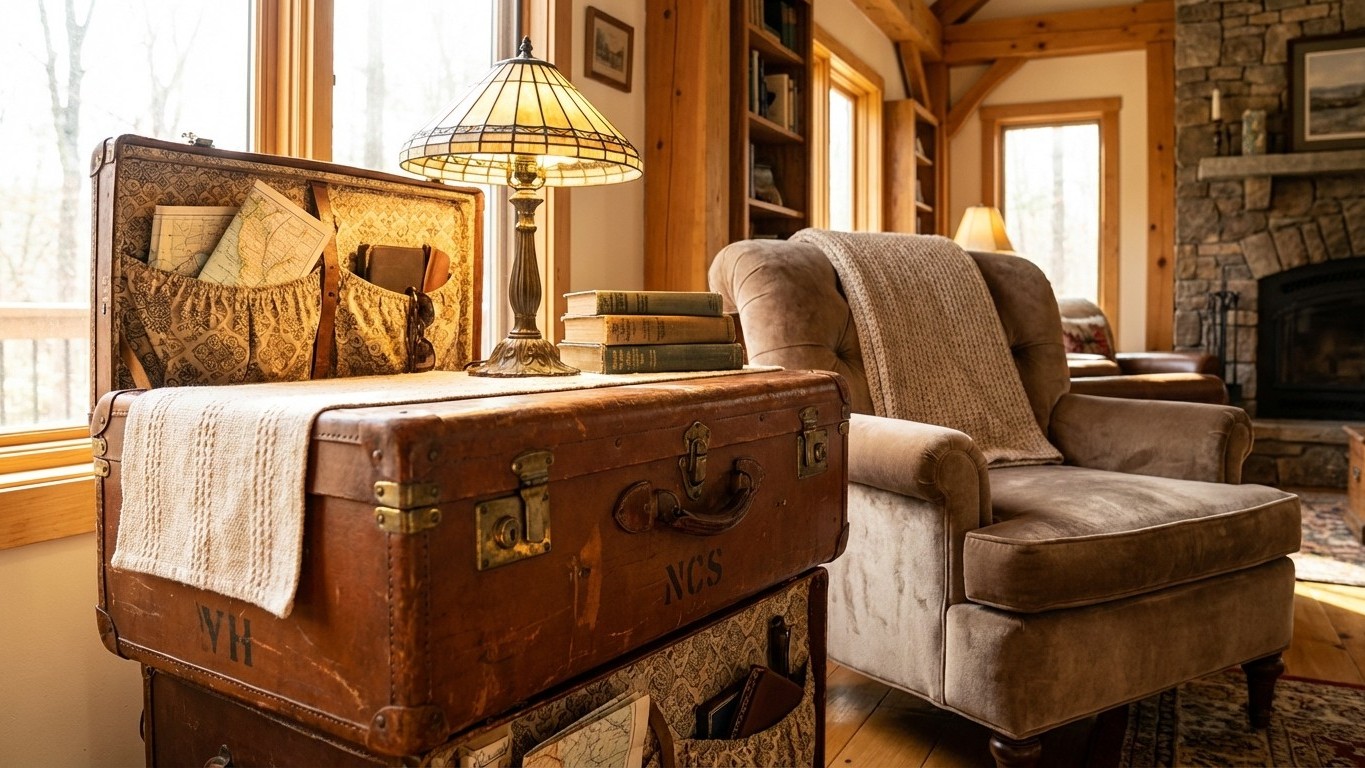
When I inherited my grandmother’s weathered leather suitcase, I couldn’t bear to store it away in an attic corner. This wasn’t just any piece of luggage – it was a portal to stories of cross-country train journeys, family relocations, and adventures that shaped our family history. The brass corners were tarnished, the leather showed decades of faithful service, and the fabric lining had faded to a whisper of its original burgundy. Rather than letting this treasure gather dust, I discovered a way to honor its legacy while giving it new purpose as a functional side table, all without compromising its original integrity.
The Challenge of Preserving While Transforming
Traditional furniture conversion projects often involve permanent alterations that destroy the original item’s value and authenticity. Drilling holes, adding screws, or cutting into vintage pieces can irreversibly damage precious heirlooms. my grandmother’s suitcase presented a unique opportunity to explore reversible transformation techniques that would allow the piece to serve dual purposes without sacrificing its historical significance.
The key insight came from understanding that stability and functionality don’t always require permanent modifications. Vintage suitcases, particularly those from the early to mid-20th century, were built with remarkable structural integrity. Their reinforced corners, quality latches, and sturdy construction make them naturally suited for supporting weight when properly positioned and supported.
The No-Hardware Solution
The transformation relies on strategic placement and removable support elements rather than invasive hardware. The foundation of this approach involves creating a stable base that distributes weight evenly while maintaining the suitcase’s original form. Heavy-duty furniture pads serve as both protective barriers and grip-enhancing surfaces between the suitcase and whatever supports it.
Furniture risers or sturdy decorative blocks can elevate the suitcase to ideal side table height without requiring attachment. These supports slip underneath the suitcase, creating a stable platform that can be easily removed if needed. The weight of the suitcase itself, combined with strategic positioning of internal supports, creates a surprisingly robust structure.
Inside the suitcase, carefully arranged books, storage boxes, or even decorative items can provide internal bracing that prevents sagging while maintaining the piece’s functionality as both furniture and storage. This internal organization system can be completely customized and rearranged as needs change, preserving the flexibility that makes this solution so appealing.
Maximizing Storage While Maintaining Style
The beauty of a suitcase side table lies in its hidden storage capacity. The interior can accommodate everything from seasonal decorations to important documents, extra linens, or rarely used electronics. Organizing these items thoughtfully creates internal structure that supports the table’s surface while keeping belongings easily accessible.
Fabric-lined compartment dividers, which can be found or easily made without sewing, help organize the interior space efficiently. These removable organizers protect stored items while creating the internal framework necessary for structural stability. Acid-free tissue paper protects delicate items while adding subtle bulk that contributes to the overall stability.
The suitcase’s original compartments and pockets become valuable storage zones for smaller items. Document organizers, jewelry boxes, or craft supplies find natural homes in these spaces, turning the side table into a multifunctional storage hub that reduces clutter elsewhere in the room.
Styling for Modern Living
Integrating a vintage suitcase table into contemporary decor requires balancing respect for its historical character with current design sensibilities. The warm tones and lived-in texture of aged leather complement both rustic and industrial design schemes, while the structured lines work surprisingly well with minimalist aesthetics.
A carefully chosen table runner or decorative cloth can protect the suitcase surface while adding color or pattern that ties into the room’s palette. Glass or acrylic sheets, cut to size at any glass shop, provide invisible protection for the suitcase top while creating a smooth surface for drinks, books, or decorative objects.
Lighting plays a crucial role in showcasing the transformation. A vintage-inspired table lamp or modern reading light draws attention to the unique texture and patina of the suitcase while providing functional illumination. The interplay between old and new creates visual interest that makes the converted piece a genuine conversation starter.
This no-drill approach to furniture transformation opens possibilities for other family heirlooms that might otherwise remain unused. Trunks, hatboxes, and even sturdy vintage containers can find new life through similar techniques that honor their history while meeting contemporary needs. The key lies in working with the inherent strengths of well-made vintage pieces rather than forcing them into roles that require damaging modifications.
My grandmother’s suitcase now serves daily as both practical furniture and a tangible connection to family stories. Every time I place a book or coffee cup on its surface, I’m reminded that the best design solutions often come from understanding and respecting what we already have, rather than starting from scratch.