
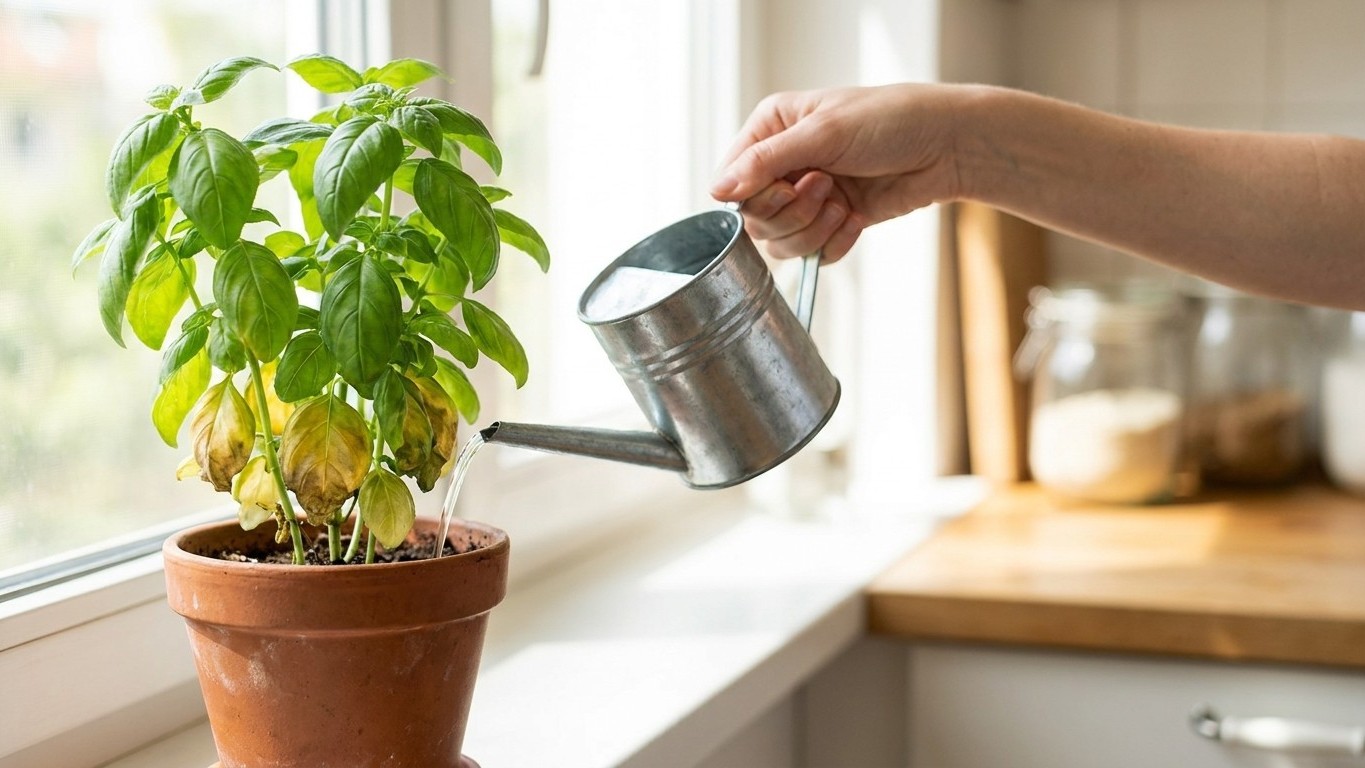
Bottom leaves turning yellow on a basil plant is basil’s version of a distress flare, and the fix that stopped it for good wasn’t complicated: a strict twice-weekly watering schedule paired with a spoonful of Epsom salt dissolved into the can. Not fancy. Not expensive. But it addressed the two things basil complains about most: inconsistent moisture and a magnesium shortage that shows up first in the oldest leaves at the base.
Key takeaways
- Bottom leaves yellow first because basil cannibualizes old growth when nutrients run short—but there’s a pattern to it
- The fix sounds almost too simple: every three days, check soil moisture + one tablespoon Epsom salt per gallon once a month
- Overwatering kills more herb gardens than underwatering, and consistency matters more than any single ingredient
Why the Bottom Leaves Go First
Basil doesn’t yellow randomly. There’s a pattern, and once you know it, diagnosis gets a lot faster. When nitrogen is lacking, the leaves at the bottom get yellow while the ones at the top stay green, because the little nitrogen remaining moves to the youngest leaves, letting the older ones die off. Magnesium behaves the same way. Magnesium deficiency manifests as yellowing between the leaf veins, typically affecting older leaves first. Both minerals are what horticulturists call mobile nutrients: when supply runs short, the plant cannibalizes its oldest growth to keep feeding new leaves at the top.
Overwatering tells a similar story but for a different reason. Basil is quite sensitive to too much moisture, and when the soil stays overly wet, roots struggle to access oxygen, which can lead to root rot, with the earliest sign being yellowing leaves that usually begin at the plant’s base. That’s the trap a lot of enthusiastic new herb gardeners fall into: they water daily out of love, and the roots slowly suffocate. A rigid twice-a-week rhythm, rather than a “whenever I feel like it” approach, forces you to check the soil instead of just dumping water on autopilot.
What Epsom Salt Actually Does
Epsom salt is magnesium sulfate, and it earns its reputation because of what those two minerals do inside the plant. Magnesium and sulfur are important macronutrients necessary for plants to thrive: magnesium is crucial for producing chlorophyll, and sulfur aids in protein production. Chlorophyll is the pigment that keeps leaves green, so a magnesium shortfall shows up exactly the way rust shows up on an old bike, gradually and starting at the weakest point.
The dosing that comes up most often across gardening references is modest. Mix a solution of 2 1/2 tablespoons per gallon of water, or for a large-scale garden, about 1 to 2 pounds of Epsom salt into every 100 gallons of water. For a houseplant in a container, that scales down considerably: basil is particularly sensitive to magnesium deficiency, which can cause yellowing between leaf veins, and if this occurs, supplement with Epsom salts dissolved in water at one tablespoon per gallon, applied monthly. That last detail matters. Monthly, not weekly. This isn’t an ingredient you dump in every time you water.
Here’s the part most quick-fix articles skip: Epsom salt isn’t a cure-all, and overdoing it backfires. Unless you’re growing basil on a large scale in soil that has been depleted of magnesium over time, you probably won’t need to add Epsom salt to your plants. Push it too far and the consequences aren’t cosmetic. Too much magnesium can diminish a plant’s calcium intake, leading to new problems like root rot, and indoor plants can develop magnesium toxicity when too much Epsom salt is used in small pots. There’s also a chemistry detail worth knowing before you get generous with the tablespoon: basil grows best with soil that has a pH range between 6.0 and 7.5, and sulfates from Epsom salt can decrease the pH level. A monthly dose is a supplement, not a diet.
The Watering Rhythm That Makes It Work
Twice a week isn’t a magic number so much as a discipline. It forces a finger-check instead of habit-watering. Testing soil moisture by inserting a finger 1–2 inches deep, and pausing watering if it still feels damp, is the standard advice for avoiding root rot. Container basil in a bright kitchen window dries faster than the same plant sitting in a shaded corner, so the schedule is a starting point, not a rulebook carved in stone.
Drainage does half the work that fertilizer gets credit for. Enhancing drainage with pots that have drainage holes and a well-draining soil blend, and watering only when the top inch of soil is dry while applying water directly to the base and avoiding the leaves, prevents most moisture-related yellowing before it starts. Combine that with a light, consistent feeding routine and you’ve covered both failure modes at once, thirst and drowning, nutrient theft and nutrient overload.
When Yellowing Isn’t About Water or Minerals
Before crediting the watering can for every green leaf, it’s worth ruling out the scarier possibilities, because they mimic the same symptom. Basil downy mildew starts as yellowing of leaf tissue between the veins, and while that chlorosis also signals nutritional deficiency, a look at the underside of the leaves confirms the disease, since purple-brown spores on the bottom of the leaves are a sure sign of infection. Fusarium wilt is the nastier cousin, and it doesn’t forgive. According to the University of Maryland Extension, Fusarium propagules persist in soil for 8 to 12 years, so infested ground cannot be remediated in a single season. If bottom leaves are yellowing alongside fuzzy gray-purple patches underneath, or streaks running down the stem, that’s not a mineral problem, and no amount of Epsom salt in the world will fix it.
What the twice-a-week-plus-Epsom-salt combo really proves is less about the ingredient and more about consistency. A basil plant that gets the same moisture level and the same light dose of magnesium every time, instead of feast-or-famine care, simply has fewer reasons to sacrifice its oldest leaves. The next time a plant starts shedding from the bottom, the watering can is worth checking before the fertilizer aisle.
Sources : foodgardening.mequoda.com | yourindoorherbs.com