
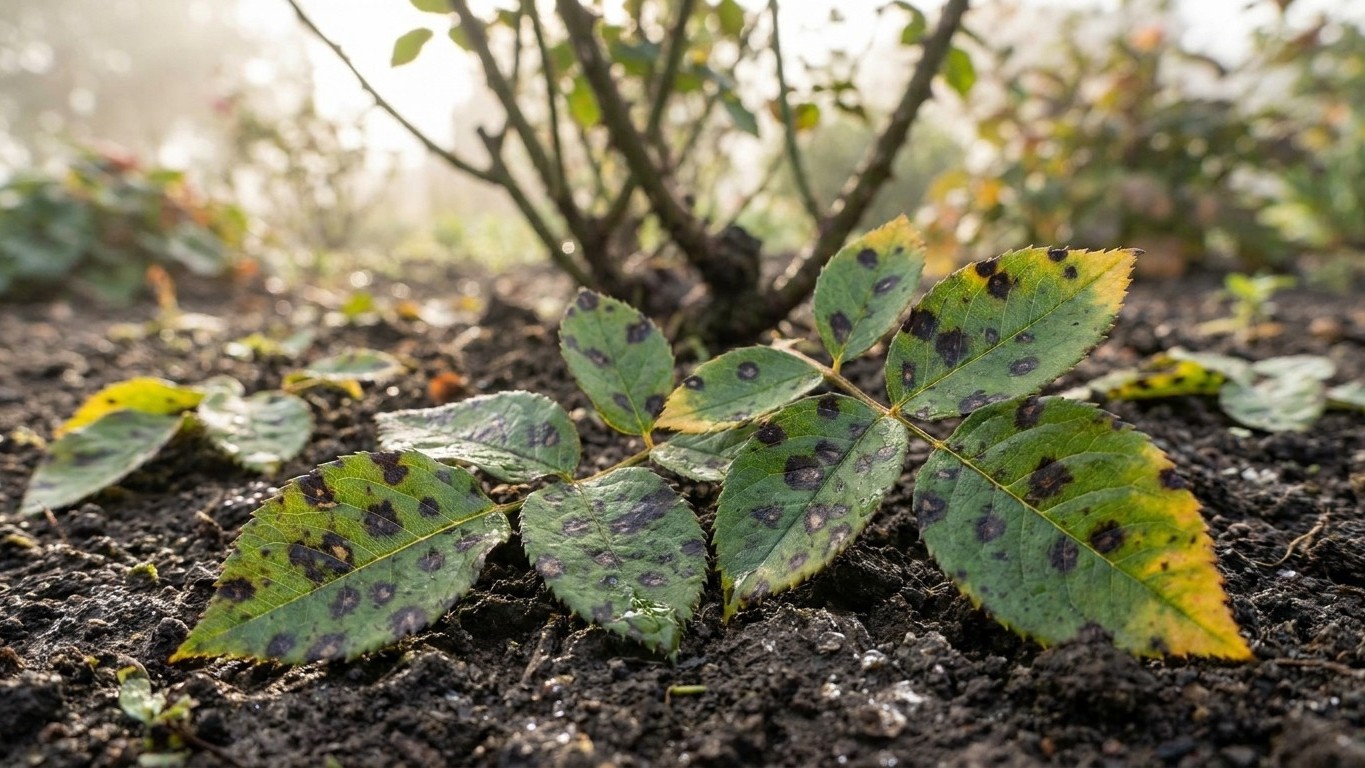
Black-spotted rose leaves left on the ground don’t just sit there quietly through winter. They act as a live reservoir, holding onto a fungus that wakes up the moment temperatures climb and rain starts falling in spring. Leaving that debris under the bushes because it “covered the soil nicely” is a mistake made by a lot of gardeners, and by May, the consequences show up on the very first new shoots.
Key takeaways
- A single damp night in April is all it takes to restart an entire disease cycle on vulnerable new growth
- The fungus doesn’t just hide in fallen leaves—it also overwinters on infected stems, waiting for spring to strike
- A rose bush can go from looking fine in April to half-bare by June if the infection spreads unchecked
What was actually growing under those leaves
The culprit is Diplocarpon rosae, the fungus behind rose black spot, one of the most common and damaging diseases roses face in home gardens. Black spot, caused by the fungus Diplocarpon rosae, is the major foliar disease of roses in Indiana, and infected leaves develop black spots, turn yellow and drop prematurely from the plant. Those blotches with the ragged, feathered edges aren’t cosmetic damage. They’re the visible sign of a fungus that has already colonized the leaf tissue and is preparing its next generation of spores.
Here’s the part that catches people off guard: the fungus doesn’t die when the leaf falls. The fungus spends the winter on fallen leaves and also in dormant infections on young stems and buds, producing spores in the spring to infect young foliage. that carpet of spotted leaves acting as mulch under the rose bush all winter was never inert. It was a dormant colony, patiently waiting for the right combination of warmth and moisture. The fungi will winter over in the debris under the rose plant ready to infect the plant again when new spring growth appears.
The trigger is almost embarrassingly simple. In the spring, fungal spores are windblown or splashed onto newly emerging leaves on the lower portion of the plant. A single spring shower, or even a heavy morning dew, is enough to launch spores from last year’s dead leaves straight onto this year’s tender new growth. And new leaves are the most vulnerable target there is. Leaves are most susceptible when young and must remain moist overnight before infection can occur. Given that blackspot infection can occur after just seven hours of continuous leaf wetness, a single damp night in April is all it takes to restart the entire cycle.
Why the infection shows up so fast, and spreads so far
Once the first lesions appear, the disease doesn’t stay contained for long. A new crop of spores is produced and spreads to healthy portions of the plant, and the cycle of infection is ready to begin again within 10 to 18 days. That’s roughly two weeks between one infected leaf and a whole new wave of spots climbing up the stem. Left unchecked through a wet spring, this compounding cycle explains why a rose bush that looked perfectly fine in April can be half-defoliated by June.
There’s a physiological trick at play, too, one that most gardeners never learn about. Leaves infected with black spot produce the plant hormone ethylene, and in leaves, high ethylene content leads to leaf drop, so rose plants infected with black spot are defoliated early and look bare. The plant essentially triggers its own leaf-shedding response as a side effect of infection. That’s a defense mechanism gone sideways: the rose sacrifices leaves to limit damage, but each dropped leaf becomes fresh fuel for next year’s outbreak if it’s left on the ground. Dropped leaves around the base of the plant then serve as a reservoir of fungal spores, reinfecting the plant during subsequent rains.
Left untreated over successive seasons, the damage compounds well beyond ugly foliage. Premature defoliation decreases plant energy reserves and results in reduced flowering of roses as well as weakening of plants to make them more susceptible to other site/cultural stresses, including winter damage. A rose that loses its leaves every summer to black spot enters winter already weakened, which makes it more vulnerable to cold injury on top of everything else.
Breaking the cycle before next spring
The fix isn’t complicated, but it does require abandoning the idea that fallen leaves are harmless ground cover. Fall leaf debris should be raked up and discarded, since removing leaf litter combined with pruning out diseased canes will help reduce overwintering blackspot fungi. Composting is tempting because it feels efficient, but resist it: dispose of infected leaves rather than composting them, since the disease can overwinter on infected debris.
Pruning matters just as much as raking, because the fungus doesn’t only hide in leaves. Canes get pulled in too, showing small purplish blotches on the current season’s growth, and those blotches are where the fungus sits out the winter. Cutting back infected canes in late winter, before new growth breaks, removes a second overwintering site the fungus relies on. Some growers go a step further with mulch, since old mulch that’s absorbed a season’s worth of fallen spores can harbor them too; refreshing the top layer around the base in early spring is a small extra precaution.
Watering habits deserve a second look as well, since moisture is the single ingredient the fungus can’t do without. Watering early in the day helps leaves dry quickly, morning sun helps leaves dry quickly, and watering at night leaves leaves wet and vulnerable to disease all night long. Switching to drip irrigation or a soaker hose at the base of the plant, rather than an overhead sprinkler, removes the splash mechanism spores need to travel from soil to leaf in the first place.
None of this guarantees a black-spot-free bush forever. These actions will help delay the onset of the disease, but are of limited value because spores are bound to blow in on wind-blown rain from elsewhere. Some rose varieties are simply more prone to it than others, with hybrid teas and grandifloras generally struggling more than sturdy shrub and floribunda types. But raking up that “convenient” leaf cover each fall, rather than letting it sit through winter, is still the single cheapest thing a rose grower can do to keep next May’s shoots from opening straight into an infection that’s been waiting for them all along.
Sources : ncbi.nlm.nih.gov | flourishingplants.com