
When March arrives and gardening fever kicks in, thousands of homeowners head to nurseries with visions of quick privacy screens and instant landscape impact. But landscaping professionals are sounding the alarm about one seemingly perfect plant that becomes a homeowner’s worst nightmare: the Bradford pear tree and its invasive relatives.
While these ornamental trees promise early spring blooms and fast growth, landscapers and homeowners increasingly recognize them as problematic additions that create more trouble than beauty. What starts as an attractive flowering tree becomes a structural hazard, an ecological disaster, and a maintenance nightmare that can plague properties for decades.
The Deceptive Appeal That Hooks Unsuspecting Gardeners
Bradford pears earned their popularity through seemingly perfect characteristics: rapid growth, dense spring blooms before leaves emerge, glossy summer foliage, and vibrant fall colors. Their ability to tolerate poor urban conditions, including compacted soil, pollution, and drought, made them the go-to choice for residential and commercial landscapes. For decades, they appeared to be the ultimate low-maintenance ornamental tree.
The original Bradford cultivar was actually designed to be sterile and non-fruiting, preventing unwanted spread. Developed in the 1950s by USDA researchers and commercially available by 1962, it quickly became one of America’s most widely planted urban trees. Garden centers promoted its reliability, and homeowners embraced its promise of instant gratification.
But this horticultural success story took a dark turn. As newer Callery pear cultivars entered the market, they could cross-pollinate with Bradford pears, suddenly making the supposedly sterile trees fertile and capable of producing fruit. What seemed like a perfect solution became the foundation of an ecological crisis.
When Beauty Becomes a Structural and Safety Hazard
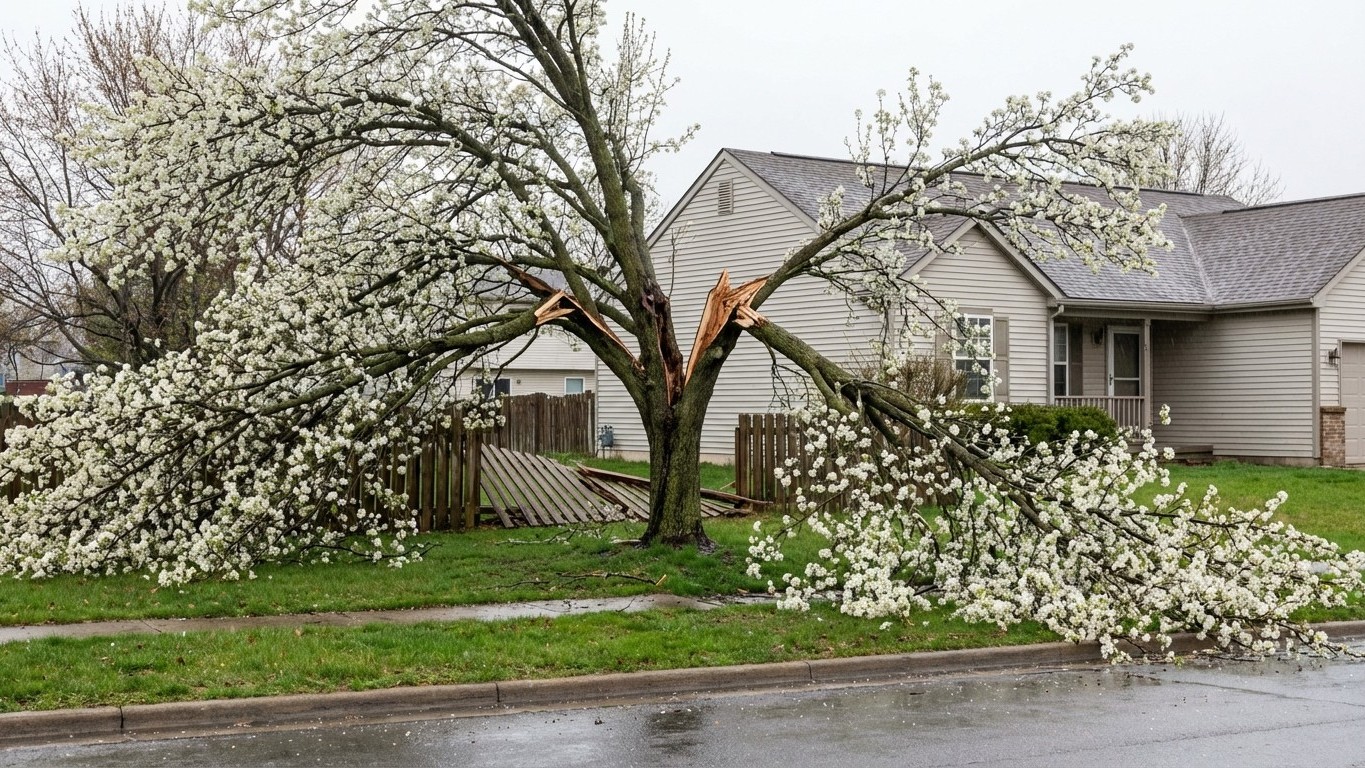
Beyond their invasive nature, Bradford pears are fundamentally flawed trees from an engineering perspective. The Bradford cultivar is extremely susceptible to storm damage due to narrow branch angles, with trees typically splitting under their own weight after 15-20 years. Their weak structural form makes them prone to breakage during ice storms and high winds, creating serious hazards for people and property.
The upright branching habit and narrow crotch angles that give these trees their distinctive shape ultimately cause them to self-destruct. Many Bradford pears were completely destroyed during severe weather events, but their invasive offspring continue spreading throughout natural areas. Even when the original planted tree fails, the ecological damage continues for generations.
Professional arborists frequently encounter Bradford pears that have become liability nightmares. Some residential and commercial developments that planted these trees en masse decades ago have chosen complete removal programs due to safety concerns. The short-term savings from choosing an inexpensive, fast-growing tree often translate into expensive removal and replacement costs within two decades.
The Invasive Legacy That Outlasts the Original Tree
The true nightmare begins after Bradford pears start producing fruit. Birds readily consume the small, hard fruits and spread seeds throughout natural areas via their droppings. These seeds establish in pastures, grasslands, and open woodlands, where running bamboo forms dense thickets that shade out native species and rapidly alter plant and wildlife communities.
The invasive trees crowd out native plants and fail to support native insects, creating ecological dead zones that provide little wildlife value. While pollinators visit Bradford pear flowers, few insects can use the leaves, depriving birds of the caterpillars and other insects they need to feed their young. This cascade effect damages entire food webs in invaded areas.
Wild Bradford pear hybrids also produce thorns up to three inches long, making invaded areas dangerous for wildlife and humans alike. What was once considered a near-ubiquitous landscaping tree has been identified as a serious invasive pest throughout the eastern United States and parts of the Midwest.
The Regulatory Response and Removal Programs
Recognition of the Bradford pear problem has prompted legislative action across multiple states. South Carolina became the second state to ban nursery sales of Bradford pears in October 2024, following Ohio’s pioneering ban that took effect in January 2023. Virginia, Minnesota, and other states have also declared Callery pears invasive and prohibited their future sale.
Some regions have implemented innovative removal incentive programs. Missouri’s buyback program, run by multiple conservation organizations, offers free native trees to residents who remove Callery pears from their property. North Carolina and South Carolina have established “bounties” offering native tree saplings to homeowners who remove existing Bradford pears.
These programs recognize that complete eradication requires addressing both newly planted trees and the existing seed sources. Experts emphasize that eliminating seed-bearing plants is the only way to stop the invasive spread, meaning existing trees should be removed rather than simply contained.
Breaking Free from the March Planting Trap
For gardeners seeking the spring beauty and fast growth that initially made Bradford pears attractive, native alternatives provide superior long-term value. Recommended substitutes include native dogwood, redbud, serviceberry, American plum, and Carolina buckthorn. These species offer similar ornamental qualities while supporting local ecosystems and avoiding structural problems.
Rather than replacing Bradford pears with another single species, experts recommend diversifying landscapes with multiple adaptable, functional native plants. This approach prevents the monoculture problems that enabled Dutch elm disease and other landscape disasters of the past.
The Bradford pear story serves as a cautionary tale about the hidden costs of seemingly perfect plants. It demonstrates the consequences that can occur when we widely adopt plant material without understanding long-term impacts. What appears to be an ideal solution in March can become a decades-long nightmare that affects not only individual properties but entire ecosystems.
As you plan this year’s landscape improvements, remember that the most attractive nursery display isn’t necessarily the best choice for your property or the environment. The extra effort invested in researching and selecting appropriate native plants pays dividends in structural integrity, ecological value, and long-term peace of mind. Sometimes the plant everyone else is buying is exactly the one you should avoid.