
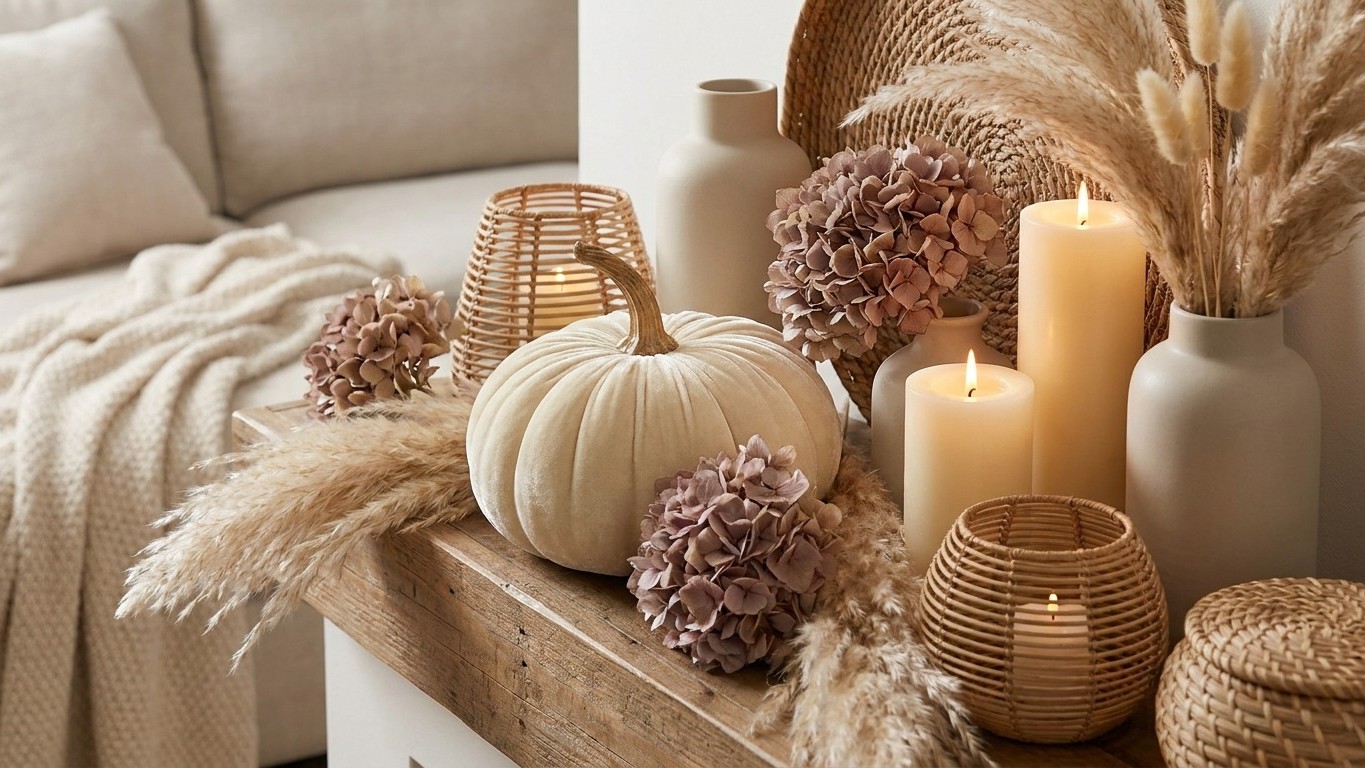
A mantel with three heights, two textures, and one odd number of pumpkins will always outperform a row of matching gourds lined up like soldiers. That’s the actual rule behind fall styling that looks curated rather than dumped from a big-box store bag. The rest is just knowing which materials to reach for and where to put them.
Most people overthink the pumpkins and underthink everything else. Real ones rot within six to eight weeks indoors depending on humidity, which is fine if you’re styling in late September but a problem if you want the display standing through Thanksgiving. Faux pumpkins made from foam or plastic have gotten good enough that the velvet-flocked and heirloom-variety versions (the bumpy pink Cinderella style, the pale blue-green Jarrahdale) are hard to distinguish from real ones at mantel distance. Mixing one or two real mini pumpkins in front with faux larger ones behind is the trick stylists actually use: the real ones add scent and authentic texture up close, the faux ones handle the bulk and the longevity.
Key takeaways
- The real pumpkins vs. faux trade-off stylists use to balance authenticity with longevity
- Why centering everything on your mantel is the biggest design mistake most people make
- How texture does more visual work than color in fall styling—and what most beginners skip entirely
Building height before you add a single pumpkin
A flat mantel reads as clutter no matter what’s on it. The fix is establishing three levels before any seasonal decor goes down: a tall anchor piece against the wall, a medium layer in front of that, and low accents at the base. The tall anchor is usually a mirror, art, or a large branch arrangement, not a pumpkin at all. Dried pampas grass, painted or natural, has become the default tall element in the past few years because it’s inexpensive, ships flat, and lasts indefinitely without water. Bunches of preserved wheat, dried eucalyptus stems, or even bare branches spray-painted matte black work the same way.
Once that vertical line exists, the medium layer is where pumpkins actually live, clustered off-center rather than centered under the anchor piece. Centering everything is the single most common mistake in mantel styling; asymmetry is what makes a display look designed instead of assembled. Push the main pumpkin cluster to one side, roughly two-thirds across the mantel, and let the other third breathe with just a candle or a small stack of books.
Texture layering: the part people skip
Texture does more visual work than color on a fall mantel, and it’s the piece most beginners leave out entirely. A mantel with only smooth pumpkins and shiny leaves looks flat under lamp light because everything reflects light the same way. Layering in matte, rough, and soft surfaces breaks that up: a chunky knit throw draped asymmetrically off one end, a woven rattan tray under the pumpkin grouping, a scattering of dried pods or pinecones with actual bark texture, a few sprigs of preserved boston fern or dried hydrangea with papery petals.
Dried florals specifically solve a problem fresh flowers can’t: they hold their shape for months instead of days. Hydrangea heads dry particularly well because their petals are already papery when fresh; hanging them upside down in a dark, dry spot for two to three weeks locks in most of the color, with blues and greens shifting toward dusty mauve and sage. Bunny tail grass, dried lavender, and preserved eucalyptus (the kind treated with glycerin, which keeps stems flexible instead of brittle) round out a mix that costs less over a season than replacing fresh stems weekly. Craft and home stores now carry pre-dried bundles specifically marketed for fall arranging, which shortcuts the drying process for anyone starting in October rather than August.
The color mistake worth naming directly: going all orange. A mantel that’s orange pumpkin, orange leaves, and orange candles reads as a costume display, not a home. Professional stylists lean on a restrained palette instead, usually two neutrals (cream, taupe, charcoal) plus one seasonal accent color, whether that’s a deep rust, a muted sage, or a dusty plum. The pumpkins can absolutely be white, sage green, or charcoal gray rather than orange; that alone modernizes the whole look without changing the arrangement.
Candles, greenery, and the finishing pass
Once the pumpkins and dried florals are placed, candles do the job of tying height and warmth together. Varying candle heights within a single grouping, rather than matching them, mimics the same three-level logic as the mantel overall. Unscented pillar candles in a graduated cluster (say, three heights within four inches of each other) read more expensive than a single oversized candle, and they avoid the scent competition that happens when a cinnamon-vanilla candle fights with fresh eucalyptus.
A thin runner of fresh or preserved greenery along the base, tucked partly behind the pumpkins rather than laid flat in front, adds a final grounding layer without competing for attention. Magnolia leaves work well here because their undersides are naturally brown and leathery, which plays into the same matte texture logic as the rest of the display, and they hold up for weeks without water if cut with some maturity on the stem.
The last move, and the one people forget, is stepping back ten feet and checking the display from across the room, not from arm’s length while arranging it. Details that seem essential up close (a specific pinecone, a particular ribbon) often disappear entirely at normal viewing distance, while gaps in the height progression become obvious. Adjusting from that distance, rather than from the mantel itself, is what separates a display that photographs well from one that actually looks good walking into the room every day for the next two months.
One more practical note: if the mantel sits above a working fireplace, keep dried florals and anything flammable at least a foot back from the firebox opening, and skip real candles directly on the mantel surface if the flue gets regular use. A tall pillar candle radiates more heat upward than people expect, and dried pampas grass in particular catches fast. The safest version of this whole look uses LED taper candles for the flame effect and saves the real flame for the fireplace itself.