
I’ve got solid material. Time to write the article.
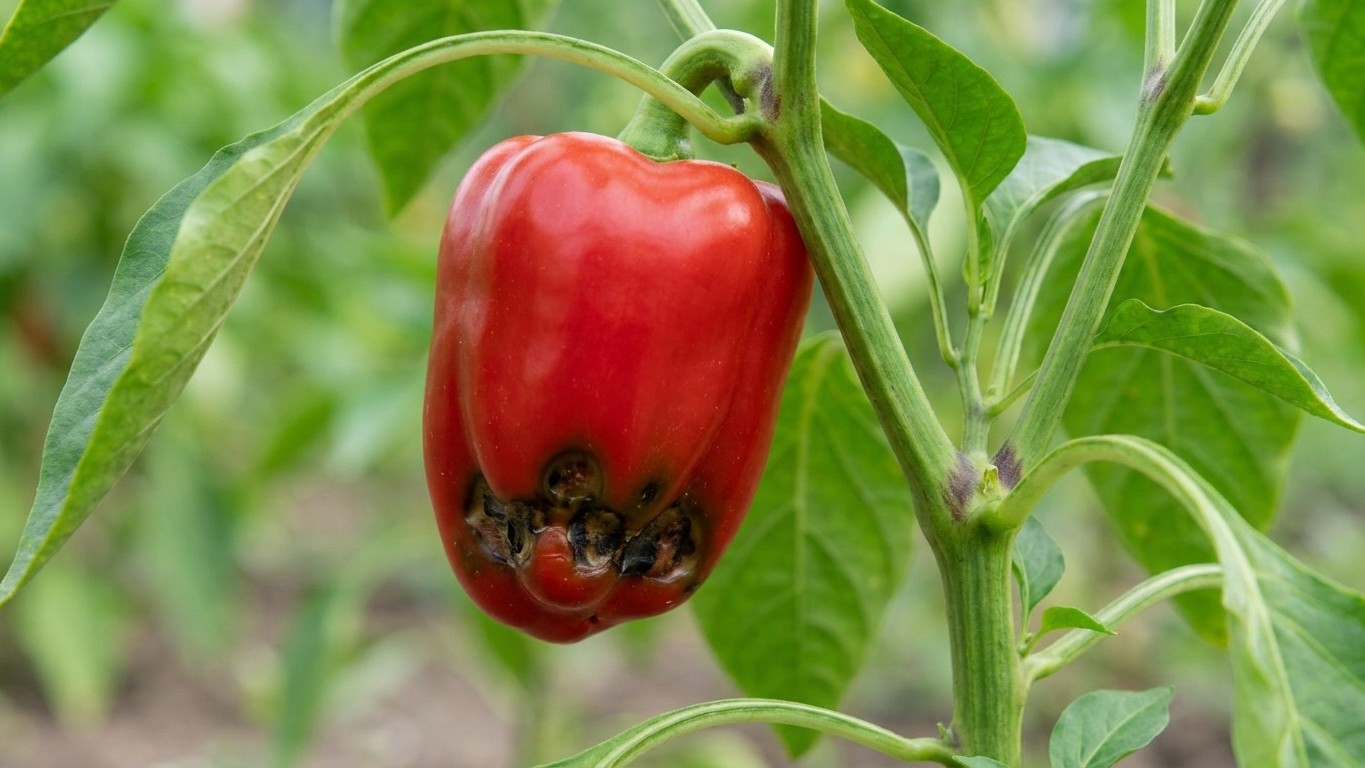
Sunken black patches on the bottom of a pepper are one of the most common midsummer disappointments in a vegetable garden, and the instinct to fix them with a shovelful of compost is almost universal. Unfortunately, that instinct usually misses the target. Blossom end rot is often associated with fluctuations in soil moisture or rapid growth and rarely results from inadequate levels of calcium in the soil, and maintaining uniform soil moisture and preventing excessive vegetative growth can help minimize it in pepper. The problem was never a hungry soil. It was a watering can with a mind of its own.
Key takeaways
- The soil likely has enough calcium, but your watering patterns are preventing the plant from accessing it
- Blossom end rot appears suddenly in midsummer because watering switches from consistent to erratic as heat arrives
- The fix isn’t dramatic: mulch, steady moisture, and a timer beat any amendment dumped in after symptoms show
What’s actually happening inside the fruit
Blossom-end rot results from a calcium deficiency in young, rapidly expanding pepper fruit tissues, and symptoms begin as a light green or yellow-colored sunken spot that expands to a larger collapsed area that begins to turn black, often from secondary fungal growth moving into the already-dead tissue. It looks like a disease. It behaves like one, spreading and darkening over a matter of days. But it is a physiological disorder and is not caused by fungi, bacteria, or any other living disease microorganisms. No spray fixes it, because there’s nothing to kill.
The confusion comes from the word “calcium.” Gardeners hear “deficiency” and reach for lime, bone meal, or a truckload of compost, assuming the soil itself is running low. Peppers rarely have a supply problem. They have a delivery problem. Calcium moves into the plant from the soil with water, and since the blossom end of the fruit is the farthest point where calcium accumulation takes place, larger fruits and longer fruits seem to be most susceptible. Calcium doesn’t travel through the plant on its own steam. It rides along with water, sentence by sentence, drop by drop, and if that water flow stutters, the calcium simply doesn’t show up where it’s needed, even if there’s plenty of it sitting in the dirt.
That’s the part that catches people off guard. Blossom-end rot occurs when the pepper plant doesn’t have enough access to calcium, which means it cannot properly grow new skin at the blossom-end, so in a nutshell it’s caused by a calcium deficiency. But the problem is not usually caused by insufficient calcium in the soil, and it is much more likely that some other cause is preventing the plant from uptaking or transporting calcium properly. Adding more compost doesn’t open a closed valve. It just adds more material around a pipe that was never blocked in the first place.
The watering can was the real culprit
Here’s where the August timeline makes sense. Early summer waterings tend to be generous and frequent because the plants are small and the weather is mild. Then the heat arrives, watering gets skipped for a day or two because the soil “still looked damp,” and suddenly there’s a marathon soaking session to make up for it. When that water flow gets interrupted even briefly, calcium cannot reach the fast-growing cells at the bottom of the fruit in time, like a delivery system where the roads keep closing and reopening, so even if the warehouse is fully stocked, the goods never arrive on time.
Both extremes do damage. Excess watering causes plants to become stressed, and the reason overwatering causes calcium deficiency is that it limits the amount of oxygen available to roots, which inhibits their ability to absorb nutrients. Underwatering causes the opposite kind of stress, but the outcome lands in the same place. Erratic watering cycles that yo-yo between drought stress and oversaturated soils contribute heavily to the development of blossom end rot. A pepper plant doesn’t care whether the swing is dramatic or subtle. It cares whether the swing happens at all.
What actually stops it from coming back
The fruit already showing black tips is a lost cause, and there’s no reversing that particular battle. But the plant itself can recover fast once the watering pattern steadies out, and new fruit sets without the same defect. The fix isn’t dramatic. It’s boring, in the best way.
Mulch does more heavy lifting than most gardeners give it credit for. Mulch’s real job is buffering: it slows how fast a downpour saturates the soil, and then slows how fast that soil dries out again once the sun returns, while beds with no mulch swing harder between soaked and bone-dry, which is exactly the inconsistency that triggers blossom end rot in the first place. A two-to-three-inch layer of straw, shredded leaves, or wood chips around the base of each pepper plant absorbs the shock of both a missed watering day and an overcorrected soaking.
Compost still has a role, just not the one most people assign it. Compost, mulch, slower watering, and fewer root disturbances usually change more than another handful of amendment scattered after symptoms appear. Worked into a bed over time, compost improves the soil’s ability to hold water evenly, which smooths out exactly the kind of swings that starve fruit of calcium. Dumped in reactively in August, after the black tips have already shown up, it does almost nothing for the current crop.
Factors that encourage blossom-end rot include low soil pH and low levels of calcium, inconsistent watering, shallow watering or droughty conditions, and excessive use of nitrogen fertilizers. That last point matters for anyone who’s been feeding pepper plants heavily to push growth. Too much nitrogen, particularly in ammonium form, pushes the plant toward fast leafy growth that outpaces its ability to deliver calcium to fruit at the same rate.
For containers, the math is even less forgiving. A fruiting pepper in a small pot can dry too fast for calcium movement even when watered every morning, which is why moving up a pot size often solves a repeat problem that fertilizer never touches. In a raised bed or in-ground row, the fix is usually a soaker hose or drip line set on a timer, delivering the same modest amount of water at the same time each day rather than a big Sunday-afternoon drenching followed by four dry days. Consistency, not quantity, is the whole game.
Sources : knowthepepper.com | positivebloom.com