
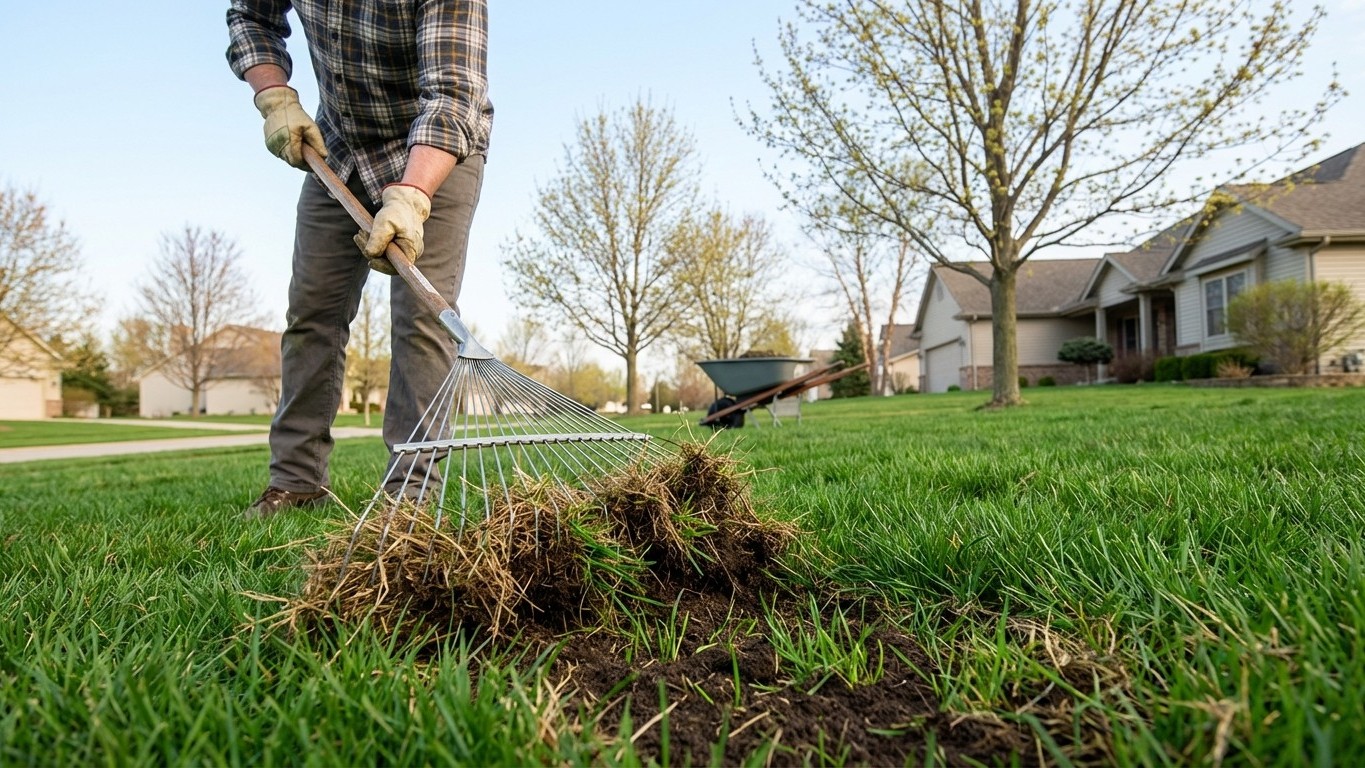
March signals the awakening of your lawn from its winter dormancy, setting the stage for a lush, green expanse that can become the envy of your neighborhood. While many homeowners focus on mowing and fertilizing, there’s an often-overlooked practice that can dramatically enhance your lawn’s health and appearance: dethatching.
Key takeaways
- Discover the hidden lawn care step that many gardeners miss in March.
- Why dethatching could be the game-changer for your lawn’s health.
- Learn the timing and techniques that can transform your grass this spring.
Understanding Thatch and Its Impact
Thatch is a layer of dead grass, roots, and organic material that accumulates between the soil surface and the green vegetation. A thin layer of thatch can be beneficial, providing insulation and moisture retention. However, when it becomes too thick, exceeding half an inch, it can hinder water, nutrients, and air from reaching the soil, leading to shallow root systems and increased susceptibility to pests and diseases.
The Art of Dethatching
Dethatching involves removing this excessive layer to allow your lawn to breathe and absorb essential nutrients. Garden expert Monty Don recommends giving your lawn a “good scratch” with a wire rake in March to eliminate overwintering thatch and moss, thereby improving light and water penetration to the roots. monty don lawn care tips for march
To dethatch effectively, use a specialized dethatching rake or a power dethatcher for larger areas. Gently rake the lawn to lift and remove the thatch layer, being careful not to damage the healthy grass beneath. This process clears the way for new growth. Also, reduces the risk of fungal diseases that thrive in moist, thatch-heavy environments.
Complementary Practices for Optimal Lawn Health
After dethatching, consider aerating your lawn to further alleviate soil compaction. Aeration involves perforating the soil with small holes to enhance the penetration of air, water, and nutrients. This practice is particularly beneficial in March, as it stimulates root growth and promotes dense turf. march tips
Overseeding is another valuable step post-dethatching. By spreading new grass seed over existing turf, you can fill in bare spots and improve the overall density of your lawn. This method introduces more resilient grass varieties without the need for a complete lawn renovation. overseeding information
Fertilization should be approached with caution. While it’s tempting to apply a high-nitrogen fertilizer to jumpstart growth, over-fertilizing can lead to excessive thatch buildup and weak roots. Opt for a balanced, slow-release fertilizer to provide consistent nutrients without overwhelming your lawn. top five lawn care mistakes to avoid in march
Timing and Weather Considerations
The timing of dethatching is crucial. Perform this task when the soil is moist but not waterlogged, and when the grass is actively growing. In most regions, early to mid-March is ideal. Avoid dethatching during periods of drought or extreme heat, as this can stress the lawn further.
Weather patterns can be unpredictable in March, so monitor local conditions and adjust your lawn care schedule accordingly. If the ground is still frozen or excessively wet, it’s best to wait until conditions improve to avoid damaging the turf.
Final Thoughts
Incorporating dethatching into your March lawn care routine can make a significant difference in the health and appearance of your grass. By removing the barrier of thatch, you enable your lawn to access the essential resources it needs to thrive. Combine this practice with aeration, overseeding, and mindful fertilization, and you’ll be well on your way to cultivating a lawn that shocks your neighbors. Also, provides a vibrant, green space for you to enjoy throughout the season.