
Three sushi rolls, one side of edamame, and two little tubs of extra sauce. Hardly a monumental meal, but the aftermath told another story. By the next morning, my kitchen counter looked like a tribute to petroleum-based convenience: a teetering pile of black plastic rectangles and clear lids, freshly rinsed but already haunting me with the question, how many more would it take to drown my recycling bin? And what about the landfill where half of them would likely end up anyway?
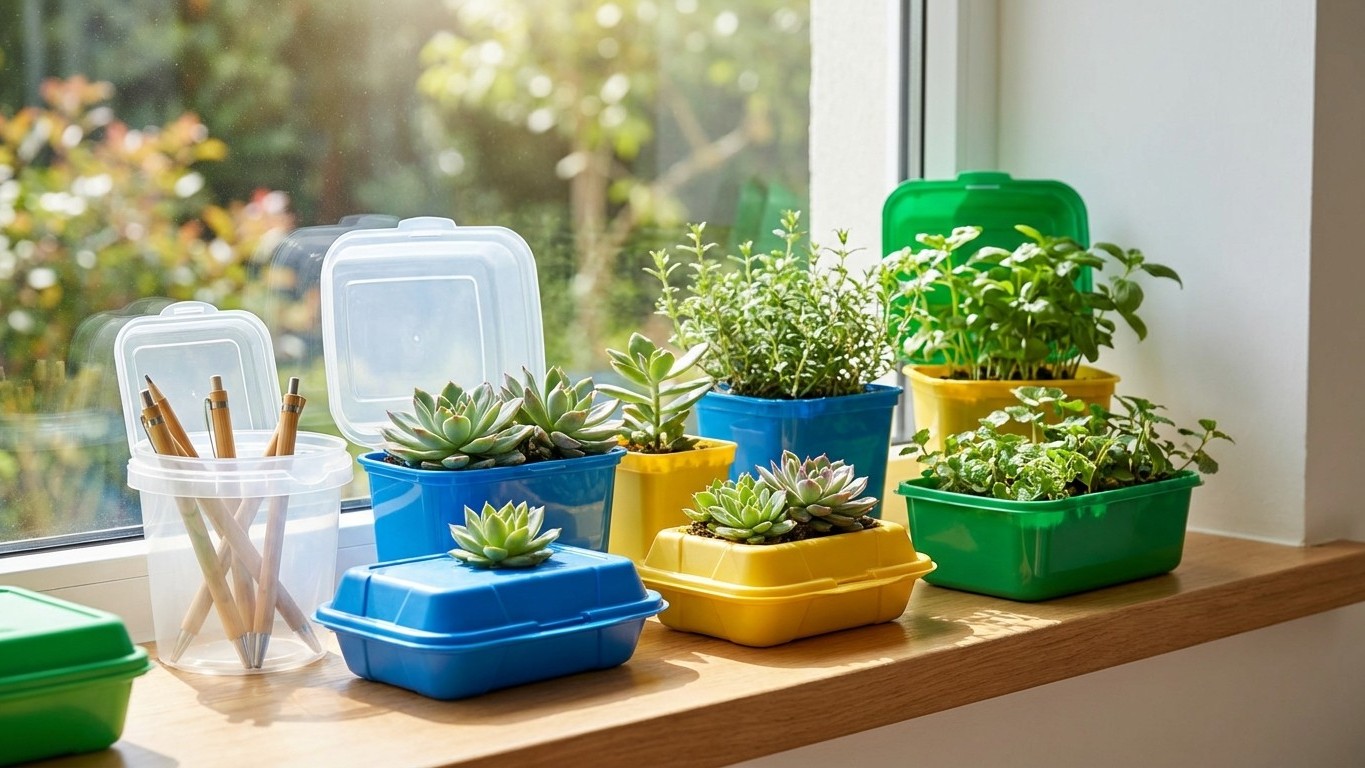
Then, an offhand comment from a friend landed like a pebble in a pond. She gestured at her windowsill, dotted with thriving pothos and baby spider plant cuttings. “You realize none of those pots came from a store, right?” She flicked at the familiar edge of a takeout container, now reincarnated as a planter. In that moment, the link between last night’s takeout and my growing craving for home decor snapped into focus.
Key takeaways
- What if your next decor piece is hiding in your takeout box?
- A simple trick turns plastic waste into personalized style.
- See how reusing containers sparks creativity and reduces shopping.
Plastic Container Alchemy: Zero Waste Meets Indoor Style
Decorating usually means opening the wallet and closing the box on another round of manufactured style. But what if the finishing touch hiding in plain sight was something you’d normally toss, or, at best, recycle with a guilty shrug? That’s the real trick: seeing those plastic containers as raw material, not rubbish. They’re uniform enough to bring cohesive order to chaos, and generic enough to bend to your aesthetic will, with just a bit of time and imagination. The result? A custom look that doesn’t bleed your bank account or mock your green ambitions.
Let’s face it, most mass-market planters, organizers, and decorative wrappers don’t add personality. They’re just another shade of beige hiding on a shelf, hundreds of miles from their factory birthplace. In contrast, each plastic box you transform carries a tale from a late-night craving or that lunch you almost canceled. There’s a kind of personal archaeology in building your space from these leftovers.
From Trash to Treasure: The DIY Process
I admit, the first cut was the hardest. Scissors hovered over a clamshell that once held dumplings, hesitation flooding in, was this really going to work or just make my apartment seem more like a thrift store’s castoff bin? But a quick swipe with paint, a bit of twine around the rim, and suddenly the container took on a new life. Not “hidden reuse” but an actual design statement.
Soft plastics sometimes need a gentle sanding to help paint stick, and acrylic paint tends to survive the watering and sunlight better than traditional craft options. Those clear lids? They aren’t trash either. Give them a quick rinse, punch a few holes for drainage, and you’ve got matching saucers for your planters, no more muddy puddles under your window tomatoes.
The trick that kept me coming back wasn’t just the money saved, though let’s be honest, decorating with what you have is like finding a twenty-dollar bill in your jacket. It was the sense of control and creativity. Instead of swallowing whatever a store decided was “on trend,” I picked my color schemes, played with texture, and mixed up arrangements depending on my mood. Even the smallest apartments can host a jungle when you’re not counting every ceramic pot like a rare collectible.
Storage, Planters, and More: The Hidden Potential
Three months. That’s how long it took before I realized I’d stopped browsing for cute desk organizers and mini planters entirely.
Those shallow salad boxes from the poke place became the perfect seed-starting trays. Longer, taller containers made surprisingly elegant desk caddies after a coat of matte spray paint and a strip of faux leather glued around the middle. I’ve even seen crafty friends use them as forms for homemade candles, though, for the sake of accidental melting, sticking to low-heat uses is advised.
One quirk you notice quickly: plastic takeout containers, unlike traditional decor, invite you to experiment. If a color doesn’t work, repaint. Too shallow? Stack two and glue. Need matching pieces for a party? Ten minutes with a few containers and washi tape and you’ve got a tablescape that looks far pricier than the pizza you ordered to get the materials. And since there’s always another takeout night on the horizon, the raw material pipeline never runs dry.
Beyond the DIY: A New Relationship With Stuff
There’s an irony at the core of this shift. The more I started reusing old containers, the less I wanted to buy new things, plastic or otherwise. Not just from a moral high horse, but because the act of creating, repurposing, and personalizing decor meant I was already meeting that itch for something new. The process was the reward.
Numbers put it in perspective: Americans toss out enough plastic each year to circle the globe four times, according to the EPA. Every reused container chips a little at that figure. Think of it as a tiny rebellion against disposable culture, a homegrown version of the repair-and-reuse ethos that still shapes entire cities in Europe. And if you ever really need to replace one, there’s always another delivery, and another container, waiting on your doorstep.
Friends come over now and eye the rows of polka-dot planters on the shelf. At least three have adopted the method for their own homes. It’s infectious, less Instagram-influencer, more neighborhood innovation. Sometimes, the best interior hacks don’t come from a magazine or a big-box store, but from necessity mixed with a drop of creativity and just enough laziness to avoid another trip to the mall.
Of course, the real question is: if we can so easily find beauty in plastic castoffs, what else are we overlooking in our rush to replace instead of reuse? Perhaps, next time you’re fishing out that last dumpling, you’ll see a new home for your pothos, and a little less need to “add to cart.”