
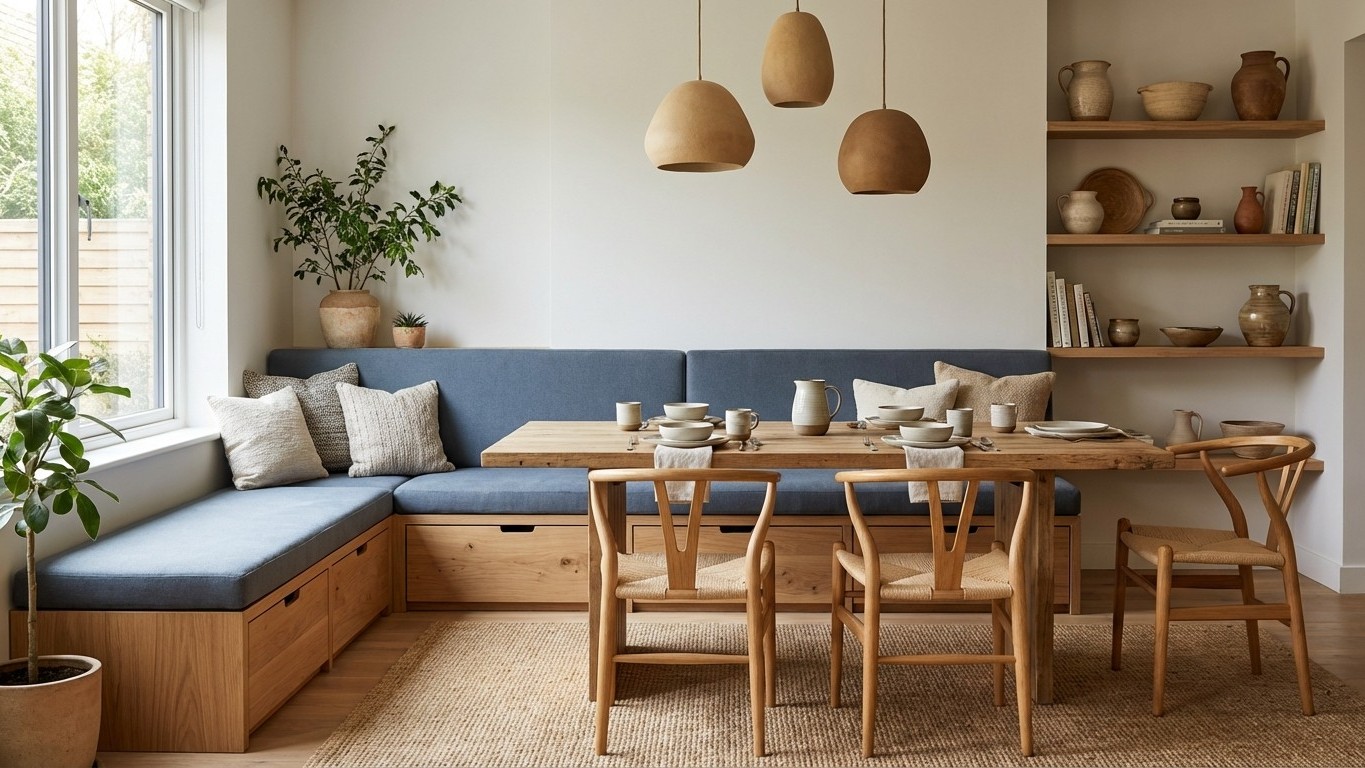
Imagine walking into a dining room where the traditional lineup of chairs has been replaced by sleek, inviting benches. This isn’t just a fleeting design choice; it’s the dining trend of 2026 that’s reshaping how we gather and dine at home.
Key takeaways
- Why benches are making a stylish comeback this year
- The blend of comfort, design, and sustainability driving the trend
- How benches change the way we gather and dine at home
The Rise of Bench Seating
Benches are making a significant comeback in dining spaces, offering a fresh alternative to conventional chairs. Their appeal lies in their versatility and ability to create a more communal and flexible dining experience. Unlike chairs, benches can accommodate varying numbers of guests, making them ideal for both intimate family dinners and larger gatherings.
Designers are embracing this shift, noting that benches contribute to a relaxed and inviting atmosphere. They break the formality often associated with traditional dining setups, encouraging longer conversations and a more casual dining experience. This trend aligns with the broader movement towards creating spaces that are functional. Also, foster connection and comfort.
Design and Functionality
Modern benches are far from the simple wooden planks of the past. Today’s designs incorporate plush upholstery, built-in storage, and ergonomic features that enhance both aesthetics and usability. For instance, the Chenille Stripe Slate Blue Aldridge Storage Dining Bench combines style with practicality, offering a spacious storage compartment beneath its comfortable seating. This design is particularly beneficial for smaller kitchens, where maximizing space is crucial.
Moreover, the integration of benches allows for creative mixing and matching with other seating options. Pairing a bench on one side of the table with chairs on the other introduces visual interest and caters to diverse seating preferences. This eclectic approach reflects the 2026 trend of personalized and curated interiors, moving away from uniformity towards spaces that tell a story.
Embracing Organic Forms
The preference for benches also ties into the broader design trend of incorporating organic shapes and materials. Curved lines and natural textures are gaining popularity, as they bring a sense of warmth and approachability to interiors. Benches with soft, rounded edges and upholstered in natural fabrics align with this aesthetic, creating a harmonious and inviting dining environment.
Additionally, the use of sustainable materials in bench construction resonates with the growing emphasis on eco-friendly design. Homeowners are increasingly seeking furniture that looks good. Also, aligns with their values of sustainability and responsible consumption.
Practical Considerations
When considering incorporating a bench into your dining area, it’s essential to assess the available space and the bench’s dimensions. Benches can be a space-saving solution, especially in narrower rooms, as they can be tucked under the table when not in use. However, ensuring there’s enough room for guests to sit and move comfortably is crucial.
Comfort is another key factor. Opting for benches with back support and cushioning can enhance the dining experience, encouraging guests to linger longer. Additionally, considering the bench’s height in relation to the table ensures a cohesive and comfortable setup.
As we move through 2026, the shift from traditional chairs to benches in dining spaces reflects a broader desire for interiors that are flexible, communal, and reflective of personal style. This trend redefines the aesthetics of dining rooms. Also, transforms how we experience meals and gatherings at home. Perhaps it’s time to reconsider your seating arrangements and embrace the bench revolution.