
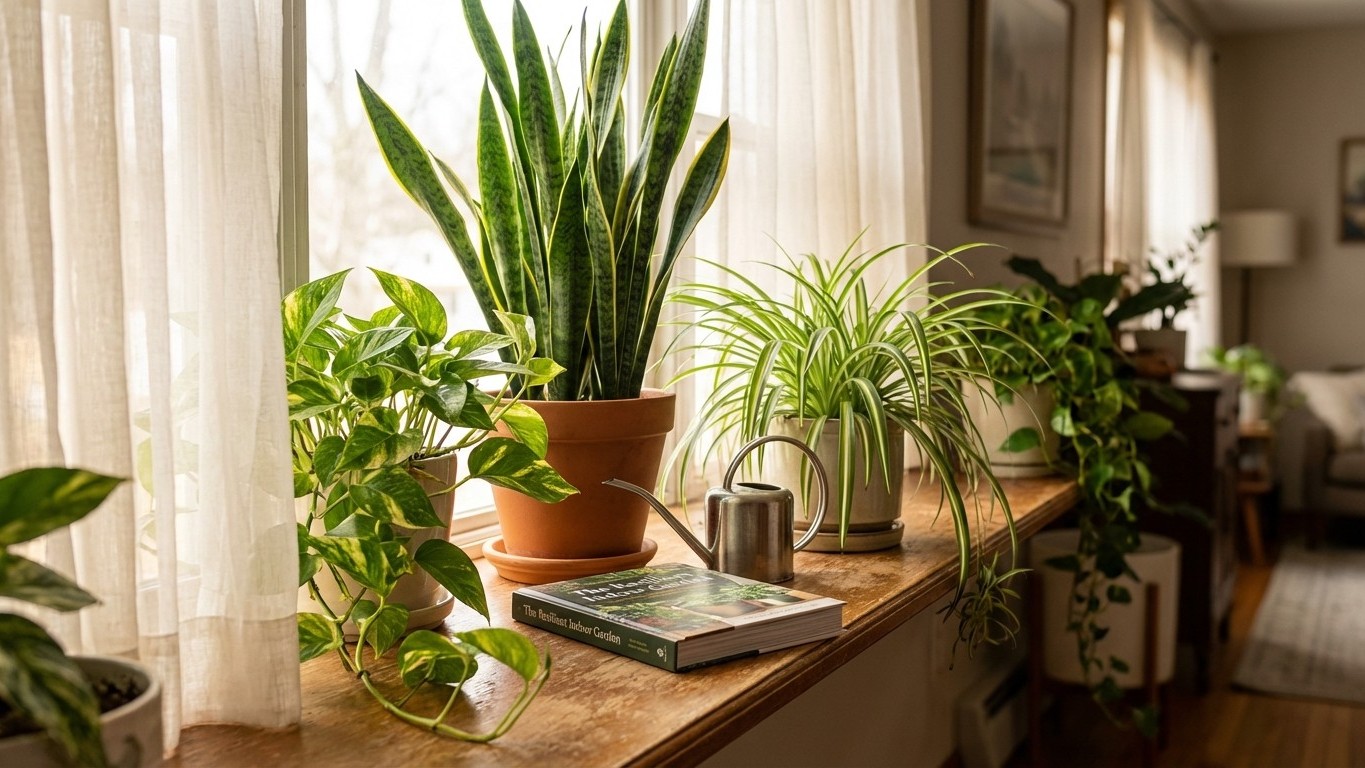
One week you water like a hero. The next, you forget your plant exists until you notice a sad, drooping silhouette on the windowsill. That gap between good intentions and real life is exactly why beginners need forgiving houseplants.
If you’re searching for best indoor plants for beginners, you’re probably not hunting for rare foliage or greenhouse-level perfection. You want a plant that survives missed waterings, forgives a less-than-ideal corner, and still rewards you with visible growth. Fast. Result? Motivation, not guilt.
This guide is built around the beginner’s reality: inconsistent routines, confusing light, and the fear of “killing another one.” Each plant below comes with a mini-portrait focused on what it tolerates, which beginner Mistakes it pardons, and how to keep it happy with a minimal routine.
Why choose easy indoor plants when you’re starting out?
Houseplants don’t fail beginners. Beginners fail schedules. Work trips, heating season, a new pet, a radiator that dries the air, one overenthusiastic watering session after a week of neglect. Real life always wins.
The most common beginner mistakes
Overwatering is the classic. Many extension guides point out that more houseplants die from improper watering than from any other single cause, and the “never leave a plant standing in water” rule is still the best beginner insurance policy. Letting the mix dry partway between waterings is often safer than sticking to a calendar.
Light is the second trap. A room that looks bright to you can still be low light for a plant, especially a few feet from the window. Beginners also tend to “rotate plants like furniture,” moving them weekly, then wondering why growth stalls.
Third: ignoring drainage. Decorative pots Without holes look great, then quietly create root-rot conditions. A pot with drainage, plus emptying the saucer, solves more problems than most fertilizers ever will.
Benefits of “tolerant” plants
Forgiving plants are basically habit-builders. They give you time to learn. Time to notice how soil feels when it’s dry, how leaves behave in brighter light, how fast a small pot dries compared to a larger one. That learning curve matters.
They also provide quick wins. A pothos vine extending by a few inches, a spider plant pushing out a baby, a ZZ plant staying glossy through your busy month. Your home feels greener, your confidence rises, and suddenly you’re ready for more specific care knowledge from a broader guide like indoor plants care varieties houseplants.
Selection criteria: what makes an ideal beginner houseplant?
“Easy” isn’t one trait. It’s a combination of resilience, flexibility, and clear feedback. The best choices survive a beginner’s mistakes, and they also tell you what they need without drama.
Ease of care and common needs
Beginner-friendly plants tend to share a few patterns: slower growth (so mistakes don’t spiral overnight), tougher leaves (less sensitive to dry air), and a preference for simple routines like watering only when the top inches of soil have dried.
Another quiet factor: pot size. Small pots dry out fast and punish inconsistent watering. Larger pots are more stable, and many extension resources note that small containers can require watering every few days while bigger pots may go much longer. Beginners usually do better with a moderately sized plant in a pot that has drainage.
Tolerance to watering and indoor light
To be “forgiving,” a plant should tolerate either missed waterings or beginner overwatering, ideally both. In practice, drought tolerance is easier to find than overwatering tolerance, so the beginner strategy becomes simple: pick plants that prefer drying out, and use a pot with drainage so you can’t accidentally create a swamp.
Light tolerance matters just as much. Most homes offer bright indirect light at best, and many apartments offer true low light. If that’s your situation, you’ll get more value from a dedicated list like low light indoor plants, but several of the plants below are comfortable in dimmer corners.
Top 10 best indoor plants for beginners (a forgiving profile for each)
These aren’t the only options. They’re the ones that most consistently survive beginner conditions: irregular watering, average indoor humidity, and light that is “fine” rather than Perfect.
1. Sansevieria (snake plant, mother-in-law’s tongue)
Sansevieria is the plant you buy when you want to stop worrying. Thick, upright leaves store water, so it tolerates neglect well. It also handles a range of indoor light, from brighter spots to lower light where growth slows but survival remains strong.
It forgives: forgetting to water, inconsistent light, beginner-level “set it and forget it” care.
It doesn’t forgive: soggy soil. If you want a single rule, make it this: water only when the potting mix is dry far down, and always use a draining pot.
2. Pothos (Epipremnum aureum, often sold as devil’s ivy)
Pothos is the “instant gratification” beginner vine. It grows in ordinary indoor conditions, looks good in a hanging pot or trailing from a shelf, and bounces back after mild neglect. Many people learn watering basics with pothos: droopy leaves can signal thirst, while constant wet soil can lead to root issues.
It forgives: missed waterings, average humidity, occasional pruning mistakes.
Beginner pitfall: overwatering because it’s growing fast. Check the soil, don’t follow a calendar.
Pet note: pothos is listed as toxic to cats and dogs by pet safety resources, so keep it out of reach if animals chew plants.
3. Zamioculcas zamiifolia (ZZ plant)
ZZ plants are built for beginners who travel or forget. They store water in thick rhizomes and tolerate low to bright indirect light. Indoors, a ZZ plant often looks “unchanged” for weeks, then suddenly pushes new stems. That’s normal.
It forgives: under-watering, low light, inconsistent routines.
It doesn’t forgive: frequent watering. If the soil stays wet, it can yellow and rot. Err dry, not wet.
Pet note: many guides caution that ZZ plants are toxic if ingested. Place accordingly.
4. Chlorophytum comosum (spider plant)
Spider plants are a confidence booster because they propagate in plain sight. Those little “spiderettes” hanging off the mother plant feel like the plant is cheering you on. They handle average indoor light, prefer not to sit in water, and are generally adaptable.
It forgives: missed waterings, average household conditions, beginner fertilizing omissions.
Pet note: spider plant is listed as non-toxic to cats and dogs by the ASPCA, which makes it a top pick for pet households.
5. Aspidistra (cast iron plant)
A plant nicknamed “cast iron” sets expectations. Aspidistra is famous for handling low light and less-than-perfect care. Extension resources describe it as dependable for very low-light conditions, which is exactly what many apartments and offices offer.
It forgives: low light, occasional watering lapses, low-effort care.
Watch for: very slow growth. Beginners sometimes overwater slow growers because “nothing is happening.” Let it be slow.
6. Spathiphyllum (peace lily)
Peace lily is forgiving in a different way: it communicates. When thirsty, it droops dramatically, then perks up after watering. That feedback loop teaches beginners what “needs water” looks like. It also tolerates lower light, though flowering is better in brighter indirect light.
It forgives: inconsistent watering, lower light than many flowering houseplants tolerate.
It doesn’t forgive: being ignored for too long. Repeated severe wilting stresses it.
Pet note: peace lily is listed as toxic to cats and dogs by the ASPCA due to insoluble calcium oxalates, so it’s not ideal for plant-chewing pets.
7. Cactus and succulents (recommended types)
Succulents are beginner-friendly if your home is bright. Their “forgiving” trait is drought tolerance, not shade tolerance. If you have a sunny window, they can be a low-maintenance win. If you don’t, they tend to stretch and weaken over time.
Beginner-friendly picks: classic aloe types, haworthia-style rosettes, and other sturdy succulents sold for indoor windowsills. Cacti can also work if light is strong.
It forgives: forgetting to water, leaving town, minimal feeding.
It doesn’t forgive: low light plus watering. That combination is where rot and disappointment happen.
8. Peperomia
Peperomia is a smart choice for people who want something compact, tidy, and less thirsty than many tropical plants. Many peperomia types have thicker leaves, which helps them tolerate missed waterings. They also fit small spaces well: desks, nightstands, narrow Shelves.
It forgives: mild neglect, average indoor humidity, smaller pots.
Beginner pitfall: treating it like a fern. Let the soil dry partly, and don’t keep it constantly moist.
9. Aglaonema (Chinese evergreen)
Aglaonema is a low-light champion in many homes, valued for patterned leaves and steady performance without sun. It’s often recommended for offices because it tolerates “benign neglect,” meaning it won’t collapse the moment your routine slips.
It forgives: lower light, occasional missed watering, average indoor conditions.
Pet note: many aglaonema types are considered toxic if ingested, so keep away from pets that chew.
10. Dracaena
Dracaena is the beginner’s “indoor tree” without the constant fuss. Many dracaena types tolerate a range of indoor light and don’t demand frequent watering. They can also help you learn spacing: a taller plant changes how a room feels, like a floor lamp made of leaves.
It forgives: slightly imperfect light, missed waterings, low-effort care.
Beginner pitfall: overwatering during slower-growth seasons. Many houseplants need less water in winter when growth slows, so adjust down.
Pet note: dracaena is widely listed as toxic to cats and dogs, so choose placement with care.
Care tips to avoid failure (simplified routines)
Good houseplant care often sounds complex because it’s written for perfection. Beginners need fewer rules, followed consistently.
Choose the right spot
Pick a location and commit for a month. Plants don’t like constant change. If you’re unsure about light, start closer to a window with bright indirect light, then adjust only if the plant shows stress.
One practical trick: if you can comfortably read a book there during the day without turning on a lamp, it’s not the darkest spot in the home. Still, “readable” doesn’t equal “bright.” Low-light tolerant plants like aspidistra, ZZ, and aglaonema make that ambiguity less risky.
If you want a more structured approach to matching plants to your home, browse a decision-style resource like houseplant varieties, which organizes choices by light, space, skill level, and pets.
Watering: simple markers that work
Skip the weekly schedule. Use these three checks instead:
- Soil feel: press a finger into the mix. If it’s still damp below the surface, wait.
- Pot weight: lift it. Dry pots feel surprisingly light.
- Drainage proof: water thoroughly until it drains, then empty the saucer. Extension resources consistently warn against leaving plants standing in water.
Two beginner truths: bigger pots are more forgiving, and “less often, more thoroughly” beats “a little splash every day.” The splash approach keeps upper roots wet and lower roots dry, and it trains you to overwater.
When should you repot?
Repotting is usually not urgent for a new plant. Give it time to settle. Then repot when one of these happens: roots circle densely at the bottom, water runs straight through without soaking, or the plant dries out much faster than it used to.
Choose a pot just one size up. Oversized pots hold extra wet soil, and that’s how beginners turn drought-tolerant plants into rot victims.
Regular care: cleaning, pruning, and basic vigilance
Dust is a silent growth limiter, especially on broad leaves. Wipe leaves with a damp cloth occasionally. It’s also the easiest “inspection routine” you’ll ever keep, because you’ll spot pests or yellowing early.
Pruning doesn’t have to be artistic. Remove dead leaves. Trim pothos to keep it fuller. Snip spider plant babies if the plant looks exhausted. Small, calm actions beat rescue missions.
If you want a broader, skill-building approach after you’ve kept your first plants alive for a couple of months, move on to easy care indoor plants for a slightly wider selection and the next level of routines.
Beginner FAQ
What should I do if my plant’s leaves turn yellow?
Yellow leaves often point to watering problems, frequently too much water, especially if the soil feels wet or you notice gnats around the pot. Pause watering, check that the pot drains, and let the mix dry more between waterings.
If yellowing is paired with dry, crispy edges and the soil is bone dry, the issue can be underwatering. Water thoroughly, then return to a “check soil first” routine.
Also consider seasonal change. In winter, indoor growth slows and many plants need less water. The same routine that worked in July can be too wet in January.
How many plants should a beginner start with?
Two is a sweet spot. One plant can die and feel like a personal failure. Three can turn into a chore if you haven’t built the habit yet. Start with two different “personalities,” for example one drought-tolerant (snake plant or ZZ) and one fast-growing feedback plant (pothos or spider plant).
That pairing mirrors real life: one plant for your busy weeks, one plant for your hands-on mood.
Indoor plants and pets: which are low risk?
If animals chew, your safest strategy is to use trusted toxicity databases and choose plants listed as non-toxic. Spider plant is listed as non-toxic to cats and dogs by the ASPCA, so it’s often a good starting point for pet households.
Many popular beginner plants are toxic if ingested, including peace lily, pothos, snake plant, dracaena, aglaonema, and ZZ plant, depending on the species and how much is consumed. If you still want them, placement becomes part of the care routine: high shelves, hanging pots, or rooms pets don’t access.
If pet safety is your priority, build your shortlist first, then match it to your light and space using houseplant varieties.
Go further: choose by your home profile
Selections adapted to low light, small spaces, and dry air
Low light Apartment? Lean into aspidistra, aglaonema, ZZ plant, and consider a dedicated shortlist like low light indoor plants so you don’t waste months on succulents that will stretch toward the window.
Small studio or desk-only space? Peperomia and compact snake plants make the habit easy. Less mess, less water, fewer dramatic failures.
Dry winter air from heating? Tough-leaved plants often cope better than delicate ferns. Dracaena, snake plant, and pothos tend to be more forgiving in typical heated rooms, as long as watering is adjusted down when growth slows.
Other guides to level up
Once you’ve kept your first plants stable, you’ll notice a shift: you stop asking “why is it dying?” and start asking “how do I make it thrive?” That’s when a structured reference like indoor plants care varieties houseplants becomes genuinely useful, because you now have real observations to connect with the advice.
Some beginners want a deeper explanation for a confusing moment: a “low-maintenance” plant that still gets spots, droops, or stops growing. Those cases are common, and they’re often less about the plant being hard and more about small mismatches in light, drainage, or winter watering.
So what’s your next move: add one more forgiving plant to lock in the habit, or deliberately pick a slightly pickier one, a calathea-style plant or a fern, as a way to learn precision without turning your living room into a rescue ward?