
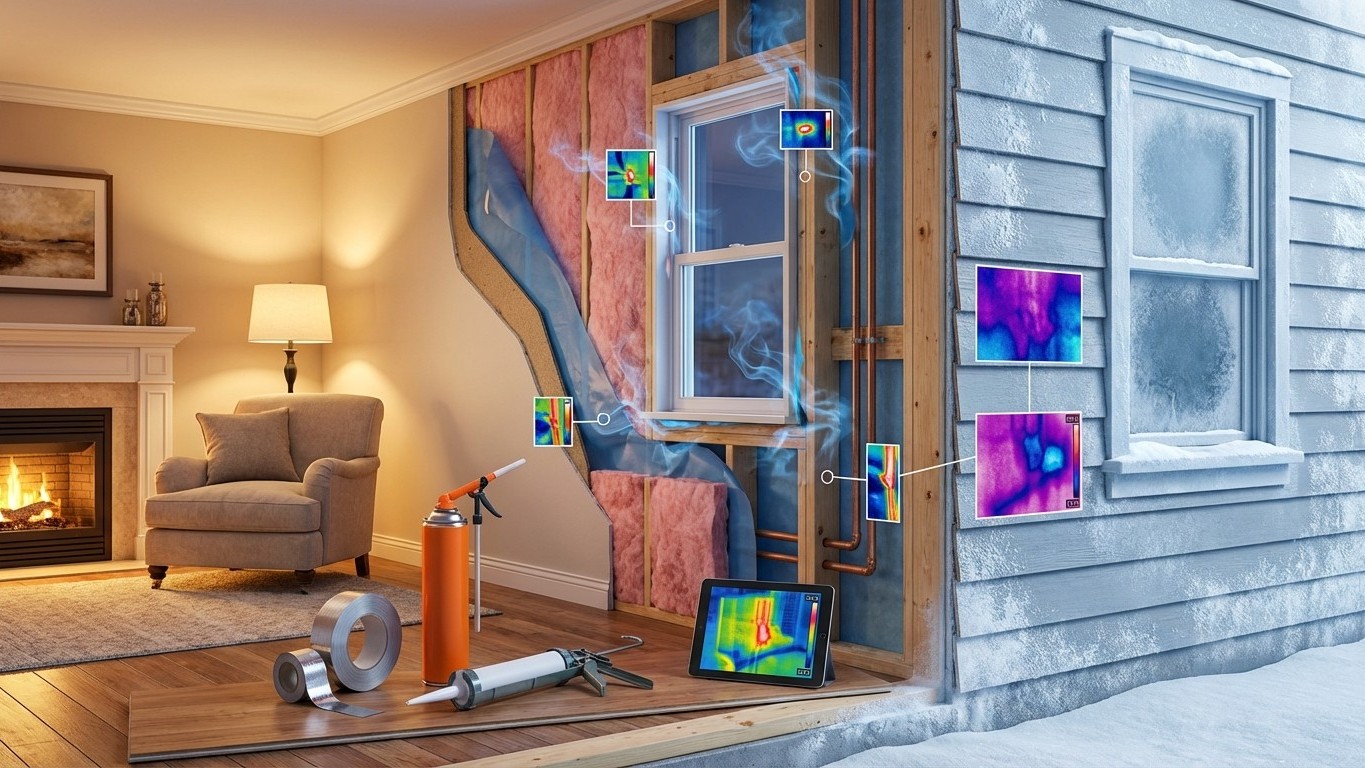
Imagine this: you’ve invested in top-notch insulation, expecting a cozy, energy-efficient home. Yet, Your Heating Bills remain high, and certain rooms feel drafty. What’s going wrong? The culprit might be an everyday oversight, neglecting to seal air leaks before installing insulation.
Key takeaways
- Why your insulation isn’t keeping your home cozy despite investment.
- The hidden air leaks that let warm air escape and cold air invade.
- Simple sealing solutions to transform your home’s energy efficiency.
Overlooking Air Sealing: The Silent Saboteur
Insulation is designed to slow heat transfer, but it doesn’t stop air movement. If your home has unsealed gaps around windows, doors, or utility penetrations, conditioned air escapes, and outdoor air infiltrates. This undermines your insulation’s effectiveness. Also, leads to uneven temperatures and increased energy costs.
Consider this: even a small gap can have a significant impact. According to experts, failing to seal air leaks can render insulation almost useless, as air movement can bypass the insulation entirely. common insulation mistakes
Identifying and Sealing Air Leaks
To address this issue, start by locating common air leak sites:
- Gaps around window and door frames
- Openings where pipes, wires, and ducts penetrate walls
- Recessed lighting fixtures
- Attic hatches and basement rim joists
Once identified, seal these leaks using appropriate materials:
- Caulk: Ideal for sealing small gaps and cracks less than a quarter-inch wide.
- Spray foam: Suitable for larger gaps and cavities, expanding to fill spaces effectively.
- Weatherstripping: Perfect for movable components like doors and operable windows.
By meticulously sealing these areas, you create a more airtight envelope, enhancing your insulation’s performance and improving indoor comfort.
The Domino Effect of Ignoring Air Sealing
Neglecting air sealing doesn’t just affect energy efficiency. It can lead to moisture problems, as humid air infiltrates and condenses within walls, fostering mold growth and structural damage. Moreover, unsealed homes often suffer from poor indoor air quality, as outdoor pollutants and allergens find easy entry.
In essence, skipping air sealing is like wearing a thick sweater with holes, it fails to keep you warm and protected.
Integrating Air Sealing into Your Insulation Strategy
To maximize your home’s energy efficiency and comfort:
- Conduct an energy audit: This assessment identifies air leaks and insulation deficiencies, providing a roadmap for improvements.
- Prioritize air sealing: Before adding or upgrading insulation, ensure all leaks are sealed to prevent air movement.
- Choose appropriate insulation: Select materials suited to your climate and home’s specific needs, considering factors like moisture resistance and R-value.
- Ensure proper installation: Even the best materials underperform if installed incorrectly. Hiring professionals can ensure insulation is applied without gaps or compression. common insulation mistakes
By addressing air leaks before insulating, you create a comprehensive barrier against energy loss, leading to a more comfortable and cost-effective home.
In the quest for an energy-efficient home, it’s easy to focus solely on insulation. However, without proper air sealing, even the highest-quality insulation can’t perform effectively. By taking the time to seal air leaks, you enhance your home’s comfort. Also, protect its structural integrity and indoor air quality. So, before you insulate, seal the deal, your home (and wallet) will thank you.