
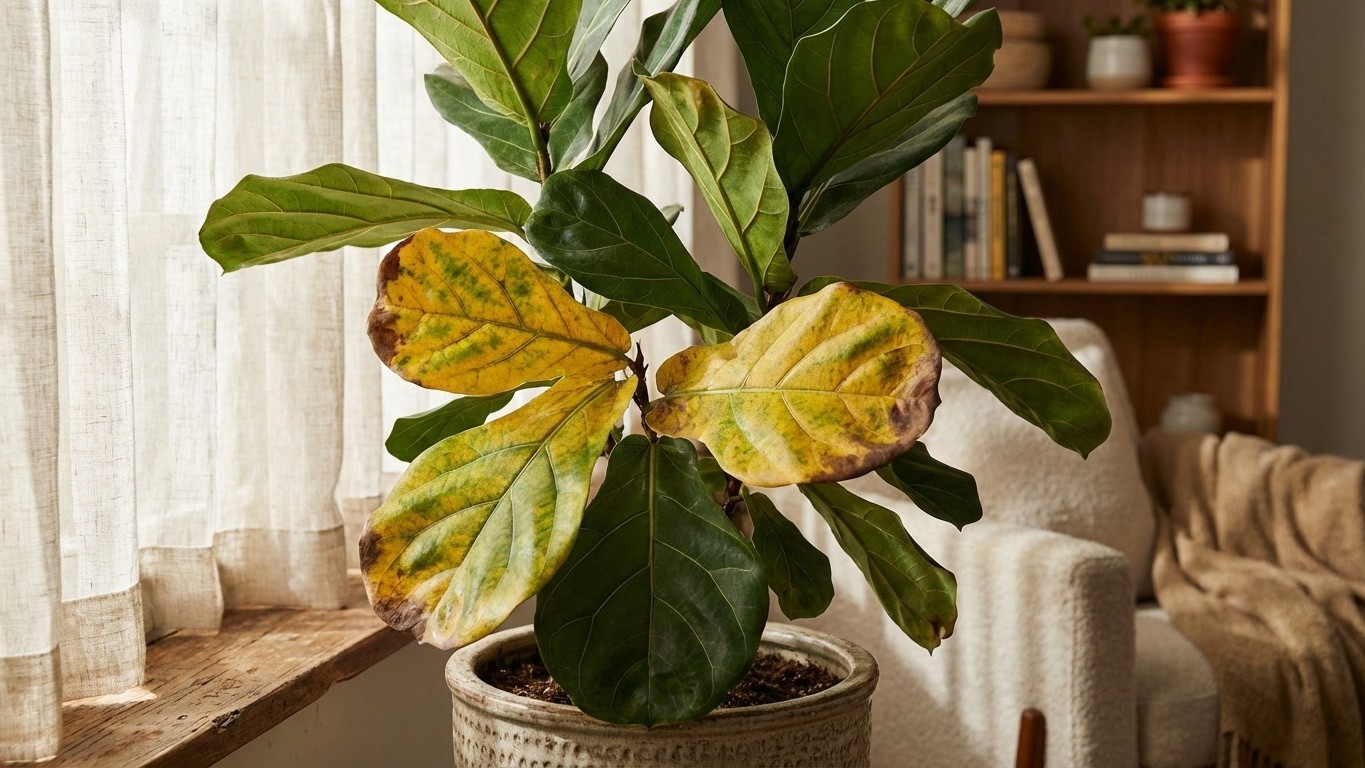
A leaf turns yellow and suddenly the whole plant looks “tired”. You water more, or you stop watering, or you move it closer to the window. Often, you make it worse by guessing.
Yellow leaves indoors are rarely a single mystery. They’re a symptom. Like a “check engine” light that can mean anything from a loose cap to a failing part. The trick is to diagnose in a logical order, from the most frequent causes to the rarer ones, using what you can Actually see and feel at home.
This page is built around that idea: why are my houseplant leaves turning yellow, and what can you do today that genuinely fixes the cause, not just the color.
Why are my houseplant leaves turning yellow?
Yellowing usually means the leaf is losing chlorophyll, the green pigment that powers photosynthesis. That loss can be temporary, or it can be the plant “giving up” on a leaf to protect the rest.
Indoors, the same few triggers come back again and again: water stress, light mismatch, depleted potting mix, pests, temperature swings, and roots that can’t breathe.
Understanding yellowing (chlorosis): what’s really happening
Chlorosis is the technical word for leaf yellowing caused by reduced chlorophyll. Sometimes it’s “normal aging” (an older leaf is sacrificed). Sometimes it’s a nutrient problem like nitrogen or iron. Sometimes it’s not a nutrient shortage at all, but a root problem that blocks nutrient uptake, typically from waterlogged soil and low oxygen.
One useful mental model: a yellow leaf can be caused by “too little coming in” (water, light, nutrients) or “transport problems” (roots damaged, soil compacted, rot). Your diagnosis should separate those two.
Common causes of yellow leaves: a step-by-step indoor diagnosis
Start with the basics that affect most houseplants. Overwatering and low light in winter still dominate indoor plant failures in 2026, because homes are warm, days are short, and watering habits don’t always change with the season.
Too much water (overwatering)
Overwatering is less about the number of times you water and more about how long the roots sit in wet, airless mix. Excess moisture reduces oxygen in the root zone, damaging fine roots and limiting water and nutrient uptake, which commonly shows up as yellowing or wilting of lower or inner leaves. This can mimic drought stress, which is why people misread it and water even more. extension.umd.edu
- Typical look: yellowing on lower/inner leaves, soft growth, droop even though soil is wet.
- Confirm it: soil feels soggy for days, pot feels heavy, smell turns sour or “stagnant”. Slide the root ball out: healthy roots are generally firm and light-colored; rotting roots are brown/black and mushy. epi.ufl.edu
- Common indoor trap: decorative cachepots that trap runoff water under the nursery pot, or saucers never emptied, keeping the base wet. Overly damp conditions also invite fungus gnats. extension.umd.edu
Not enough water (underwatering or drought stress)
Underwatering is straightforward, until a peat-based potting mix becomes hydrophobic and repels water. You pour, it runs down the sides, and the center stays dry. The plant keeps yellowing despite “watering”.
- Typical look: yellowing plus dry, crispy edges; older leaves may yellow and drop; soil pulls away from the pot wall.
- Confirm it: soil is dry and crumbly; the pot feels unusually light; a wooden skewer comes out clean and dry from deep in the pot. Rehydration may take several soakings if the mix has shrunk away from the pot. extension.umd.edu
Wrong light (too much or too little)
Light problems are sneaky indoors because the room looks bright to you, but not to the plant. In many homes, winter daylight near a window can drop sharply compared with summer. Low light slows growth and water use, so yesterday’s watering routine becomes today’s overwatering problem.
- Too little light: gradual yellowing, leggy growth, long gaps between leaves, slow drying potting mix.
- Too much direct sun: yellowing that looks like bleaching, with scorched patches, usually on the side facing the glass.
If your plant sits near a cold window in February and gets a blast of direct sun on clear days, you can get the worst mix: cold stress plus light scorch.
Nutrient deficiencies (nitrogen, iron, magnesium…)
Potting mixes don’t feed forever. Indoor plants can deplete available nutrients, especially if they’ve been in the same soil a long time or if you water heavily and leach minerals out. Deficiencies have recognizable “patterns” that help you avoid random fertilizing.
- Nitrogen deficiency: older leaves turn uniformly pale green to yellow first, because nitrogen is mobile and gets moved to new growth. ipm.ucanr.edu
- Iron (and sometimes manganese) deficiency: young leaves become yellow to whitish between veins while veins stay greener, classic interveinal chlorosis. ipm.ucanr.edu
- Magnesium deficiency: interveinal chlorosis often appears on older leaves first; veins can remain green while tissue between them yellows. ipm.ucanr.edu
One caution: nutrient-looking symptoms can come from roots that can’t absorb nutrients, especially in compacted, constantly wet mix. Feeding a plant with damaged roots is like offering a meal to someone who can’t swallow.
Common pests and diseases
Many pests weaken a plant slowly, so yellowing becomes “background noise” until the infestation is obvious. Indoors, you’ll most often see sap-suckers (spider mites, mealybugs, scale, whiteflies) or moisture-linked issues like fungus gnats.
- Fungus gnats: adults are small dark flies around pots/windows; larvae live in moist soil and can feed on organic matter and sometimes roots, contributing to yellowing, wilting, and slow growth. They thrive in damp conditions. extension.umn.edu
- Fungal leaf problems: yellowing with spots that spread, often brown centers or rings, usually worsened by poor airflow and wet leaves at night.
Bacterial diseases exist, but indoor cases are less common than people fear. Many “disease” moments trace back to care conditions and root stress rather than an aggressive pathogen. epi.ufl.edu
Environmental stress (temperature, drafts, humidity)
One cold draft from a door, one heater vent blasting dry air, and a tropical plant reacts fast. Yellow edges and leaf drop can follow temperature shock, and low humidity can push leaf margins toward yellow then brown, especially in winter-heated rooms.
- Typical look: yellowing at edges, leaf drop after a location change, damage clustered on the draft-facing side.
- Confirm it: check what’s near the plant: an exterior door, a frequently opened window, a radiator, an AC vent.
Pot problems: repotting stress, poor drainage, wrong container
A pot Without drainage turns your soil into a bathtub. A pot that’s far too large can stay wet for too long. A rootbound plant can also yellow because water runs through too fast, or because old mix becomes compacted and oxygen-poor.
- Typical look: water pools, soil takes forever to dry, roots circle densely, or the plant dries within a day and still looks stressed.
- Confirm it: lift the pot after watering, then again 2-3 days later. If it stays heavy and wet, drainage and airflow are failing.
How to diagnose the real cause of yellow leaves
Don’t start with fertilizer and don’t start with pesticides. Start with observation, then match what you see to the most likely mechanism.
Visual inspection: where is the yellowing, and what does it look like?
- Older lower leaves yellowing first: can be normal aging, nitrogen shortage, overwatering stress.
- New growth yellowing first: think iron/manganese chlorosis, root damage, or severe stress.
- Interveinal yellowing (veins stay green): iron or magnesium patterns are common suspects, depending on leaf age. ipm.ucanr.edu
- Yellow plus mushy tissue: often excess water, rot, or severe root issues.
- Yellow plus crisp edges: drought stress, low humidity, salt buildup, or heat exposure.
- Yellow with spots, stippling, sticky residue: pest feeding or leaf disease.
Keep it practical: take two photos, one close-up of a leaf, one of the whole plant including the pot and its position. You’ll catch clues you miss in the moment.
Care history: the fastest way to catch the culprit
Write down what changed in the last 2-4 weeks. A plant rarely “randomly” turns yellow without a trigger.
- Watering frequency and method (top watering, bottom watering, misting).
- Has the plant moved? Closer to a window, away from it, near a vent.
- Any repotting, new potting mix, or new fertilizer.
- Season shift: in winter, growth slows and soil stays wet longer, so routines need to adapt.
If you want a broader framework for symptom-based troubleshooting beyond yellow leaves, connect this diagnosis to the cluster page on houseplant problems.
Concrete solutions for each yellow-leaf cause
Fixes work best when they change the plant’s “inputs” (water, light, nutrients) and its “plumbing” (roots, oxygen, drainage). Cosmetic pruning alone won’t stop new yellow leaves from forming.
Adjust watering and improve drainage
- If overwatering is likely: pause watering, let the mix dry to an appropriate depth before the next watering, and empty saucers/cachepots. Overly wet soil is a repeat trigger for decline and fungus gnats. extension.umd.edu
- Check roots if symptoms are advancing: slide the plant out, inspect for mushy dark roots, trim rot, then repot into fresh, well-draining mix. theguardian.com
- If underwatering/hydrophobic soil is the issue: water thoroughly until runoff, wait, then water again. For severe cases, bottom-soak the pot for 15-30 minutes, then drain completely.
Small habit that changes everything: water based on soil feel and pot weight, not a calendar. Extension guidance often recommends learning the “lightness” of a pot as it dries, because it’s a quick proxy for moisture. extension.umd.edu
Optimize light (placement and grow lights)
Light is a budget. When the budget is low, the plant cuts spending, older leaves yellow, growth slows, and water use drops.
- Move shade-loving plants to bright, indirect light, not harsh midday sun through glass.
- Rotate the pot weekly for even exposure if one side is fading.
- In winter, consider a grow light if you notice slow drying soil plus stretching growth. Even a modest increase can stabilize watering needs and reduce yellowing driven by low-energy conditions.
If you’re also dealing with twisted or rolled foliage, pair this page with indoor plant leaves curling causes for a tighter differential diagnosis between water, light, pests, and dry air.
Correct deficiencies with the right fertilizer (and timing)
Feeding helps when the plant is actively growing and roots are healthy enough to absorb nutrients. If you suspect rot, fix roots first.
- Nitrogen pattern (older leaves pale/yellow): use a balanced houseplant fertilizer during the growing season, following label rates and avoiding “more is better”. Nitrogen deficiency commonly starts on older leaves. ipm.ucanr.edu
- Iron chlorosis pattern (young leaves yellow with green veins): check if your plant prefers slightly acidic conditions; high pH can reduce iron availability. Iron deficiency shows interveinal chlorosis on new growth. extension.usu.edu
- Magnesium pattern (interveinal yellowing on older leaves): consider a fertilizer that includes magnesium, or a targeted supplement if appropriate for your plant type and your watering water chemistry. Magnesium plays a central role in chlorophyll, so deficiency expresses as chlorosis. plantscience.psu.edu
Repotting every 1-3 years, depending on species and growth rate, often solves “mystery yellowing” by refreshing structure and nutrients, without turning your shelf into a chemistry lab. bhg.com
Treat pests and diseases without overreacting
Pesticides are easy to buy and easy to misuse. Your first tools are inspection, isolation, and consistency.
- Isolate the plant if you see moving pests or sticky residue.
- Wipe leaves (especially undersides) and check nodes and stems.
- For fungus gnats, break the cycle by letting the top 1-2 inches of soil dry and use yellow sticky traps to catch adults. Larvae thrive in moist soil, so moisture control is the core fix. extension.umn.edu
For a step-by-step gnat plan that fits indoor conditions, connect to how to get rid of fungus gnats in houseplants.
Stabilize the environment (temperature, humidity, drafts)
- Keep sensitive plants away from exterior doors and drafty windows in winter.
- Avoid placing plants directly above radiators or in the path of HVAC vents.
- If indoor air is dry, grouping plants or using a humidifier can reduce stress signals like edge yellowing.
This is where indoor plant care starts to resemble personal comfort. Dry air that irritates your skin also stresses leaves. You feel it, the plant shows it.
Repot when the roots and soil are the real problem
Repotting is not a cure-all, but it’s often the fastest reset when soil structure has collapsed.
- Repot if: soil stays wet too long, roots are circling densely, there’s a persistent sour smell, or you confirm root rot.
- Choose a pot with drainage holes and size up modestly, not dramatically.
- Use an airy mix suited to the plant type, because “generic” mixes vary widely in how long they hold water.
FAQ: true/false about yellow leaves
Is it normal for indoor plant leaves to turn yellow sometimes?
Yes, in a narrow sense. A few older leaves yellowing at the bottom while the plant is growing can be normal leaf turnover. The red flag is speed and location: rapid yellowing across the plant, or yellowing concentrated in new growth, points to stress that needs action.
Use this rule: one leaf aging out is maintenance; clusters of leaves yellowing in days is a diagnosis moment.
Should I cut off yellow leaves on my houseplants?
Removing fully yellow leaves is usually fine, because they won’t turn green again. It can also reduce the plant’s “stress look” and improve airflow around crowded stems. Sanitize your pruners, especially if you suspect disease. If many leaves are yellowing, don’t treat pruning as the fix, treat it as cleanup after you correct the cause.
If the only yellowing is on a few oldest leaves and everything else looks stable, pruning is optional.
Prevent yellow leaves: daily habits that actually work
Prevention is less about a Perfect routine and more about adjusting to change. Indoor conditions are not stable: seasons shift, heating turns on, daylight drops, you travel for a week.
Seasonal adjustments (especially winter)
- In winter, expect slower growth and slower drying, so reduce watering frequency and be stricter about checking soil first.
- Keep plants from touching cold glass, and watch for draft events after weather changes.
- Fertilize less when growth slows; feeding a resting plant often creates more problems than it solves.
Many “mysterious” yellow-leaf episodes are just winter routines applied with summer confidence. The plant is quiet, but the watering schedule isn’t.
A quick at-home diagnostic checklist (2 minutes)
- Touch the soil 1-2 inches down. Dry, damp, or wet?
- Lift the pot. Light or heavy?
- Look under leaves for pests. Any webbing, dots, sticky film?
- Check where yellowing starts: older leaves, new leaves, one side only?
- Smell the soil. Fresh-earthy, or sour and stagnant?
If you want a broader foundation for plant-by-plant routines, connect this page to indoor plants care varieties houseplants and build your care around species needs rather than generic tips.
When to worry: yellowing plus signs of bigger trouble
Yellow leaves alone are common. Yellow leaves with collapse signals a root or pest problem that can snowball quickly.
How to recognize root rot, heavy pest pressure, or severe decline
- Root rot suspicion: soil stays wet, sour smell, drooping that doesn’t improve, roots are brown/black and soft when inspected. Healthy roots should be firm and lighter in color. epi.ufl.edu
- Mass pest issue: yellowing accelerates, new growth deforms, leaves drop early, you see pests across multiple stems or multiple plants.
- Fungus gnat overload: adults visible daily, soil constantly damp, plant growth stalls, yellowing persists. Gnats are a moisture signal as much as an insect problem. extension.umn.edu
If you see these, act within days, not weeks: inspect roots, isolate the plant, and reset the soil conditions. Waiting usually converts a recoverable issue into a long rehab.
Go further: related symptoms and next reads
Yellow leaves often travel with other signs: curled foliage, brown spots, mushy stems, or sudden drop. Those combinations narrow the diagnosis faster than yellow alone.
- If leaves are curling or twisting along with yellowing, use indoor plant leaves curling causes to separate light stress, watering Mistakes, pests, and dry air.
- If you notice small flies near pots, connect to how to get rid of fungus gnats in houseplants and tackle moisture plus lifecycle control.
- For a broader symptom map across indoor pests, diseases, and leaf issues, use houseplant problems.
One last thought: the next time you catch yourself “just watering a bit more” because a leaf turned yellow, pause and lift the pot first. That single gesture can change the whole outcome. What would your plants look like in a month if you replaced guessing with that one habit?