
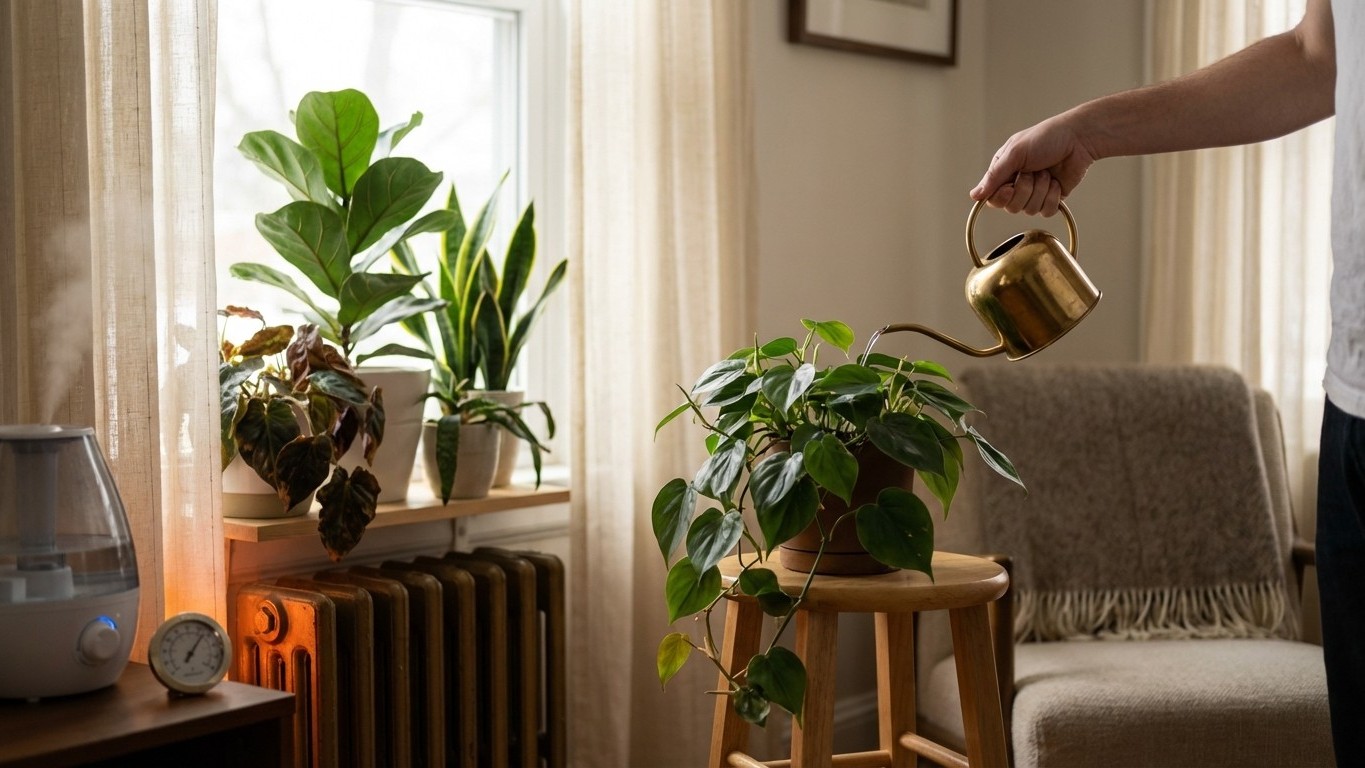
Winter doesn’t “kill” most houseplants. It simply changes the rules.
Less daylight, weaker sun, cooler glass, and drier air from heating all push indoor plants into a slower rhythm. Growth stalls. Water use drops. Leaves transpire differently. The same routine that worked in August can suddenly trigger yellow leaves, limp stems, or fungus gnats in January. That’s why people search for how to care for houseplants in winter (less light), not because plants become fragile, but because our homes become a different ecosystem for three to four months.
This guide walks through the practical winter reset: watering that follows the pot, light that follows the sun’s path, and humidity that doesn’t fight your radiator, it works around it.
Why winter disrupts indoor plant needs
A plant on your shelf may look unchanged in December, but inside it is recalibrating. Photosynthesis slows when light drops. With less energy coming in, the plant can’t “spend” as much water, and it won’t rebuild roots or leaves at the same pace. You feel it as stagnation. The plant feels it as survival mode.
Understanding dormancy and slowed growth
Many houseplants enter a mild dormancy (often called quiescence) when daylight hours and intensity fall. The visible signs are subtle: fewer new leaves, longer pauses between growth spurts, and a tendency to hold onto older foliage rather than pushing fresh growth. Some species go further. Certain bulbous or tuberous plants, and some tropical aroids, may drop leaves and “rest” until spring. That can look dramatic, but it’s not automatically failure.
What changes for you: winter care is less about “pushing” growth and more about keeping conditions stable. Consistency beats ambition.
How reduced light reshapes plant cycles
Light is not only brightness. It’s duration and angle. In winter, the sun sits lower, shadows stretch longer, and your windows deliver fewer usable hours of plant-ready light, even on a sunny day. Add short days plus indoor obstacles (buildings, curtains, tinted glass), and a plant that thrived two meters from a window in summer can end up in near shade in winter.
That’s the core of how to care for houseplants in winter (less light): water and humidity problems often start with a light problem, because lower light means lower water use. Same watering schedule, slower plant, wetter soil. Result? Disappointing.
Watering houseplants in winter: what to do, what to stop doing
The most common winter mistake is not forgetting to water. It’s watering on autopilot.
In low light and cooler conditions, potting mix stays wet longer. Roots breathe less efficiently in cold, soggy media. That’s when rot organisms and fungus gnats find their opening. Meanwhile, rooms near vents can dry a pot faster than expected, so under-watering still happens, just less often. Winter is full of contradictions.
How to adjust watering frequency in the cold season
Skip the calendar. Use the pot.
- Finger test: push your finger 2–5 cm into the mix. If it’s cool and damp, wait. If it’s dry at that depth for the plant’s type, water.
- Chopstick test: insert a wooden chopstick to near the bottom. Pull it out after a minute. Soil sticking to it means moisture is still present.
- Weight test: lift the pot right after a thorough watering and memorize the “heavy” feel. In winter, this becomes your fastest diagnostic.
Watering technique matters more in winter than frequency. Water thoroughly until excess drains, then empty the saucer or cachepot. Roots sitting in water is a quiet, reliable way to lose a plant when light is low.
One Apartment, two realities: a plant in a bright bay window may dry reasonably fast, while the same species across the room might stay wet for 10–14 days. Winter care is location-specific, not species-only.
How to tell if you’re overwatering or underwatering in winter
Yellow leaves in winter are not a diagnosis. They’re a symptom with multiple causes. The trick is to read the pattern.
- Overwatering signals: persistent damp soil, a musty smell, yellowing that starts on older leaves, soft stems, blackened roots (if you check), fungus gnats hovering, and leaves that look swollen then collapse.
- Underwatering signals: soil pulling away from the pot edge, crispy tips and margins, drooping that improves quickly after watering, and a pot that feels unusually light.
- Mixed signals: droop plus wet soil often points to root stress. The plant is thirsty, but the roots can’t drink.
If you want a structured path for leaf issues that spike during the heating season, map your symptoms first, then adjust one variable at a time. “Fixing” water, light, and humidity all at once feels productive, but it prevents you from learning what the plant was actually reacting to.
Warm water and water quality: does it matter more in winter?
Cold tap water straight onto cool roots can add stress. Room-temperature water is a sensible default in winter, not a miracle trick, just a gentler input. It also helps you avoid chilling the potting mix when your room is already cooler at night.
Water quality can matter, especially for plants sensitive to mineral buildup. If you notice white crust on the soil surface or pot rim, or leaf tip burn that doesn’t match your humidity situation, consider flushing the pot occasionally with a thorough watering and full drainage. Winter is not the time for constant “small sips”; those concentrate salts.
Managing light in winter: helping plants cope with less
In February 2026, most homes still don’t have ideal plant lighting. That’s normal. The goal is not Perfect growth, it’s enough light to keep metabolism steady and prevent the cascade of overwatering problems that come from darkness.
Move plants and optimize exposure
A simple shift can feel like a climate change for a plant.
- Bring light-loving plants closer to the brightest window you have, usually south- or west-facing in the Northern Hemisphere.
- Keep foliage from touching cold glass at night; that’s where chilling damage can happen.
- Rotate pots regularly so growth stays balanced and plants don’t lean hard toward the window.
- Clean windows and wipe dusty leaves. Dust is a light filter you didn’t ask for.
Do you need to move all plants in winter to maximize light? Not automatically. Shade-tolerant plants can stay where they are if they’re stable. Move the ones that show clear low-light behavior: leggy growth, smaller new leaves, loss of variegation, or a plant that stays wet far too long after watering.
Using grow lights: when they help and how to use them
Artificial light is most useful when you have a plant that keeps declining despite careful watering, because it never receives enough winter light to maintain healthy roots and leaves. It’s also helpful in windowless rooms where “bright indirect light” is a myth.
- Choose a reputable full-spectrum LED grow light, and position it close enough to be effective without overheating foliage.
- Give plants a consistent day length. Many people aim for a steady daily schedule rather than random top-ups.
- Watch the plant, not your ambition: tighter growth, less leaning, and soil drying at a more predictable pace are good signs.
Apart from grow lights, there’s a low-effort improvement: don’t waste your best light on empty space. Windowsills, plant stands near windows, and reflective light-colored walls all increase usable brightness in winter.
Low-light houseplants to prioritize in winter
Winter is a great moment to learn which plants are truly tolerant of reduced light, not just “surviving.” If your space is naturally dim, prioritize foliage plants known for coping with shade. Many people have success with plants like Chinese evergreen types, some philodendrons, and other resilient foliage plants that don’t demand direct sun to stay stable.
Be realistic about what “low light” means. It rarely means a dark corner. It usually means a few meters from a window in a room that still feels bright to your eyes during the day. Your eyes adapt. Plants don’t.
Humidity and heating: the winter tension you can actually manage
Heating solves human comfort by drying the air. Plants often pay the bill.
Relative humidity indoors can drop sharply in winter because cold outdoor air holds less moisture, and heating lowers indoor relative humidity further. Many tropical houseplants respond with brown tips, crispy edges, stalled growth, and increased pest pressure, spider mites love dry air.
What dry air and heating do to plants
Dry air increases transpiration. In plain terms, water exits leaves faster. If the roots are cold or stressed, or the soil is kept too wet to “compensate,” the plant can’t regulate well. That’s when you see leaf edge burn, curling, or a general tired look.
Mes plantes sont collées au radiateur, est-ce risqué ? Yes. Radiators and hot air vents create heat spikes and dryness right where the foliage sits, like a desert bubble inside your living room. Even tough plants can react: drying leaf margins, sudden leaf drop, and pots that swing between bone-dry and soggy because you keep trying to “catch up.”
How to maintain healthier humidity (without turning your home into a greenhouse)
Humidity solutions work best when they’re boring and consistent.
- Group plants: clustered plants create a small shared microclimate as they transpire.
- Pebble trays: a tray with pebbles and water under pots can raise humidity right around the plant, as long as the pot sits above the waterline.
- Humidifier: the most direct way to raise room humidity, especially for fern-heavy collections.
- Bathroom or Kitchen “microclimates”: if you have windows, these rooms often run more humid naturally.
Misting divides opinion. It can briefly wet leaf surfaces and may help discourage pests in some setups, but it usually doesn’t change room humidity for long. If you mist, do it with a purpose: as a leaf-Cleaning habit for suitable plants, not as your main humidity strategy.
One more winter move that’s underrated: keep leaves clean. A thin layer of dust reduces light capture, which worsens the low-light winter loop and keeps soil wet longer than it should.
Other winter watchpoints that quietly matter
Water, light, humidity get most of the attention. Temperature and timing decide whether those efforts pay off.
Temperature: protect plants from cold and drafts
Most common houseplants do fine in the same temperature range humans enjoy, but winter problems come from fluctuations. Cold drafts from doors, windows cracked “for fresh air,” or plants pressed against cold glass can chill tissues. Hot blasts from vents dry them out. A stable spot, away from both extremes, is a winter win.
- Move plants a few centimeters away from window glass at night.
- Avoid placing pots directly above radiators or next to heat vents.
- Watch for cold windowsills, they can be much colder than the room air.
Should you fertilize or repot in winter?
For many houseplants, winter is not the moment for heavy feeding. When growth slows, fertilizer salts can accumulate and stress roots, especially if you’re watering less and flushing the pot less often. If a plant is actively growing under strong light or supplemental lighting, modest feeding may be appropriate, but winter feeding “just because” is a common way to complicate things.
Repotting is similar. Unless a plant is in real trouble because of compacted mix, pests in the soil, or severe root issues, many growers wait until spring when growth resumes and recovery is faster. Winter repotting can be fine, it’s just less forgiving if you also have low light.
Pruning fits into winter care differently. You can remove dead or yellowing leaves any time, because that’s cleanup. Structural pruning is often better timed to the plant’s growth season. If you want a precise, species-agnostic method for cuts and what to do with stems, see the guide built for that task: how to prune indoor plants.
FAQ: winter houseplant care in real life
How do I know if I’m watering too much or too little in winter?
Start with the soil, not the leaves. Wet soil plus yellow leaves and a soft, tired look points toward overwatering or root stress. Dry soil deeper in the pot plus crisp edges and quick recovery after watering points toward underwatering. If you’re unsure, stop scheduling water and start measuring it: finger test, chopstick test, or pot weight. The plant doesn’t care what day it is.
My plants sit next to a radiator. Is it risky?
It’s one of the most common winter setups, and yes, it raises risk. Radiators create hot, dry microclimates and temperature swings. Move plants a short distance away, even 30–60 cm can make a difference, and use humidity tactics like grouping or a humidifier. If space is tight, prioritize moving thin-leaved tropical plants first, they usually complain faster.
Do I need to move all my plants in winter for more light?
No. Move the plants that show low-light stress or that stay wet too long after watering. Shade-tolerant plants can remain stable where they are. Think like a photographer: you’re repositioning for the winter sun angle, not redecorating your entire home.
Quick checklist: a weekly winter routine that prevents most problems
Seven days is a good rhythm in winter, not because you must water weekly, but because you should observe weekly.
- Check soil moisture in each pot, and water only when the mix is dry enough for that plant.
- Empty saucers and cachepots after watering.
- Scan for pests, especially spider mites and fungus gnats.
- Wipe dusty leaves with a damp cloth to maximize low winter light.
- Rotate plants near windows so growth stays even.
- Confirm no foliage touches cold glass and no pot sits in a draft path.
- Assess humidity, watch for brown tips, curling, or edge crisping near heat sources.
Related resources inside the cluster
Winter care is easier when you stop treating “houseplants” like one category. Variety matters: thick-leaved plants, thin-leaved plants, succulents, ferns, each plays by different winter rules. If you want the broader map of species, light needs, and care baselines that this winter guide builds on, explore indoor plants care varieties houseplants.
If winter care is part of a bigger seasonal routine, pruning, travel, propagation, the page winter care for indoor plants helps connect those topics into one plan you can actually follow. And because winter often overlaps with holiday travel, it’s worth pairing this article with how to keep houseplants alive while on vacation, so your “less light” strategy doesn’t collapse the moment you leave for a week.
Yellow leaves, leaf marks, sudden leaf drop, these tend to spike in winter because conditions change faster than your routine. If your plants keep sending the same signal, the next step is not another trick. It’s choosing one variable, light, water, humidity, temperature, and adjusting it with intent. Which variable in your home changes the most between July and January?