
One glance at a well-set Easter table, bursting with color and life, and suddenly brunch feels like an event. Eggs, branches, spring blooms, ingredients as old as the holiday itself, yet every year they seem to reinvent themselves. Forget cookie-cutter decorations. The most memorable centerpieces look effortless, but weave in textures and details that linger long after dessert.
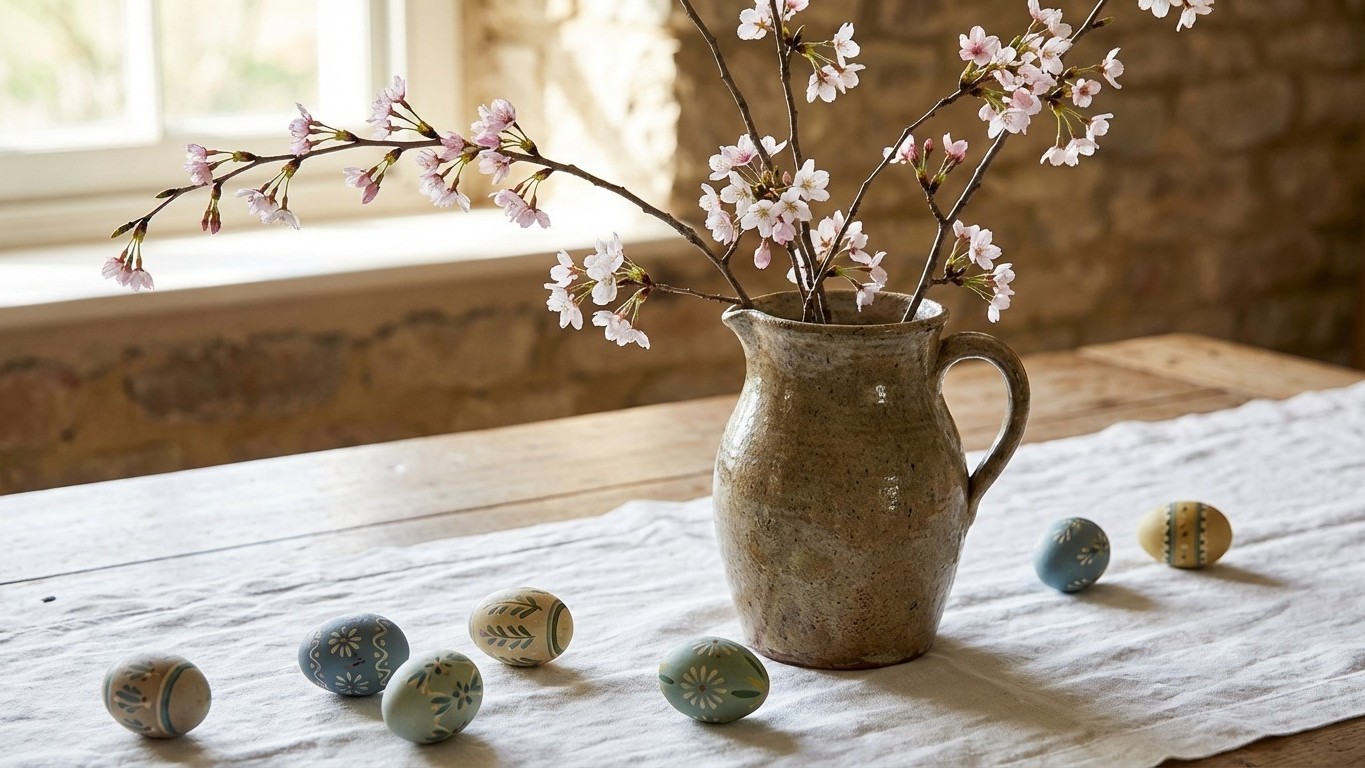
A handful of eggs scattered across a white linen runner, dappled with watered-down paint flecks. Nearby, a tangle of flowering cherry branches curves out from a chipped ceramic jug, balancing wildness with structure. Between them, crocuses and muscari peep through low glass bowls, as if freshly plucked from a woodland walk. This is Easter at its liveliest, seasonal, tactile, unpredictable.
Key takeaways
- Explore the symbolism and artistry behind Easter egg decorations.
- See how branches bring natural wildness and seasonal drama indoors.
- Discover how spring blooms add color, scent, and emotion to your table.
Eggs: Symbolism and Playfulness on Display
For some, decorating eggs stops with dye kits and a plastic cup. But in the right hands, eggshells transform from children’s craft to dinner-party statement. Folklore meets aesthetics here: eggs symbolized rebirth centuries before supermarkets began churning out pastel six-packs. The real artistry? Juxtaposing that primal shape against the unpredictability of nature.
Consider a cluster of eggs nestled in a rough nest of moss and bark, evoking the forest floor. The trick is to mix materials, smooth shells next to tangled twigs, gleaming metallics beside old feathers. Bleached, hand-painted, or decoupaged, each egg tells a story. Last spring, a Norwegian host set out quail eggs on tiny marble pedestals, mixed with snipped forsythia. Guests circled the table twice, just to take it in. No centerpiece markers, no symmetry — just artful placement, and a fearless embrace of imperfection.
Branches: Wildness Brought Indoors
Step into a florist’s shop in March and you’ll spot buckets bristling with branches in bud. Forsythia, pussy willow, cherry blossom, each one a miniature explosion waiting to unfurl. But branches alone won’t anchor a table; they demand a little structure, a play between line and volume. Fill an old wine carafe with flowering almond boughs, and the mood in the room shifts. Suddenly, there’s height, drama, the suggestion of growth right on your table.
Branches aren’t only about aesthetics. Their ephemeral blooms remind us how brief, and precious, this season is. In Kyoto, whole neighborhoods time their walks to catch the cherry blossoms at peak. Across the US, city dwellers snap pics of magnolia trees against traffic lights, proof that urban life can hold space for the miraculous. Bringing branches inside, we create our own pocket of spring, a secret garden among the forks and napkins.
Spring Blooms: Color and Fragrance in Conversation
Imagine hyacinths in pale green bud vases, their scent mingling with coffee and the murmur of conversation. Daffodils, massed at one end of the table, while grape hyacinths pour from vintage teacups and tulips tilt their heads, always unexpectedly. Flowers don’t just add color, they set the emotional temperature of the room. Vibrant corals and deep golds pulse with energy; soft lilac and buttercream invite quiet joy.
Cut flowers can be kept low for easy conversation, or left tall and swooping if the food will be served buffet-style. And not every bloom must come from the store. In neighborhoods blessed with wilder backyards, or willing neighbors, hellebores and snowdrops might find their way onto the table. This collision of cultivated and spontaneous is what makes spring design so compelling.
Arranging for Gatherings Large and Small
Easter isn’t always a crowded feast. Sometimes, it’s three friends at a sun-splashed table, brunch set between textbooks and a half-read magazine. In those moments, a single magnolia branch, paired with two painted eggs, whispers ‘celebration’ without shoving aside the Everyday mess. For bigger gatherings, let arrangements meander down the length of the table, repeating motifs of eggs, flora, and slender branches, never quite matching, but clearly in conversation.
The secret? Leave room for plates and hands; a striking centerpiece shouldn’t behave like a fence. Eggs placed atop napkin nests or slid into glass ramekins cue each guest in on the spirit of the season. If an egg tips over, or a petal drops onto someone’s sleeve, all the better. Perfect houses exist mostly in catalogs; real homes tell stories in scuffs and splatters.
Practicality matters, too. Avoid heavily perfumed flowers near the food, save those lilac sprays for the sideboard. Use sturdy vessels that won’t tip if someone reaches across for the butter lamb. And always, always preview the table the night before. In the quiet kitchen light, something clicks: a stray feather needs shifting, or that daffodil leans at exactly the right angle. Small adjustments, big impact.
The Joy of Reinvention
Easter centerpieces reflect more than the arrival of spring; they hint at the pleasure of reinvention. Each year, old objects gain new meaning: last season’s vase, this year’s moss. Even plastic eggs, handed down from a grandparent, can take pride of place with a quick coat of matte spray paint and a few clipped daisies. Two hours of arranging, and the room warms, as if the sun itself had pulled up a chair.
Of course, table decorations are fleeting. By evening, the first daffodils will droop and the branches begin to relax into gravity’s pull. But for those in-between hours, the world outside the window doesn’t matter much. The centerpiece holds attention, sparks conversation, becomes a backdrop for surprise confessions and spontaneous laughter. Is there any higher purpose for a table, or for a holiday, than that?
Come the next season, perhaps the focus will shift: more wildflowers, fewer branches, eggs perched atop slices of sourdough instead of moss. The script will change, and so will the designs. After all, what would spring mean without a little unpredictability, and the thrill of bringing it right to the center of things?