
Carrot tops in the trash. Garlic cloves forgotten until a green sprout appears. The everyday waste hiding a secret: a garden’s worth of potential, quietly tossed aside. Spring doesn’t ask for fancy seeds or expensive kits, and the truth is, some of the most resilient, satisfying vegetables you’ll ever grow aren’t hiding in seed catalogs. They’re languishing at the back of your fridge.
A zero-cost vegetable patch begins at your cutting board, not the garden center. Those scraps, roots, stubs, cores, even limp leafy ends, promise more than compost. They offer the kind of self-reliance that, once discovered, feels like a little act of rebellion. A handful of discarded kitchen scraps can Transform a sunny patch of soil, a windowsill, or a bucket into an edible haven, all for the price of yesterday’s dinner prep.
Key takeaways
- Unlock the hidden gardening potential in your kitchen waste.
- Learn which common scraps regrow quickly and easily.
- Transform your windowsill or garden patch into a zero-cost vegetable haven.
The Kitchen-to-Garden Cycle: Waste Less, Grow More
Picture a potato the size of your fist, covered in knobbed, waxy eyes. Most might see it as past its prime. For the resourceful gardener, it’s a starter kit for a potato patch. Slice into chunks, each with at least one sprout, and plant them a few inches deep in loose soil. In a few months, you’ll dig up a crop fit for a family, and all from what most people throw away.
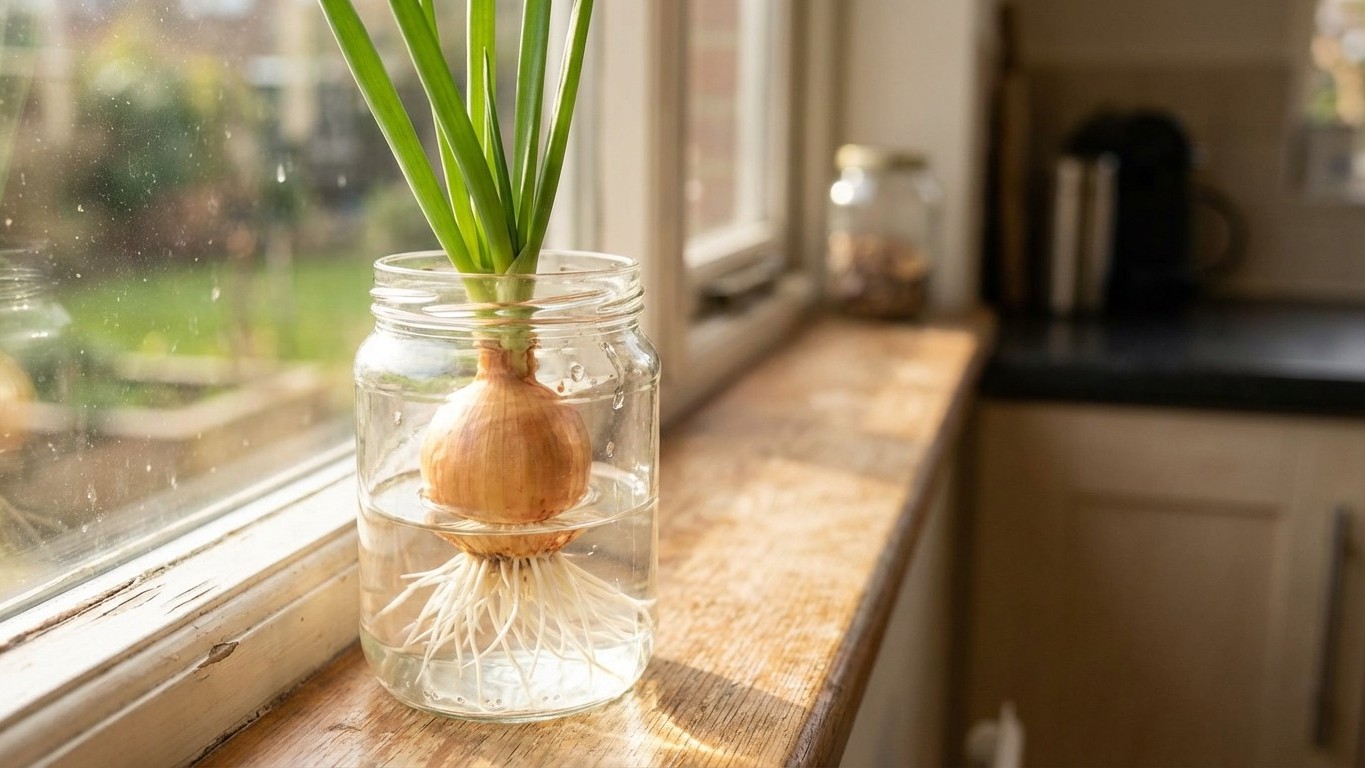
Green onions, fatigued and floppy, regrow at a pace that borders on miraculous. Trim the green tops for your salad or omelet, but leave the white bulbs with roots attached. Stand them in a glass of water on your kitchen windowsill. Within days, new greens emerge, ready for a second (or third) harvest. Move the regenerating bulbs outdoors once frost has passed, and you’ll never buy scallions again.
Celery stumps, lettuce hearts, and even herb stems revive with similar vigor. Place these scraps base-down in a shallow dish of water. After a week, roots and leaves start to unfurl, hungry for sunlight. Plant them in moist soil, water lightly, and wait. The transformation, from cast-off to crop, can feel like time-lapse magic in slow motion.
Spring’s All-Star Scraps: What Actually Works?
Some kitchen waste delivers a quick, almost effortless return. Others, less so. Sweet potatoes, with their wrinkled, dormant eyes, top the list for patience and reward alike. Half-bury a portion in damp soil and wait for “slips”, shoots that appear after several weeks. Break them off gently and plant. The result: a lush vine that produces a generous fall harvest, all from a single forgotten root.
Avocado pits dazzle with their promise, yet rarely yield actual fruit outside the subtropics. Still, the joy of watching that glossy seed split, sending a root into water and a stem into air, turns the ordinary into a lesson in slow trust. It’s the perfect project for anyone craving greenery, regardless of yield.
Garlic, far less capricious. That sprouting clove? Plant it, pointy end up, in spring or fall. Each sprout Becomes a whole new bulb by late summer, its sharp flavor a reminder that persistence pays off in the garden too.
Peppers, tomatoes, and cucumbers offer a wildcard: their seeds. Dry, plant, and watch for germination, though results aren’t always identical to the supermarket variety. Hybrids throw surprises, but that’s part of the excitement. The next “volunteer” plant could become your garden’s signature crop, one you never set out to grow.
Setting Up Your Zero-Cost Potager
Sunshine and patience form the backbone of any productive garden. You won’t need much more, at least at first. Even apartment dwellers can exploit scraps, windowsill trays, mason jars, an old yogurt container with holes punched in the bottom. The ordinary transformed with a bit of ingenuity.
Water is the critical bridge from scrap to seedling. Most regrows want their feet barely wet, not submerged. A shallow dish, a splash of clean water, and a daily change keep rot at bay. Transition to soil as soon as roots or green growth appear. The move from sterile water to living earth is when these plants truly wake up–suddenly, a nubby lettuce core turns lush, the bland landscape of potting soil erupting into new life.
Don’t expect perfect results. Some scraps simply won’t regrow, or might suffer setbacks. (One soggy spring, I lost a dozen carrot tops to mold, yet one surviving stub thrilled with a crown of green.) These false starts teach resilience, both for the gardener and the garden. The cost? Nothing but what you were already throwing away.
Connecting with the Unexpected
There’s a small thrill in bringing your own celery or green onions to the table, knowing they began as waste. It’s a lesson in circularity, the kind that would make your grandparents nod approvingly. Waste less, eat more. Every tiny harvest feels outsized, almost mischievous, when supermarket prices climb higher with every passing season.
Think back: how many times have you paid for another head of garlic, or tossed the gnarly core of a store-bought lettuce? Would it have made a difference if, once, just once, you’d set it aside instead, letting it regrow on your window ledge? The answer isn’t about saving money, though the numbers add up fast; it’s about changing the way you experience food and waste at home.
This isn’t gardening for the perfectionist, or those after instant results. It’s an experiment in patience and possibility, returning value to things deemed valueless. Each sprouting clove or regrown lettuce heart delivers a reminder: the distance between the garden and the kitchen is shorter than most imagine.
What starts as a spring hack could become a way of seeing, watching green life return out of scraps, realizing that abundance and thrift can walk hand in hand. Could a future harvest, humble as it may seem, shift your habits and spark joy in the everyday? Only those who try will find out.