
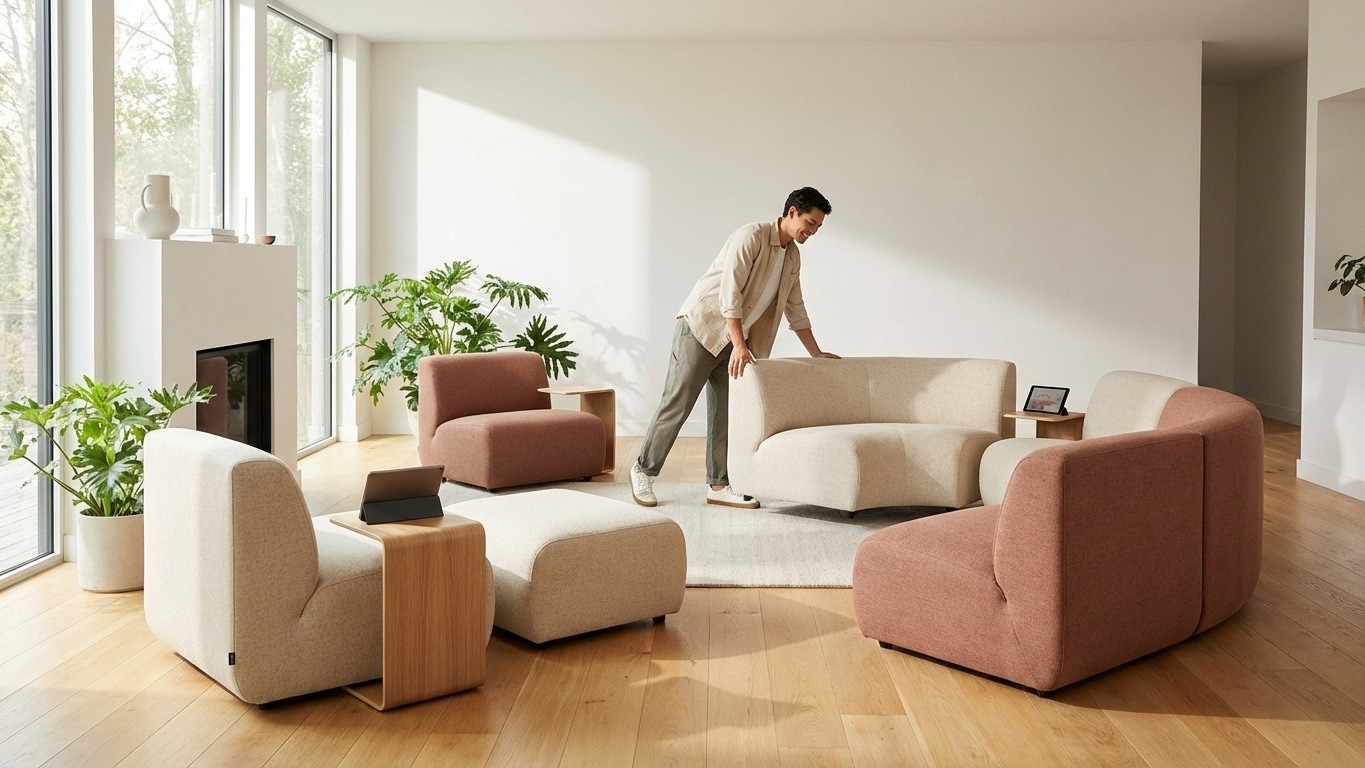
The era of immovable, fortress-like furniture is coming to an end. The global modular furniture market is set to rise from USD 86.38 billion in 2025 to USD 90.44 billion in 2026, driven by growing urbanization, changing lifestyles, and rising demands for space-saving, adaptable furniture solutions. This shift represents more than just changing aesthetics—it signals a fundamental reimagining of how we live, work, and relax in our homes.
Traditional heavy sofas that once anchored living rooms for decades are giving way to sleek, lightweight modular systems that can transform at will. Furniture design is increasingly focused on modular systems that support multiple functions within compact interiors, with architecturally integrated pieces that allow layouts to shift between configurations with minimal effort. This revolution isn’t driven by fleeting design whims—it’s a response to the realities of modern living.
Why Heavy Furniture No Longer Makes Sense
In 2026, your sofa is no longer just a place to sit—it’s your video-call background, kids’ fort, guest bed, and movie-night base, often all in the same week. Hybrid and remote work are still a regular part of many people’s jobs, so we’re spending more time living, working, and relaxing in the same space. The massive sectionals and oversized recliners that dominated the 2010s simply can’t keep pace with these evolving demands.
Urban living spaces continue to shrink, making versatility essential rather than optional. Rising demand for space-efficient furniture shows 68% of urban households preferring modular solutions and 72% opting for multifunctional products. Heavy, fixed furniture becomes a liability in these dynamic environments, where a living room might serve as an office during the day, a dining space at lunch, and an entertainment center by evening.
The financial burden of traditional furniture also weighs heavily on modern consumers. Moving a heavy sectional often requires professional movers, making relocations expensive and stressful. The design philosophy extends beyond environmental concerns to practical benefits—furniture that adapts to different living situations appeals to increasingly mobile lifestyles. Lightweight modular systems eliminate these costly complications entirely.
The Modular Revolution Transforms Living Spaces
Magnetic connectors and precision interlocking joints enable fast reconfiguration without tools, making it easy to adapt furniture to different daily activities. This flexibility improves spatial efficiency by allowing a single system to perform several roles, such as converting seating into lounge or guest arrangements. The technical innovations driving this trend go far beyond simple assembly mechanisms.
Modern modular systems represent a masterclass in intelligent design. A modern modular sectional sofa is made from individual, movable sofa pieces—single seats, corner units, chaises, and ottomans—that lock together with clips, rails, or grippy feet. Instead of one heavy frame, you get modules you can detach, rotate, or rearrange. This engineering approach creates furniture that’s both structurally sound and infinitely adaptable.
Leading brands have embraced this modular philosophy with sophisticated connection systems. Each sectional piece is upholstered in performance fabric and heavy-duty clips underneath each piece keep seats together but make it easy to rearrange when needed. The modular system stays firmly connected, preventing shifting—a common issue with lesser modular sofas—while still giving you the freedom to reconfigure as needed. These advancements address previous concerns about modular furniture’s stability and durability.
The sustainability factor adds another compelling dimension to the modular movement. Loose-fit construction supports easy repair and part replacement, extending product lifespan and reducing material waste. By combining adaptability with structural clarity, modular furniture delivers long-term value while responding to changing space requirements and evolving lifestyle needs. This approach aligns perfectly with growing environmental consciousness among consumers.
Design Meets Functionality in 2026
The aesthetic evolution accompanying this functional revolution deserves equal attention. In 2026, furniture trends are being driven far more by how we want our homes to feel than how we want them to look. This year, there’s an obvious shift towards furniture that feels ’emotionally reassuring rather than overly structured’. Lightweight doesn’t mean compromising on visual impact or comfort.
After years of sharp lines, furniture shapes in 2026 are softening. Curves are everywhere, but they’re not fussy or overly decorative; instead, they bring a sense of ease that makes rooms feel calmer and more welcoming. These organic forms work particularly well in modular systems, where individual pieces must harmonize regardless of their arrangement.
The material innovation supporting lightweight construction continues to advance rapidly. Material innovation is moving toward bio-engineered alternatives that reduce reliance on fossil-fuel-based synthetics. Regenerative materials such as mycelium and algae-based polymers offer low carbon impact while introducing rich, tactile surfaces that feel organic and visually distinctive. These developments enable furniture that’s simultaneously lighter, more sustainable, and more aesthetically appealing than traditional alternatives.
Color palettes are also evolving to support this new functionality-first approach. The 2026 color forecast is all about grounding, warmth, and nature, with sofas upholstered in creamy oatmeal, deep terracotta, sandy beige, muted rust, rich olive green, and rich chocolate brown. These versatile neutrals work beautifully across different modular configurations and room layouts.
The Future of Flexible Living
The shift toward modular, lightweight furniture represents more than a trend—it’s a fundamental adaptation to contemporary life. As the trend has shifted towards convenience and sustainability, the demand for modular furniture will seek to uphold its consistent growth, with the market recovery remaining robust, helped by changing consumer trends towards adaptive and multi-purpose furniture.
Smart integration further enhances these systems’ appeal. Smart features are quietly becoming standard: hidden USB ports in arms, storage chaise modules for blankets and controllers, or adjustable headrests that make TV marathons kinder to your neck. These technological enhancements transform modular furniture from simple seating into comprehensive lifestyle solutions.
The psychological benefits of this flexibility shouldn’t be underestimated either. Homes are becoming more of a safe haven from a fast paced, tech-infused world, and our furniture choices are trending towards supporting our need for comfort, relaxation, and a real sense of self. Modular systems provide the control and customization that enable this personal sanctuary feeling.
As we settle into 2026, the writing is clear on the living room wall. Heavy, immovable furniture represents an outdated approach to home design that no longer serves our dynamic lifestyles. In 2026, living room furniture trends revolve around modularity, comfort, natural palettes, sustainability, and wellness. The living room furniture trends of 2026 point toward a home that is warm, authentic, and deeply comfortable. The future belongs to furniture that adapts as quickly as we do, creating homes that truly support the way we live now.