
The revelation hit me while examining a pair of leather boots I’d owned for just two years. What should have been supple, well-maintained leather had developed unsightly creases, permanent indentations, and areas where the finish had worn thin. The culprit wasn’t excessive wear or poor quality – it was my storage method. Like millions of people worldwide, I had been unknowingly destroying my leather shoes by simply stacking them in my closet.
The Hidden Damage of Stacking Leather Shoes
Leather is essentially treated animal skin that retains memory and responds to pressure, temperature, and humidity changes. When shoes are stacked on top of each other, the weight creates constant pressure points that gradually deform the leather’s natural structure. This pressure doesn’t just create temporary impressions – it causes permanent damage that compromises both the appearance and longevity of your footwear.
The science behind this damage involves the leather’s fiber structure. Quality leather contains natural oils and proteins that keep it flexible and durable. However, sustained pressure from stacking compresses these fibers, squeezing out essential oils and creating weak points where cracking eventually occurs. The problem becomes more pronounced with expensive leather shoes, which often feature softer, more pliable leather that’s particularly susceptible to deformation.
Temperature fluctuations in closets exacerbate the issue. When leather becomes warm, it softens and becomes more malleable, making it even more vulnerable to the weight pressing down from above. Cool temperatures then cause the leather to stiffen while maintaining the compressed shape, essentially “setting” the damage permanently.
Beyond Deformation: The Moisture and Mold Problem
Stacking creates another serious issue that many shoe owners overlook: poor air circulation. Leather shoes naturally absorb moisture from daily wear, and this moisture needs somewhere to go. When shoes are stacked closely together, air cannot circulate properly around them, creating pockets of humidity that become breeding grounds for mold and mildew.
This trapped moisture doesn’t just create unpleasant odors – it actively breaks down the leather’s structure from within. The proteins and oils that give leather its strength and flexibility begin to deteriorate when exposed to prolonged moisture, leading to cracking, peeling, and eventual disintegration of the material. High-quality leather shoes, which can cost hundreds or even thousands of dollars, can be ruined in a matter of months under these conditions.
The sole materials also suffer when shoes are stacked. Rubber and leather soles can develop permanent deformation when bearing the weight of multiple shoes above them, affecting the shoe’s comfort and potentially causing uneven wear patterns that impact your gait.
Proper Leather Shoe Storage Techniques
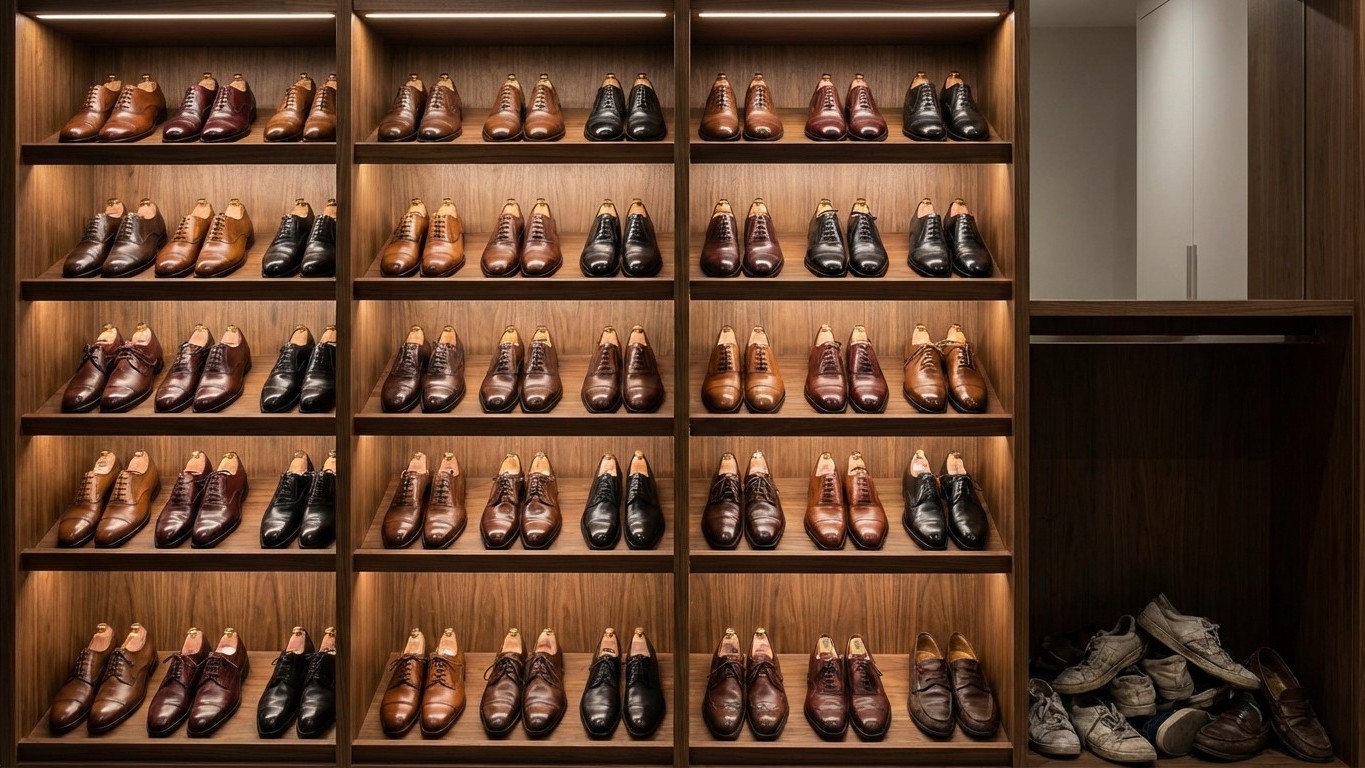
The solution lies in treating leather shoes as the investment pieces they are. Each pair needs individual space to maintain its shape and allow proper air circulation. Shoe trees represent the gold standard for leather shoe storage – cedar or plastic forms that maintain the shoe’s natural shape while absorbing excess moisture and preventing creasing.
For those without shoe trees, stuffing shoes with acid-free tissue paper provides a budget-friendly alternative that helps maintain shape without the moisture-absorption benefits. The key principle remains the same: support the shoe’s structure from within while allowing air to circulate around it.
Horizontal storage on individual shelves or in dedicated shoe cubbies eliminates the pressure problems associated with stacking. If space constraints make individual storage challenging, shoes can be stored in breathable bags or boxes, but never directly on top of each other. Even when using boxes, ensure they’re not stacked with shoes inside, as the weight transfer still occurs.
Climate control plays a crucial role in leather preservation. Shoes should be stored in areas with stable temperature and humidity levels, away from direct heat sources or damp areas. A bedroom closet typically provides better conditions than a garage or basement, where temperature and humidity fluctuations are more extreme.
The Economic Impact of Proper Storage
The financial implications of proper shoe storage extend far beyond avoiding replacement costs. Well-maintained leather shoes develop a beautiful patina over time, actually increasing in character and value with proper care. Professional shoe restoration can cost a significant fraction of the original purchase price, but shoes that have been properly stored rarely need such intensive treatment.
Consider the cost per wear calculation: a quality pair of leather shoes that lasts ten years with proper storage and care provides dramatically better value than shoes that need replacement after two years due to storage-related damage. The initial investment in proper storage solutions – shoe trees, adequate shelving, or climate control – pays for itself many times over through extended shoe life.
The transformation in my own shoe collection has been remarkable since abandoning the stacking method. Leather shoes that I thought were permanently damaged have regained much of their original suppleness after months of proper storage with shoe trees. The lesson extends beyond mere organization – it’s about respecting the craftsmanship and materials that go into quality footwear by providing them with the care they deserve.