
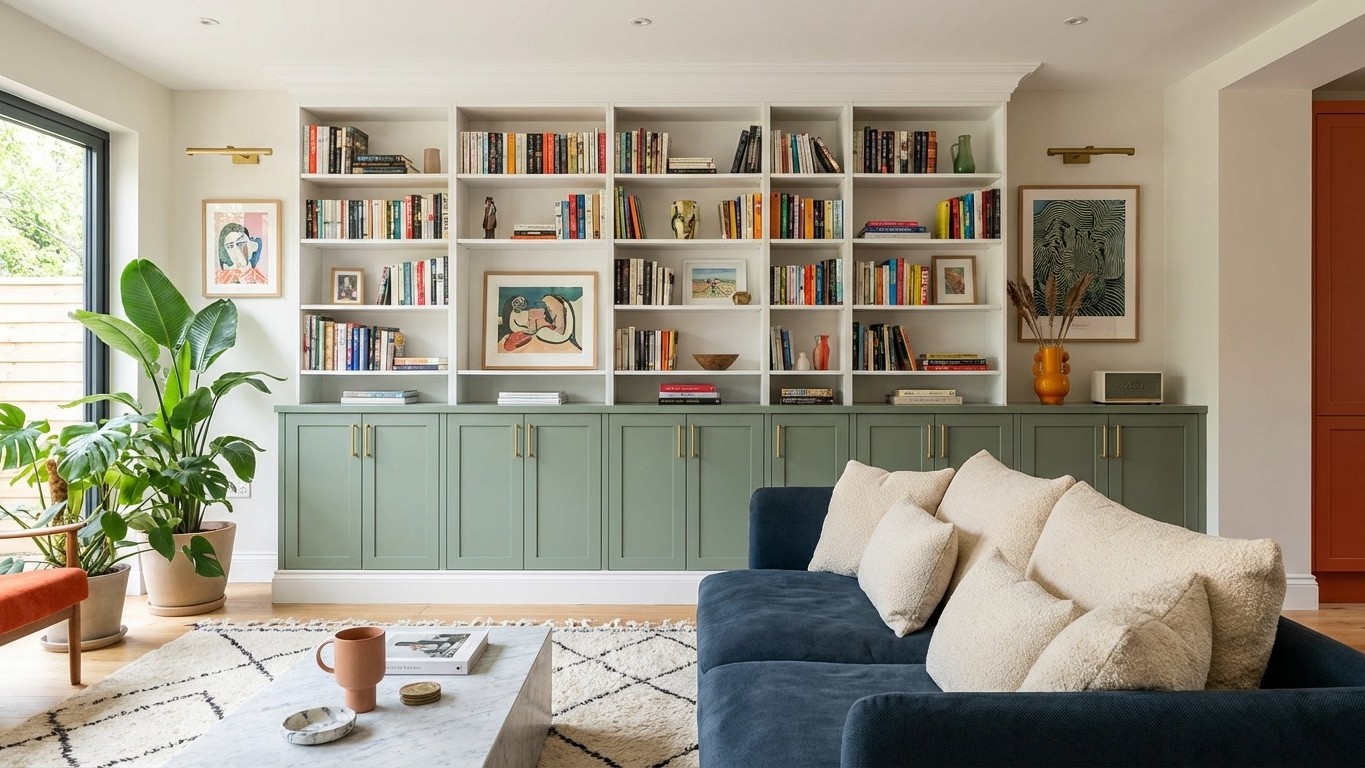
While most homeowners see IKEA as the go-to for budget furniture, interior designers have long used it as their secret weapon to create bespoke, magazine-worthy spaces without the premium price tag. From mixing high and low elements strategically to redirecting funds where they make the most visual impact, these professionals know exactly how to transform flat-pack basics into custom-looking masterpieces.
The magic isn’t in choosing different furniture—it’s in understanding how to manipulate what IKEA already offers. As interior designer Kanza explains, the key is “treating IKEA furniture like a blank canvas, a base to add on to rather than a finished product,” transforming functional pieces into something beautiful and personal.
The Strategic Paint and Hardware Swap
The most transformative yet accessible upgrade starts with color. Interior designer Michelle Harris advocates for painting IKEA pieces in unusual shades outside their traditional palette, noting that “if you go for a color that is 100% not IKEA, people will automatically assume it’s bespoke”. This simple change immediately removes the recognizable IKEA aesthetic that can cheapen a space’s appearance.
The standard IKEA handles often look generic, but upgrading them is a low-effort way to achieve a luxury look. Swapping hardware and applying fresh paint are among the most cost-effective upgrades that make a huge difference, completely changing a piece’s personality while adding a custom feel. Gold half-moon handles, brass fixtures, or matte black pulls can instantly elevate even the most basic storage solutions.
The Crown Molding and Trim Transformation
Nothing screams “custom built-in” quite like proper trim work. Adding trim or molding to bookcases and cabinets creates depth, dimension, and the illusion of high-quality craftsmanship. Crown molding at the top visually connects all sections and immediately changes the feel—if you do one thing to change up IKEA wardrobes, this should be it.
The technique extends beyond aesthetics to functionality. Hiding the seam between furniture and walls is key to achieving a custom-built look, requiring proper wall mounting, caulking gaps, and painting everything in complementary tones. Caulk gives a clean, seamless, professional finish that completes the built-in appearance when run along edges where wardrobes meet walls.
The Repetition and Built-In Illusion
One of the biggest secrets to making IKEA look expensive is repetition—the same principle IKEA uses in their brand photography to create balance, cohesion, and intentionality. This works particularly well with storage pieces like credenzas and bookcases, as freestanding furniture can feel disconnected while built-ins instantly add sophistication and impact.
The key to making Billy bookcases look built-in is adding a face frame around the front, which covers gaps and creates a seamless look using basic lumber from home improvement stores. Creating boxes above and below extends the height from floor to ceiling, while crown molding at the top makes a huge difference in overall appearance. Combining several pieces transforms any room with a custom-designed built-in for a much lower price tag, with trim hiding seams between individual units.
The Custom Configuration Strategy
Being more adventurous than standard IKEA shelf configurations is another way to make furniture look more bespoke and expensive. Rather than following the suggested layouts, designers create unique arrangements that serve specific functional needs while appearing completely custom.
With Billy bookcase hacks, designers often create central four-compartment features by dividing open sections in half. Similarly, HAVSTA units can be reconfigured with large central compartments and narrower sections above and below. This requires removing central supporting shelves and drilling new holes, but ensures the unit maintains structural integrity while achieving a custom appearance.
The Textile and Surface Enhancement
Whether reupholstering chairs or creating cushions, adding vibrant textiles can transform IKEA pieces into high-end, unique statements. As designer Noz Nozawa explains, “IKEA makes great furniture frames and bases that are wonderful quality for their value,” and the way to elevate them is through custom cushions with more vibrant textiles.
Textured surfaces like reeding and fluting represent major trends, achievable with IKEA pieces through DIY applications of fluted panels cut to size and glued to door fronts. Overlays—custom-made pieces designed to fit specific IKEA furniture—come in various materials and designs, transforming regular pieces into unique, elevated furniture that matches personal interior tastes.
The genius of these designer strategies lies not in expensive renovations, but in understanding how small, thoughtful changes can create dramatic visual impact. With a keen eye and basic DIY knowledge, even the most mundane IKEA pieces can become high-end centerpieces that are both practical and stylish. The key is viewing each piece not as a finished product, but as a foundation for expressing your unique design vision while maintaining the functionality and affordability that makes IKEA so appealing in the first place.