
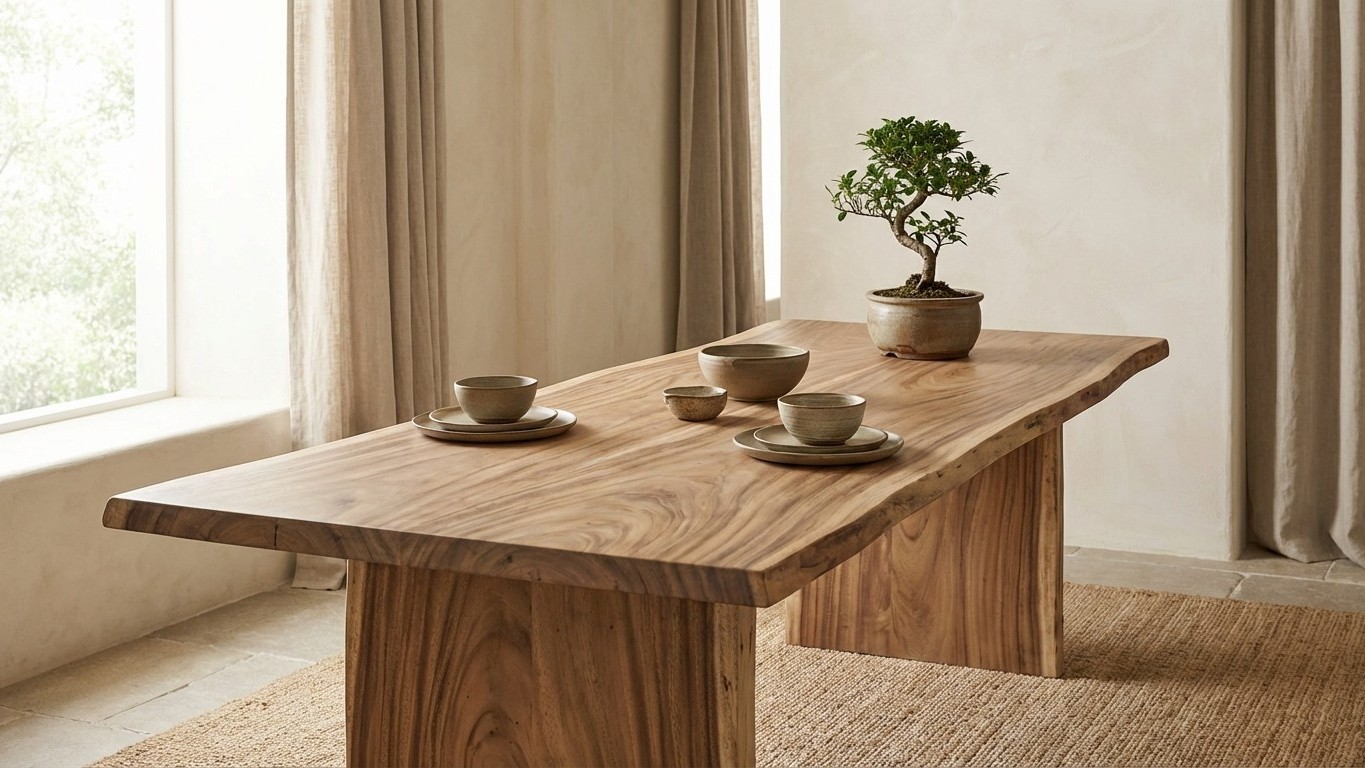
The Quiet Revolution on Your Dining Table
While traditional dining rooms cling to elaborate tablecloths and layered linens, a growing movement inspired by Japanese minimalism and Scandinavian functionality is redefining how we approach table styling. The “naked table” trend isn’t about deprivation—it’s about revealing the inherent beauty that’s been hiding beneath layers of fabric.
This aesthetic where wabi-sabi meets hygge blends Japanese minimalism with Scandinavian warmth, creating spaces that embrace simplicity, nature, and quiet comfort. What started as a niche design philosophy has evolved into a 2025 trend that adapts to emerging priorities of sustainability, wellness, and authentic living.
At its core, Japanese minimalism is rooted in Zen principles—finding balance, appreciating imperfection, and seeking tranquility through neutral colors, clean lines, and natural materials. Unlike the stark minimalism that can feel cold, this approach celebrates the warmth and character that emerges when natural materials take center stage.
Understanding the Philosophy Behind the Bare Table
The naked table movement extends far beyond simply removing a tablecloth. It embodies the Wabi-Sabi philosophy that beauty can be found in imperfection and impermanence—a beauty of things modest and humble, unconventional rather than vulgar. This Japanese aesthetic celebrates the natural aging process, the unique grain patterns in wood, and the subtle variations that make each piece authentic.
Wabi Sabi offers a transformative approach to dining room design, creating serene, elegant, and deeply meaningful spaces that go beyond mere decoration. When applied to dining tables, this philosophy encourages us to appreciate the craftsmanship and natural beauty of the wood itself, rather than concealing it beneath layers of textile.
The approach embraces clean lines and uncluttered space, with dining furniture designed for both functionality and beauty using natural materials that age gracefully, complemented by soft, natural lighting that highlights quality craftsmanship. The result is a dining environment that feels both sophisticated and deeply calming.
Mastering the Art of Beautiful Bare Tables
Successfully styling a naked table requires understanding that less truly can be more, but only when executed with intention and care. The key lies in striking a balance between rugged charm and refined style, using natural materials like stone, wood, and metal while paying careful attention to texture and detail.
Start by assessing your table’s inherent beauty. Tables crafted with meticulous attention to detail showcase unique grain patterns and natural variations of the wood, creating stunning centerpieces. If your current table lacks character, consider that this trend works best with pieces that have natural imperfections, weathering, or distinctive grain patterns that tell a story.
Layering remains important in this aesthetic—a minimalist table runner combined with carefully chosen placemats adds depth and interest while maintaining a clean look, with mixed textures like linen with jute or cotton creating unique yet cohesive aesthetics. The goal isn’t to strip everything away, but to choose each element with purpose.
Consider your tableware as sculptural elements rather than mere functional objects. Handcrafted dishware like ceramic bowls or cups can add artistry without clutter, while carefully placed greenery such as bonsai trees or small potted ferns connects you to nature and adds organic beauty to clean lines. Each piece should feel intentionally chosen rather than accidentally assembled.
Living With Intention: The Practical Benefits
Beyond its aesthetic appeal, the bare table approach aligns perfectly with modern lifestyle needs. Multifunctional furniture and built-in storage integrate seamlessly into furniture, reducing clutter while preserving the minimalist aesthetic. This makes maintenance easier and creates more flexible living spaces.
Japanese minimalism represents liberation rather than deprivation—the freedom to let go of what doesn’t serve you and the joy of living with clarity, peace, and purpose, creating spaces that support calm and well-being daily. When your dining table isn’t hidden beneath layers of fabric, cleaning becomes simpler, and the natural antibacterial properties of certain woods can even contribute to a healthier dining environment.
This aesthetic also supports mindfulness, adaptability, and eco-conscious choices, proving that minimalism isn’t just about reducing clutter but curating a home that fosters intentional living. By investing in quality pieces that stand alone beautifully, you reduce the need for constant textile updates and seasonal decorating.
The naked table trend represents more than a design choice—it’s a philosophy that honors both the materials we choose and the moments we share around them. This creates lasting, meaningful spaces that serve as an oasis from daily stress, celebrating harmony, simplicity, and intentionality as both a design style and a lifestyle. In a world of constant visual noise, the bare table offers a return to authenticity, where natural beauty needs no embellishment to make a lasting impression.