
The window between late winter’s last frost and the first real warmth of spring is short. Miss it, and you’re scrambling to catch up. Nail it, and your garden beds are primed, loose, and hungry for whatever you’re about to grow. The difference between a mediocre growing season and a genuinely productive one often comes down to what you do in the ground before a single seed goes in.
Key takeaways
- Winter leaves hidden clues in your soil—and a pencil can reveal whether compaction is killing your plants’ potential
- Not all debris is bad: the organic matter already breaking down is actually feeding your soil’s hidden ecosystem
- Timing soil amendments isn’t just about technique—it’s about giving chemistry weeks to work before seedlings need it
Start by reading what the bed is telling you
Before you reach for a shovel, take ten minutes to actually look at your beds. Winter leaves marks. You might spot soil compaction from months of rain and snow, patches where water pooled and left crusty surfaces, or spots where mulch from last fall has started to mat down and smother the soil underneath. These observations aren’t decorative, they tell you exactly where to focus your energy.
Compacted soil is the enemy of root development. A simple test: push a pencil straight down into the bed. If it meets resistance within three inches, your soil needs breaking up before anything else. Loose, well-aerated soil lets roots push deep, which means plants that can survive a dry week Without instantly wilting.
Check for debris too, and be specific about what you’re dealing with. Dead annual stems are easy to pull and compost. Diseased plant material is different, anything that showed signs of fungal blight or bacterial rot last season should go straight to the trash, not the compost heap. Pathogens overwinter in plant tissue, and recycling them back into the soil is how you set yourself up for the same problem two years running.
Clearing debris the right way
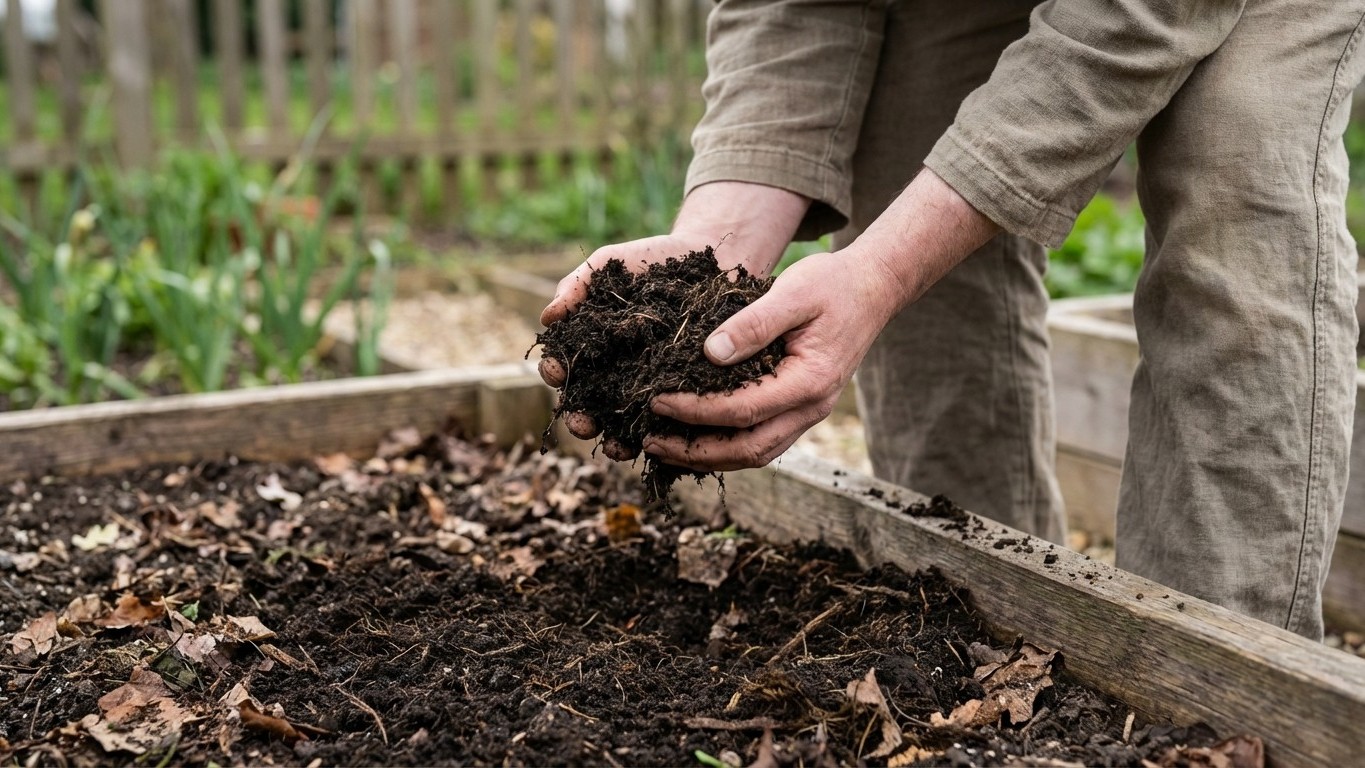
There’s a nuance here that a lot of gardeners miss: not all “debris” is bad. Fallen leaves that have started to break down are actually working for you, feeding soil microbes and improving structure. Aggressive clearing that strips every organic particle from the surface can leave your soil exposed and vulnerable to erosion and moisture loss.
The rule of thumb is texture. If the organic material is still mostly whole and identifiable (whole leaves, thick stems, seed heads), remove it. If it’s already breaking down into dark, crumbly bits, leave it or work it lightly into the top inch of soil. Your earthworms will thank you. Studies from soil biology research consistently show that beds with preserved organic surface matter host significantly higher populations of beneficial microbial life than bare-soil beds.
For persistent weeds that survived winter (and there are always some), remove them now before they get any ideas about flowering. Dandelions and thistle are particularly aggressive, pull them with a narrow weeding fork to get the taproot, or you’ll see them back within two weeks. A weed that’s already gone to seed in early spring can scatter hundreds of viable seeds in a single wind event.
Amending soil: what your beds actually need
Soil amendment isn’t a one-size approach. The right addition depends on what you’re working with. Clay soil needs structure, compost and coarse organic matter open it up and allow drainage. Sandy soil needs water retention — the same compost works here, but aged manure or coco coir can help hold moisture between waterings. Loamy soil in reasonable condition might only need a light top-dressing of compost worked in a couple of inches.
Compost is the universal starting point, and a two-to-three inch layer worked into the top six to eight inches of soil will improve almost any bed condition. The timing matters here: amending too early when soil is still waterlogged can damage soil structure by compacting wet particles together. Wait until the soil passes the squeeze test, grab a handful and compress it. If water drips out, it’s too wet. If it crumbles when you open your hand, you’re ready.
A soil pH test is worth doing every two to three years, and early spring is the right moment. Most vegetables prefer a range between 6.0 and 7.0. Significantly acidic soil (below 5.5) will starve plants of nutrients even when those nutrients are physically present in the bed, because acidity locks them into unavailable forms. Lime raises pH over several weeks, which is exactly why applying it at planting time is too late, spring prep is when it actually takes effect in time to matter.
For gardeners who grew heavy feeders like tomatoes, squash, or corn in a bed last season, nitrogen levels may be depleted. Incorporating a two-inch layer of well-aged compost or a balanced granular organic fertilizer now gives that amendment time to integrate before your seedlings need it. Fresh manure, on the other hand, should be avoided, it’s too “hot,” meaning nitrogen-concentrated, and can burn young roots.
The final prep before planting
Once the bed is cleared and amended, resist the urge to over-till. Repeated deep tilling disrupts the fungal networks and microbial communities that make soil biology work. A single pass with a garden fork to loosen and incorporate amendments is enough. Rake the surface level but not packed down, you want texture, not a smooth crust that sheds water instead of absorbing it.
If you’re not planting immediately, cover the prepared bed with a layer of straw mulch or a simple row cover fabric. Bare, prepared soil exposed to spring rain and wind can lose its structure quickly. Covering it keeps moisture in, soil temperature rising, and early weed seeds from colonizing the space you just worked hard to clear.
The beds you prepare in these few weeks before spring planting are doing more work than you’ll see. Soil that’s been properly cleared, amended, and given time to settle will grow plants that simply look different, deeper color, stronger stems, more consistent yields. Which raises the real question every gardener eventually asks: how much of the gap between struggling plants and Thriving ones was always about what was happening underground, before anything was even planted?