
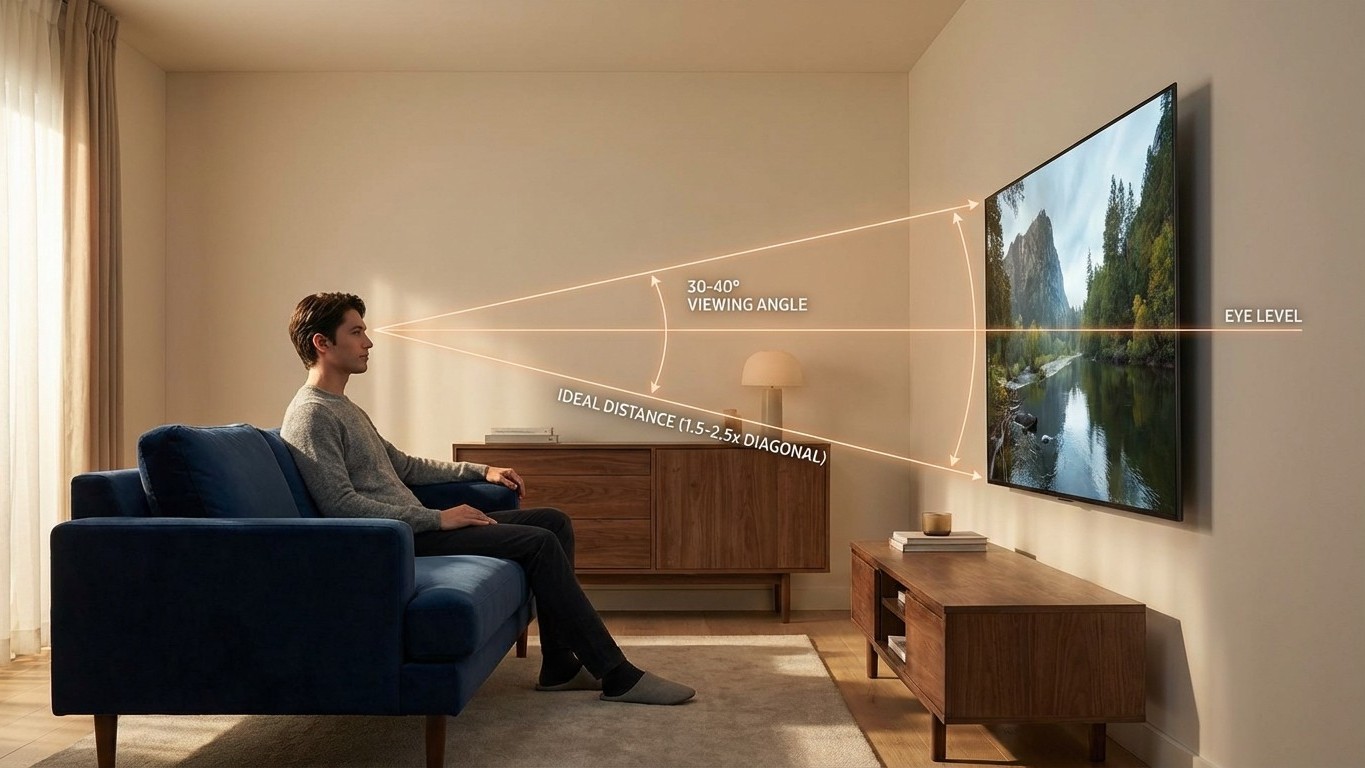
After years of squinting at my television, adjusting my posture constantly, and wondering why my expensive display never seemed quite right, I discovered something embarrassing: I’d been positioning it completely wrong. The culprit wasn’t my TV or my furniture—it was my complete ignorance of two fundamental measurements that professional installers use to create the perfect viewing experience.
Most of us mount or place our televisions based on gut feeling, available wall space, or furniture height. We eyeball the position, step back, and call it good enough. But optimal TV positioning relies on precise calculations involving viewing distance and viewing angle—two measurements that work together to eliminate eye strain, neck pain, and that nagging feeling that something just isn’t right about your setup.
The Science Behind Comfortable Viewing
The human eye and neck have specific comfort zones that haven’t changed despite our screens getting larger and sharper. When we ignore these biological limitations, we force our bodies to adapt to poor positioning rather than optimizing our setup for natural, comfortable viewing.
The first critical measurement is viewing distance, which determines how far you should sit from your screen. This isn’t arbitrary—it’s based on your TV’s size and resolution. For 4K televisions, the optimal distance ranges from 1.5 to 2.5 times the screen’s diagonal measurement. A 65-inch TV, for example, should be viewed from 8 to 13 feet away. Sit too close, and you’ll see individual pixels or experience eye fatigue. Too far, and you lose detail and immersion.
The second measurement—viewing angle—determines the vertical position of your screen relative to your eye level. Your eyes should align with the bottom third of the screen when you’re in your normal sitting position. This translates to the TV’s center being positioned 15 to 25 degrees below your eye level, depending on your seating arrangement and personal comfort.
Why These Measurements Matter More Than Ever
Modern televisions have grown substantially larger while becoming thinner and lighter, making it easier to mount them higher on walls or place them on tall entertainment centers. This trend toward elevated positioning creates viewing angles that force us to crane our necks upward—a position our cervical spine wasn’t designed to maintain for extended periods.
The consequences extend beyond temporary discomfort. Consistently poor TV positioning contributes to what healthcare professionals now recognize as “tech neck,” a condition characterized by chronic neck pain, headaches, and shoulder tension. When combined with the eye strain from incorrect viewing distances, poor TV positioning can significantly impact your comfort during what should be relaxing entertainment time.
Resolution improvements in modern displays have also changed optimal viewing distances. While older standard-definition TVs required greater distances to hide pixelation, today’s 4K and 8K displays reward closer viewing with increased detail and immersion. Many people still position themselves based on outdated distance recommendations, sacrificing the visual experience their modern TV was designed to deliver.
Implementing the Perfect Setup
Start by measuring your primary viewing position—the spot where you spend most of your TV-watching time. Sit naturally in your favorite chair or on your couch, and have someone measure the height of your eyes from the floor. This becomes your reference point for determining the TV’s vertical position.
For the horizontal distance, measure from your seating position to where your TV will be placed. Compare this measurement to your TV’s diagonal size using the 1.5 to 2.5 times rule. If your current distance falls outside this range, consider rearranging your furniture or adjusting your seating to optimize the viewing experience.
When mounting or placing your TV, position the center of the screen 4 to 6 inches below your measured eye level. This slight downward angle reduces neck strain while maintaining a comfortable field of view. For wall mounts, this often means positioning the TV lower than intuition suggests—many people mount their televisions far too high, creating the upward viewing angle that causes discomfort.
Fine-Tuning Your Setup
After implementing these measurements, spend time in your normal viewing position and pay attention to your body’s feedback. Your head should rest naturally against your chair or couch back without tilting up or down. Your eyes should move comfortably across the screen without strain, and you should be able to read on-screen text clearly without squinting or leaning forward.
Remember that these measurements provide starting points rather than rigid rules. Personal preferences, room layout constraints, and physical differences may require minor adjustments. The goal is finding the sweet spot where technical recommendations align with your individual comfort and viewing preferences.
The transformation in viewing comfort after implementing proper TV positioning can be dramatic. What once felt like a compromise between visibility and comfort becomes an effortlessly enjoyable experience. Your neck stays relaxed, your eyes don’t strain, and you can focus entirely on your content rather than constantly adjusting your position. These two simple measurements—viewing distance and angle—represent the difference between settling for adequate and achieving optimal home entertainment.