
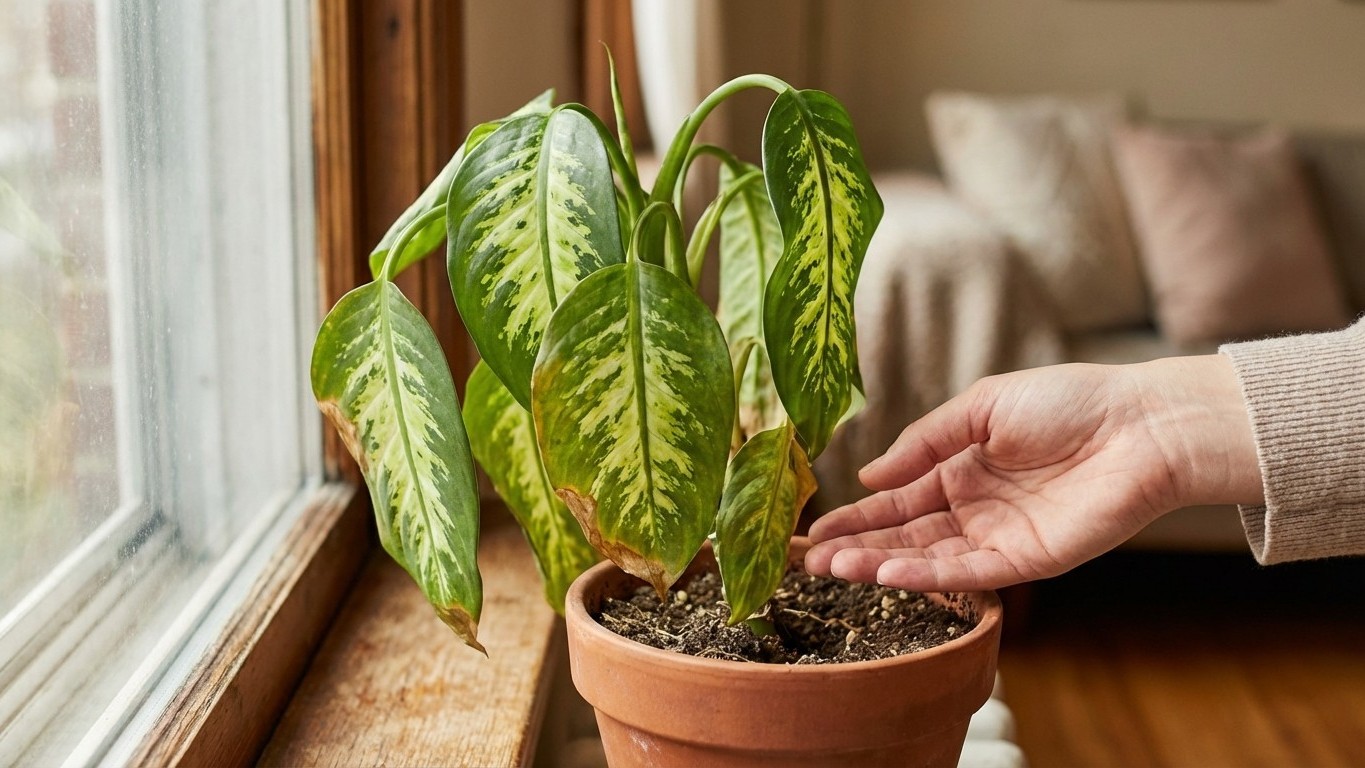
Your houseplant looked perfectly fine this morning. Now it’s slumped over, stems soft, leaves hanging limp like a forgotten umbrella. Before you reach for the watering can, stop. That instinct, to water a drooping plant immediately, is one of the most common mistakes made by plant owners at every experience level, and it can turn a recoverable situation into a fatal one.
The most common cause of drooping plant leaves is inconsistent watering, either overwatering or underwatering
, and
too much or too little water triggers similar symptoms: drooping leaves, discoloration, and stunted growth. The causes are opposite, and so are the remedies — misdiagnosing the issue can mean applying more water to an already drowning plant, or withholding it from one that’s parched.
The key to saving your plant is not speed. It’s observation.
Why a Houseplant Droops: What’s Actually Happening
The Mechanics Behind Limp Leaves and Stems
When a plant droops or wilts, its stems and leaves lose rigidity and begin to sag. This occurs due to a loss of turgor pressure — the internal water pressure that keeps plant cells firm and gives structure to non-woody stems and leaves.
Think of it like a garden hose: fully pressurized, it holds its shape. Drain it, and it collapses.
This happens because of an unnatural balance between water intake in the roots and water loss through transpiration.
The disruption can come from a surprising number of directions.
There’s an important distinction to make before going further.
Drooping leaves and wilting leaves are two different issues. While both are signals of distress, they differ in appearance and potential causes. When a plant’s leaves droop, they hang limply from the stem. Unlike wilting, drooping doesn’t necessarily imply dryness or browning, and the overall health of the plant may remain robust.
A drooping plant often still has green, otherwise healthy-looking foliage — it just looks defeated. That’s actually good news.
The good news about drooping plants, as opposed to once the leaves are brown and crisp, is it’s not too late to save them.
Drooping vs. Natural Trailing: Know Your Plant
Not every plant that “falls” is in distress.
Some plants naturally have a trailing or cascading growth habit. Examples include pothos, string of pearls, and trailing philodendrons. These plants aren’t experiencing stress — it’s their normal appearance.
A string of pearls spilling over the edge of a shelf is thriving. A pothos whose new leaves are now limp and pale green is not the same situation at all.
Drooping leaves aren’t always a sign of trouble. Some plants naturally start to droop with age, and other plants tend to have somewhat droopy-looking leaves even when they’re totally healthy. Try to learn what is “normal” for your plants so you can act quickly if something suddenly changes.
One overlooked case: transplant shock.
Plants can droop their leaves after being potted or repotted, as a sign of transplant shock. With a correct care routine and an ideal growing environment, the leaves will perk up and regain their vitality in a week or two.
If you just repotted and noticed drooping, hold off on any aggressive intervention, your plant may simply need time to adjust.
Underwatering vs. Overwatering: The Two Faces of the Same Problem
Identifying Dehydration
Dry soil starves roots of moisture. Without enough water, stems lose structure and leaves collapse like tired umbrellas. If the soil is pulling away from the edge of the pot or feels dusty and crumbly, your plant is screaming for water.
The texture of the leaves themselves is a clear indicator too.
The leaves of underwatered plants often have dry, crispy edges or tips. This is because the plant is unable to maintain hydration throughout its tissues, causing the edges to dry out first.
Stems remain firmer than in overwatered plants —
with underwatering, the stems remain firm even when leaves sag. If the soil is bone-dry and hydrophobic, submerge the pot in a basin of water for 10-15 minutes to rehydrate thoroughly.
That bottom-watering technique is particularly effective when soil has become so dry it repels water poured from the top.
Recovery from underwatering is usually swift.
Leaves dramatically droop but perk up quickly after watering.
If your plant bounces back within an hour or two of a good drink, you had a thirsty plant. Simple as that.
Recognizing Overwatering, and Root Rot
Overwatering is trickier. The plant can look nearly identical to an underwatered one, which is exactly where the danger lies.
Overwatering doesn’t kill plants by giving them too much water, it kills them by drowning the roots and cutting off their oxygen supply. Plant roots need air pockets in the soil to breathe and function properly. When soil is constantly saturated, these air pockets fill with water, and the roots literally suffocate. This oxygen deprivation leads to root rot, where roots begin to decay and turn mushy. Once root rot sets in, the damaged roots can no longer absorb water or nutrients effectively, which is why an overwatered plant often looks thirsty despite sitting in soggy soil.
The tell is in the details.
If a plant is overwatered, it will likely develop yellow or brown limp, droopy leaves as opposed to dry, crispy leaves, which are a sign of too little water.
Overwatered stems may appear darker at the base, soft, swollen, or collapsing inwards. Underwatered stems are more likely to feel hollow, shriveled, or woody.
And if you catch a foul smell from the soil, that’s a serious warning sign:
overwatering can cause root rot, which makes the roots turn soft and brown or even black. The soil may also develop a sour, stinky smell as the oxygen-less conditions encourage anaerobic bacteria to grow.
The bottom line for quick differentiation:
if a plant perks up fast after watering, it was thirsty. If it stays limp and the soil is wet, it was overwatered.
That single test resolves the ambiguity most of the time. For wider guidance on houseplant problems including yellowing, spots, and infestations, a broader diagnostic approach helps build confidence with plant care overall.
Stress and Environmental Causes
Temperature, Light, and Dry Air
Watering gets most of the blame, but the environment plays just as large a role. Temperature extremes are a prime culprit.
Extreme heat can cause direct damage to the plant — leaves can actually burn. On really hot days, a plant might struggle because it’s using water to keep itself cool, and transpiration is in full swing. It’s like your houseplant is sweating and is in danger of dehydration. Its roots simply cannot handle the demand for water, causing the leaves to droop.
On the cold end,
cold drafts can slow down transpiration so your houseplant leaves will not get enough water anymore, resulting in drooping leaves.
A practical rule:
if a room is a comfortable temperature for you, it will generally be comfortable for your plant.
The real villains are radiators, air conditioning vents, and cold drafts from single-pane windows in winter.
Keep your plant clear of direct heating and cooling sources. For a happy houseplant, maintain a room temperature between 60-75°F.
Light deficiency is less dramatic but equally real.
Insufficient light can contribute to drooping leaves. The process of photosynthesis, essential for a plant’s vitality, heavily relies on an ample supply of light. When plants don’t receive an adequate amount of light, their ability to carry out effective photosynthesis becomes compromised, and this can manifest as drooping leaves.
And for tropical species like Anthuriums, Alocasias, or Fittonias, dry indoor air is a constant threat.
Droopy leaves may indicate that your plant craves humidity. When there is not enough moisture in the air, the plant loses much more water through its leaves via transpiration. The roots cannot supply enough moisture to replace it, resulting in sad, limp leaves.
Pests, Root Rot, and Biotic Stress
A plant that droops despite correct watering and good light needs a closer look — specifically at the undersides of its leaves and at the base of its stems.
Pest infestations can cause drooping in houseplants. Certain pests such as spider mites, aphids, or mealybugs can suck out the sap from plant tissues, leading to a loss of moisture and turgor pressure. As a result, affected leaves may appear limp and droopy. Other signs include a white web-like substance, sticky sap on the leaves, or visible damage such as holes or discoloration.
Pests like aphids, spider mites, thrips, mealybugs, fungus gnats, whiteflies, and scale insects can also cause wilting leaves. These tiny troublemakers feed on your plant’s sap, weakening its overall health.
When pests are identified, isolation is the first step: quarantine the affected plant before treating with insecticidal soap or neem oil to avoid spreading the infestation. A useful angle: check if you also notice indoor plant leaves curling causes, as curling alongside drooping often points more specifically to pests or humidity issues than to watering problems.
Another overlooked factor is pot size.
Rootbound plants are outgrowing their pot. They may not get the nutrients and water needed to support the bigger plant. Repot the plant into a bigger pot.
If water runs straight through the pot without being absorbed, and you can see roots circling at the drainage holes, repotting is overdue.
Step-by-Step Diagnosis: A Method That Works
Diagnosis before action. Every time. Here’s a practical sequence to identify why your houseplant is drooping:
- Touch the soil first.
Feeling the leaves and the soil is the best way to differentiate between overwatering and underwatering. If the leaves feel dry and crispy, you are underwatering the plant. If they are soft and droopy, you are overwatering it. Dry and crusty soil indicates underwatering, whereas soggy soil indicates overwatering. - Check the stems. Soft, dark, or mushy at the base suggests overwatering or rot. Firm but shriveled points toward dehydration.
- Smell the soil. A foul, sour odor means anaerobic conditions and likely root rot from overwatering.
- Inspect leaves, both sides. Look for webbing (spider mites), sticky residue (aphids, scale), or cottony masses (mealybugs).
- Review the context. Did you recently move the plant? Did the heating come on? Has it been weeks since watering, or did you water yesterday?
To figure out if your plant is suffering from disease or mistreatment, look at how much of it is affected. If the problem is isolated to a single leaf, there’s a chance your plant has an infection. Pathogens take time to reproduce and spread, so they will initially affect only one leaf or stem at a time. If wilting or mushiness is spread out across the entire plant, the issue is likely abiotic — something physical rather than biological.
Widespread drooping is almost always a care issue, not a disease.
Common Mistakes to Avoid
The biggest beginner error: watering a drooping plant automatically, without checking the soil.
Many people assume a drooping plant needs water — and end up worsening the situation if the roots are already rotting.
Second mistake: following a strict calendar for watering.
Watering is less about following a strict calendar and more about paying attention to your plant’s needs. The type of plant, seasonal changes, the moisture level of the air, and lighting conditions will all affect how often to water your indoor plant.
Third mistake: assuming the problem is the same in every season.
In winter, indoor plants slow down due to shorter daylight hours and cooler temperatures, and they take much longer to dry out. If you keep watering your plants the same way in winter, you’re almost guaranteed to overdo it. Reduce watering frequency by 25-50% during the cold months.
Rescue and Prevention: What to Do Next
For underwatered plants, the fix is straightforward: water thoroughly, letting it drain completely.
Ensure you thoroughly soak all of the soil when you water. Add water slowly over the entire top soil surface, allow it to soak in, and keep adding more until it begins to drain from the drainage hole. This ensures that all of the roots have equal access to water.
For overwatered plants, the response depends on severity.
In mild cases, simply stop watering for the next few weeks and wait for your plant to recover. Don’t water until the soil is completely dry throughout, not just at the top surface.
If root rot has set in, more action is needed:
inspect the roots for root rot — signs are mushy roots and a foul odor, while healthy roots are firm and white. Root rot can be treated with horticultural hydrogen peroxide. First, remove the plant from the pot, gently remove as much soil as possible, and cut off any damaged roots.
Replant into fresh, well-draining potting mix and resist the urge to water immediately.
Prevention comes down to three habits.
Soil moisture meters and the good old finger test help take the guesswork out of when to water.
Always choose a pot with drainage holes and well-draining soil.
And
adjust according to seasons, plants typically need more water during the growing season (spring and summer) and less during the dormant season (fall and winter). This includes houseplants too.
Recovery time varies.
Healing can take 2-4 weeks or even more, depending on the damage. Bushy plants with a significant number of salvageable parts heal faster than those with only a few shoots left.
Patience is part of the cure. Once your plant stabilizes, it’s worth revisiting its full care profile, the right soil, pot size, light level, and watering schedule together determine whether drooping becomes a rare event or a recurring one. For a complete reference on species-specific needs, the guide on indoor plants care varieties houseplants is an excellent next step.
FAQ: Houseplant Drooping : Your Questions Answered
Why is my houseplant drooping suddenly?
Sudden drooping usually points to underwatering, a cold draft overnight, or heat stress. Check the soil and the plant’s location first.
A sudden change in environment, moving the plant to a new spot, turning on the heat for winter, or an open window overnight — can trigger a rapid response.
How can I tell if my plant is overwatered or underwatered?
Overwatered plants wilt because the roots are dead; underwatered plants wilt because they’re thirsty.
The soil is the deciding factor. Soggy and smelling earthy (or worse) means overwatering. Bone-dry, pulling away from the pot sides, means the plant is thirsty. Leaf texture confirms it: soft and limp points to overwatering, crispy and brittle to dehydration.
What should I do if my houseplant doesn’t recover after watering?
If your plant is drooping even after you water it, either the roots are suffocating due to excess moisture, or the soil is too dry and compacted so that water runs through without being absorbed. In both cases, check the soil carefully. If it’s soggy, hold off and improve drainage. If it’s bone dry and pulling away from the pot sides, soak it deeply using bottom watering.
If neither fixes it within 48 hours, check for root rot or pests.
Can temperature changes cause houseplants to droop?
Yes, absolutely. Both heat and cold affect plants in real time.
A plant that’s too hot may wilt from drying out too quickly. A plant that’s too cold may wilt from stress.
Even a cold night near a drafty window can be enough to cause visible drooping by morning.
Which indoor plants naturally droop, and when is it abnormal?
Trailing varieties like pothos, string of pearls, creeping jenny, and heartleaf philodendrons are naturally pendulous — their stems cascade by design. Drooping becomes abnormal when it happens suddenly, affects previously upright growth, or is accompanied by color change, spots, or soft stems. For varieties known to communicate their needs dramatically,
the Peace Lily is quite dramatic about its water needs and will droop the second it requires attention, an abrupt but reversible signal. Always use the context of the individual plant’s normal behavior as your baseline.
The drooping plant on your windowsill is not giving up on you. It’s communicating, than most people realize. Whether the answer is a glass of water, a drier pot, a new spot away from the radiator, or a closer look at the undersides of those leaves, the information is all there. You just have to know where to look. Explore more symptoms and why are my houseplant leaves turning yellow to build a fuller picture of your plant’s health beyond drooping alone.