
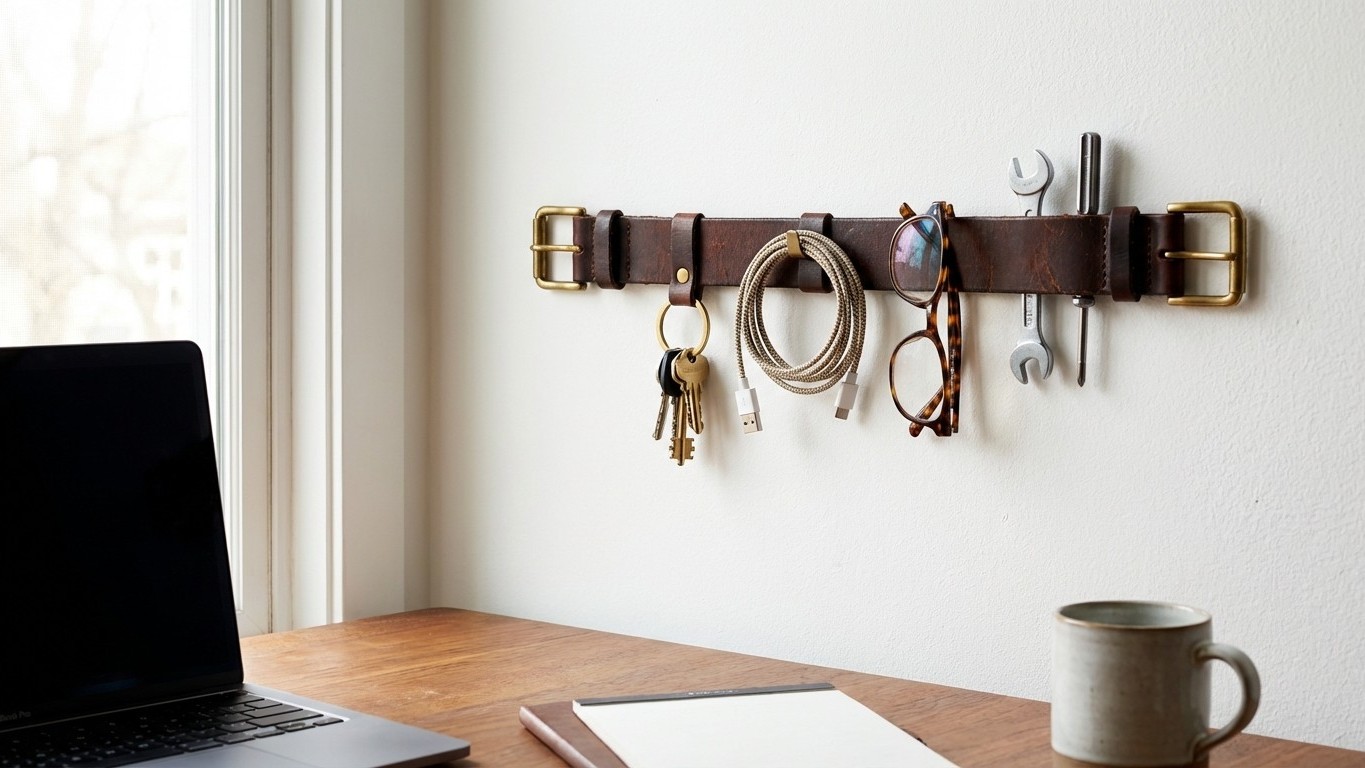
That cracked leather belt sitting in my closet’s donation pile was destined for the trash. The buckle had lost its shine, the holes were stretched beyond repair, and frankly, I hadn’t worn it in years. But something stopped me from tossing it out that day—a flash of inspiration that would completely transform how I organize my small apartment.
The Lightbulb Moment That Changed Everything
Standing in my cramped home office, surrounded by charging cables, keys, and various small items scattered across every surface, I caught sight of that old belt. Its sturdy construction suddenly looked less like a fashion failure and more like an organizational opportunity. The leather, despite its worn appearance, remained strong and flexible. The metal hardware, though tarnished, was still perfectly functional.
The transformation began with a simple wall mounting. Using two small screws positioned about eighteen inches apart, I secured the belt horizontally to the wall beside my desk. The buckle end anchored one side while a small loop I created with the other end completed the installation. What happened next surprised even me—this improvised organizer immediately began solving storage problems I didn’t realize I had.
The belt’s natural curve created the perfect catch-all for items I use daily but always seemed to misplace. Smartphone charging cables found their home draped over the leather. Keys slipped easily onto the belt, hanging at the perfect height for grabbing on my way out. Even my reading glasses discovered their designated spot, resting securely in the belt’s gentle curve.
Beyond the Basics: Unexpected Uses
As days turned into weeks, this repurposed accessory revealed its versatility in ways I never anticipated. The leather’s texture provided just enough grip to hold lightweight tools—scissors, pens, and small measuring tape found their place without sliding off. The belt’s flexibility meant I could adjust the tension by simply repositioning the items, creating custom storage solutions for different needs throughout the day.
Friends visiting my office couldn’t help but notice this unconventional organizer. Their initial puzzlement quickly turned to admiration as they watched me effortlessly grab exactly what I needed without rummaging through drawers or searching desktop clutter. The belt had become more than storage—it was a conversation starter that demonstrated the beauty of creative problem-solving.
The success in my office inspired experimentation in other areas. A wider belt found new life in the kitchen, holding dish towels and oven mitts near the stove. Its heat-resistant leather made it ideal for this high-temperature environment. Another belt, this one with a distinctive texture, became the perfect organizer for my workshop area, keeping frequently used hand tools within easy reach while working on projects.
The Science Behind Why It Works
This simple repurposing solution succeeds because it addresses fundamental principles of effective organization. Visual accessibility ranks among the most important factors in maintaining an organized space—when you can see your items at a glance, you’re more likely to return them to their designated spots. The belt’s horizontal orientation creates a clear visual inventory of everything stored on it.
The psychological impact shouldn’t be underestimated either. Having a designated place for frequently used items reduces decision fatigue and eliminates the daily frustration of searching for misplaced objects. The belt organizer creates what organizational experts call “homes” for items—specific locations where objects naturally return after use.
From an ergonomic perspective, the belt’s positioning at eye level and arm’s reach eliminates the need for bending, stretching, or opening multiple drawers. This efficiency translates into saved time and reduced physical strain during daily routines.
Making It Your Own
The beauty of this organizational hack lies in its adaptability to different spaces and needs. Narrow belts work excellently for lightweight items and small spaces, while wider belts can handle heavier objects and create more dramatic organizational impact. The choice of mounting height depends on your specific use case—higher for decorative storage, lower for frequently accessed items.
Consider the belt’s material when choosing its new purpose. Leather belts offer durability and an attractive patina that improves with age. Fabric belts might work better in casual spaces or children’s rooms where softer textures are preferred. Even chain belts can find new life as unique hanging organizers for jewelry or small decorative items.
The mounting method can be adjusted based on your wall type and rental situation. Removable adhesive hooks work well for temporary installations or spaces where drilling isn’t possible. For permanent solutions, properly anchored screws provide the stability needed for heavier items.
What started as a moment of hesitation before throwing away a worn-out accessory became a revelation about the creative potential hidden in everyday objects. That old belt didn’t just find new life—it transformed how I think about storage solutions. Sometimes the best organizational tools aren’t found in stores but rather hiding in plain sight within our own homes, waiting for a moment of inspiration to reveal their true potential.